Key Points
- What the bill does: Exempts state-run and state-chartered nonprofit loan programs from the Higher Education Act's "preferred lender arrangement" definition, which triggers federal disclosure and code-of-conduct rules that govern how colleges present loan options.
- What gets dropped: The ban on revenue sharing, gifts to aid officers, and lender staffing of aid offices no longer attaches to those arrangements, along with disclosure and annual reporting duties.
- Why now: Grad PLUS ended July 1, 2026, and states are rapidly expanding loan programs to fill the gap, meaning far more borrowers fall under the carve-out than would have a year ago.
A bill moving quietly through the Senate would let colleges steer students toward state-run and nonprofit student loans without triggering the federal conflict-of-interest rules Congress wrote after the 2007 financial aid kickback scandal.
Nearly two decades ago, investigators found that the people students trusted most to give neutral advice (their college financial aid officers) were quietly working for the other side of the table. Financial aid officers held stock in the lenders they recommended. Lenders paid schools a cut of the loan volume they steered. Some financial aid offices let lender employees answer their phones.
Because roughly 90% of families take whatever loan their school recommends, a single line on a "preferred lender" list was worth millions to a lender. It also cost borrowers real money, since the school's recommended option is not always the cheapest one.
The cleanup produced settlements, resignations, congressional hearings, and eventually a permanent set of federal rules. This proposed law would change the rules back for a small slice of the private student loan market.
Would you like to save this?
Driving The News
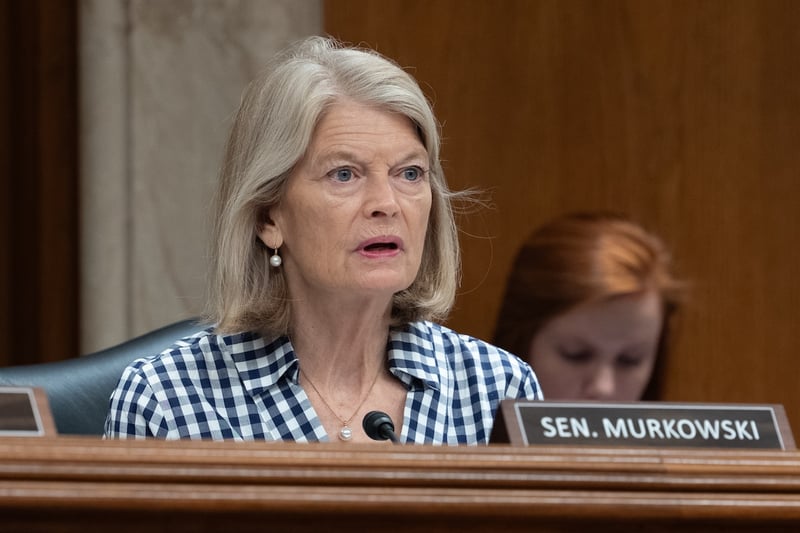
Sen. Lisa Murkowski introduced S.4097, the State-Based Education Loan Awareness Act earlier this year.
The bill is one sentence of substance: it amends Section 151 of the Higher Education Act so that deals involving a "State-based education loan program" are exempt from the preferred lender arrangement rules.
To qualify, a program must be run by a state agency, authority, or nonprofit lender; be non-federal; be authorized by state law; carry rates and fees at least as favorable as Direct PLUS; and be offered only after the school tells the borrower to exhaust federal loans first.
The main states with non-profit state-based lenders are:
- Alaska (Alaska Supplemental Educational Loan)
- Arkansas (Arkansas Student Loan Authority)
- Connecticut (CHESLA — Connecticut Higher Education Supplemental Loan Authority)
- Georgia (Student Access Loan)
- Iowa (ISL Education Lending — Iowa Student Loan Liquidity Corporation)
- Massachusetts (MEFA — Massachusetts Education Financing Authority)
- Minnesota (SELF Loan Program)
- New Hampshire (EDvestinU)
- New Jersey (NJCLASS)
- North Carolina (NC Assist Loans)
- Oklahoma (OSLA — Oklahoma Student Loan Authority)
- Pennsylvania (PA Forward)
- Rhode Island (RISLA — Rhode Island Student Loan Authority)
- Texas (Brazos Higher Education)
- Vermont (Vermont Advantage Loan)
Why It Matters
Preferred lender arrangement status is what activates a stack of borrower protections. Under 34 CFR 601.10, schools that maintain preferred lender lists must name at least two unaffiliated private lenders, disclose why each was chosen, report annually to the Education Department, and tell students in writing that the school will process a loan from any lender they pick.
That last piece matters more than it sounds. Some schools already market loans branded with the university's own name, and the disclosure rules exist so students know they are free to shop any lender and any rate.
Separately, 20 U.S.C. 1094(a)(25) requires any school in a preferred lender arrangement to adopt a code of conduct barring revenue sharing with lenders, gifts to aid officers, consulting fees, lender-provided call center or financial aid office staffing, and paid seats on lender advisory boards.
Strip the preferred lender arrangement label off state loan programs and none of that matters for these organizations.
What Happened Back In 2007
History is worth remembering. The scandal was not one bad actor. It was the entire marketplace.
New York Attorney General Andrew Cuomo's investigation, a parallel Senate inquiry led by Sen. Edward Kennedy, and a House oversight hearing found the same conflicts repeating across dozens of campuses, at least six distinct ways.
Financial aid directors were owning lender stocks. Financial aid chiefs at Columbia, USC, and UT Austin held shares in Student Loan Xpress while listing the company as a preferred lender. UT Austin's Lawrence Burt bought 1,500 shares at $1 and sold at roughly $10. Columbia's David Charlow cleared about $100,000 on his. All three also sat on the company's advisory board.
Lenders paid the officers directly. Johns Hopkins aid director Ellen Frishberg took more than $65,000 from Student Loan Xpress between 2002 and 2006 (roughly $43,000 in consulting fees plus about $22,000 the company put toward her doctoral tuition) without disclosing it while promoting the lender. Hopkins ultimately paid $1.125 million and accepted five years of monitoring. Capella's financial aid director took $13,000 in consulting fees and Widener's took $80,000 for conference work.
Advisory boards were vacations. Senator Kennedy's report, which Inside Higher Ed called evidence of a systemic problem, documented Citizens Bank spending roughly $43,000 on a three-day advisory meeting in Phoenix )including more than $15,000 on food and $1,500 on spa treatments) and Chase spending nearly $18,000 on food and drink at a San Diego gathering. Bank of America put $5,000 into a Temple University golf tournament and $21,242 into two UCLA receptions. Lenders also ran all-expenses-paid cruises and retreats for financial aid staff. At the low end, the report catalogued golf towels, foldable wallets, and stress yo-yos shipped to aid offices by the crate.
Schools took a cut of profits. Cuomo sued Drexel University after finding it had collected more than $124,000 from Education Finance Partners, with another $126,000 pending, after naming EFP its sole preferred private loan provider. That arrangement sent EFP more than $16 million in loan volume. Salve Regina, Pace, NYIT, Molloy, Fordham, St. John's, and Long Island University had all settled similar cases.
Lenders answered the school's phones. Some financial aid hotlines routed students to lender employees who never identified their employer. Lenders also set up "opportunity pool" loans (high-rate credit extended to a school's weakest applicants) as the price of preferred placement.
Even the regulator was compromised. Matteo Fontana, the Education Department official responsible for overseeing the lenders, held more than 10,500 shares in Student Loan Xpress's parent company and sold them for over $100,000. He was placed on leave, and criminal charges followed.
The impact was massive. Cuomo settled with a dozen lenders including Citibank, Sallie Mae, Nelnet, JPMorgan Chase, Bank of America, Wells Fargo, Wachovia, and College Loan Corporation among them.
Lenders and schools put $13.7 million into a national borrower education fund, 10 schools repaid students more than $3 million, and financial aid directors at several universities resigned. Congress wrote the fixes into law in 2008, which are the same rules that still shape how borrowers are told to compare offers today.
Every practice above is barred by the code of conduct that S.4097 would stop applying to state loan arrangements.
The Other Side
The guardrails in the bill are thin.
Non-profit state lenders must offer student loans with better rates that Direct PLUS Loans. Direct PLUS carries a 9.07% rate for 2026-27 plus the highest origination fee in the federal portfolio, so beating it is an easy test for nearly any state program.
The definition also covers nonprofits "separately or jointly" with a state, broad enough to reach quasi-public authorities that partner with banks. Supporters counter that state authorities are not profit-seeking lenders, and that compliance burdens keep schools from mentioning cheaper in-state options at all — a fair point, given that state nonprofit loans often beat national private lenders on rate.
The deeper issue is the premise. A state seal does not by itself mean a product is built around the customer, and 529 plans are the clearest proof. Every 529 is authorized by a state, yet nearly all are run day to day by for-profit financial firms under contract — Ascensus alone administers 51 plans across 31 states and Washington, D.C., with more than $300 billion in assets.
The cost spread that produces is enormous. Saving For College's 529 fee study puts the cheapest available option in Florida at about $25 in 10-year costs on a $10,000 balance, and South Carolina and Louisiana at $26. The cheapest option in Hawaii runs about $920, and West Virginia's SMART529 Select about $915 — more than 30 times as much for the same account!
Some states layer their own administrative fees on top of the manager's cut, which is why the CFPB tells savers not to assume a state plan is the cheaper one. Where you open a 529 matters precisely because the public label says nothing about the price.
Student lending would work the same way. Public or nonprofit sponsorship determines who signs the contract, not whose interest the contract serves, which is the argument for keeping the code of conduct and disclosure rules in-tact.
Supporters counter that state authorities are not profit-seeking lenders, and that compliance burdens keep schools from mentioning cheaper in-state options at all. But given they do the same compliance work anyway with nationwide for-profit lenders, it's clearly not that big of a problem.
As Mike Pierce, Executive Director and co-founder of Protect Borrowers, put in this tweet, "This is just corruption".
This is just corruption. It's the reason Americans don't trust Congress, colleges, or student lenders.
— Mike Pierce (@millennial_debt) July 27, 2026
The whole thing is rigged and everyone knows it. https://t.co/GbLjCbAjng
How This Connects
The timing is the whole story. Graduate borrowing is now capped at $20,500 a year and $100,000 total, or $50,000 and $200,000 for designated professional programs, against a $257,500 lifetime federal ceiling.
Private loan volume could nearly double as a result, since the caps shift the most profitable loans to private lenders.
States are filling the gap fast — Connecticut, Minnesota, and Massachusetts all expanded programs this year. But a July 2026 Century Foundation analysis found many state loans underwrite like private ones: MEFA requires a 690 FICO for graduate borrowers, and Minnesota's SELF Grad Loan wants 670 without a cosigner.
Borrowers who cannot clear the score need a creditworthy cosigner, and cosigner release is harder to actually obtain than the marketing suggests.
State loans also don't offer the Repayment Assistance Plan or Public Service Loan Forgiveness, the two backstops federal borrowers rely on when income falls short.
It will be important to watch whether this bill moves forward, and whether anyone amends it to keep the code of conduct language. The Senate is set to have an executive session to markup the bill on July 30.
It's also worth watching how aggressively lenders court financial aid offices in the meantime. The American Prospect reported in July that private lenders sponsored much of NASFAA's 60th anniversary conference, which is exactly the kind of proximity that drew scrutiny the last time around.
Whether state programs can actually replace what Grad PLUS did remains an open question, and total student debt keeps climbing either way.
Don't Miss These Other Stories:
Editor: Colin Graves

Robert Farrington is the founder of The College Investor and is widely recognized as one of the nation’s leading voices on student loan debt and saving for college. He holds an MBA from UC San Diego Rady School of Management and has spent over 15 years researching, writing, and advising on student loans, 529 plans, financial aid programs, and saving and investing for young professionals.
Robert has been featured in the The New York Times, The Wall Street Journal, The Washington Post, NBC News, and Forbes, where he has been a regular personal finance contributor for over a decade. His work combines both professional expertise and personal experience – he successfully navigated his own student loan repayment journey and has helped thousands of readers do the same.
He is committed to making the intersection of personal finance and education transparent and accessible. You can learn more about Robert on the About Page or on his personal site RobertFarrington.com.