Save And Pay For College: Your Complete Resource
Most families want to help pay for college, but saving and paying for it is complicated. It starts with saving while your kids are young, moves through admissions in high school, and ends with figuring out how to cover the bill with grants, scholarships, savings, and loans. We cover every step.
529 data as of June 30, 2026, from The 529 Network. Parent savings rate from Fidelity Investments. See our full 529 plan statistics.
Want Help Paying For College?
Join our free newsletter. We’ll email you FAFSA deadlines, financial aid changes, and new ways to save as they come up.
Where Are You Right Now?
Jump to what you need
Saving For College
Start early, save smart
Every dollar you save is a dollar your child won’t have to borrow. A 529 plan is the most popular way to save because your money grows tax-free when it’s used for education, and many states give you a tax break on contributions. The right account and the right amount depend on your family, so start with how much you can realistically save.
529 Plan Rules
College Admissions
Planning, applying, and testing
Admissions starts with planning: where your student wants to go, what they want to study, and what your family can afford. Then comes the application process, including admissions tests, which more colleges are requiring again. See our full college admissions section for more.
College Planning
Applying
Paying For College And Financial Aid
Free money first
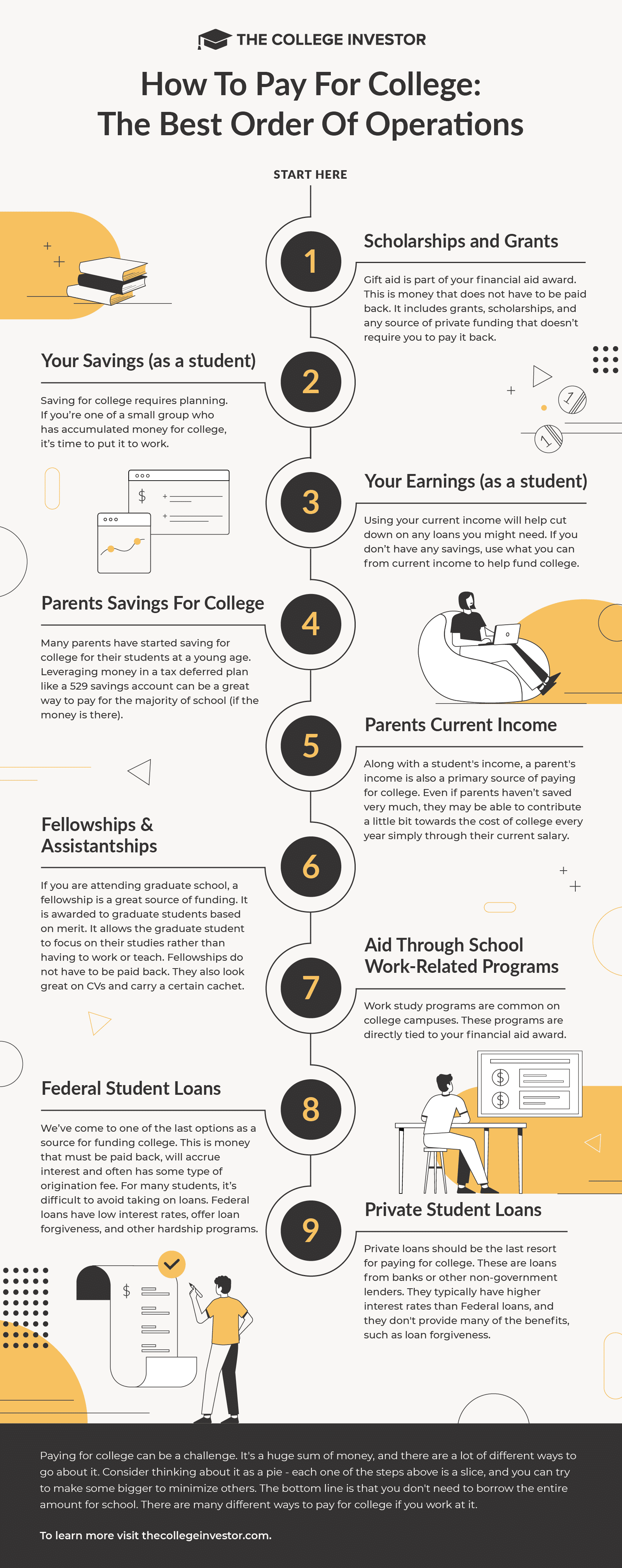
Paying for college is like a pie with a lot of slices. You want the biggest slices to come from free money like grants and scholarships, so the loan slice can be as small as possible. Everything starts with the FAFSA, which most colleges use to award aid, so file it as early as you can.
- How To Find Grants For College
- Pell Grant Chart
- How To Find College Scholarships
- Best Scholarship Search Websites
- How To Appeal A Financial Aid Award
- Financial Aid Programs By State
- Military And VA Education Benefits
- Federal Work-Study
- Do You Report A 401k Or IRA On The FAFSA?
- Net Worth Of Assets On The FAFSA
- When Are Tuition Bills Due?
- Tuition Insurance
Graduate School
Tests, funding, and loans
Paying for graduate school works differently than undergrad. Parents usually aren’t part of the FAFSA, more of the funding comes from fellowships and assistantships, and new federal loan limits apply to grad and professional students. Most programs also require an admissions test, so plan your prep early.
Student Loans By Type
Borrow last, borrow smart
Loans should fill whatever gap is left after aid, savings, and income. Federal loans come first because they have fixed rates and borrower protections. Parent PLUS loans now have annual and lifetime caps, so more families are comparing private student loans to cover the rest.
Undergraduate Loans
Graduate And Professional Loans
Career Training Loans
Parent, International, And Other Loans
See Them AllStudent loan options for every education level
College Savings Data
Our most-cited research
Read More Financial Aid Content
Browse all of our articles on the FAFSA, grants, scholarships, and paying for college.
Saving And Paying For College Terms
71 terms, A to Z
Learn what these financial aid terms mean, from A to Z.