Key Points
- Senators Kirsten Gillibrand and Jeff Merkley introduced the Professional Student Degree Act that would raise the federal student loan limit for 13 graduate fields to $50,000 a year from $20,500, and to $200,000 total from $100,000.
- For a two-year master’s, today’s limits allow $41,000 in federal student loans. The bill would allow $100,000, more than typical students in most of these fields borrowed even before the caps.
- Only four of the 13 degrees are required to practice in the field. No license requires an MBA, an MPH or an accounting master’s, and FREOPP data shows the typical program in those fields loses money over a career.
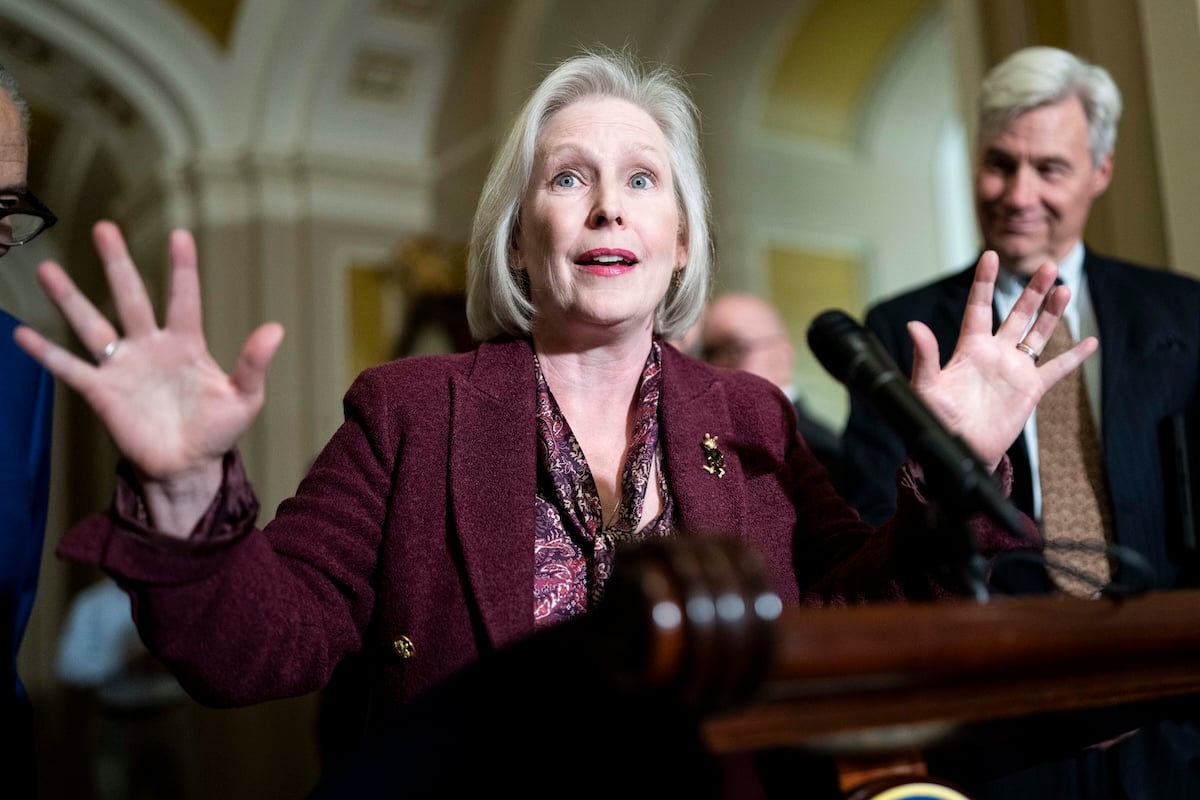
Senators Kirsten Gillibrand (D-N.Y.) and Jeff Merkley (D-Ore.) introduced the Professional Student Degree Act on November 17, 2026. The bill would increase the current list of professional degrees in the Higher Education Act, letting students in those programs borrow up to $50,000 a year and $200,000 total in federal student loans.
Every other graduate degree type would be held to the $20,500 a year and $100,000 total under the new graduate school limits that took effect July 1.
The bill keeps the 11 fields the Department of Education already treats as professional and adds 13 more. The new fields are social work, audiology, physician assistant, occupational therapy, physical therapy, nursing, public health, business administration, accounting, architecture, education, special education and ministry (D.Min.).
The bill also lets the Education Secretary add any degree that meets its definition. We have a full breakdown of graduate vs. professional degree status for student loans.
Would you like to save this?
Why It Matters
The press release warns of an immediate “loan cliff” for these fields, but that is only partly true today. A federal judge blocked the Education Department’s narrow definition on June 24, and the Department now treats 30 programs as professional on an interim basis.
That interim list has already been updated to include nursing, physician assistant, physical therapy, occupational therapy and audiology. But students in social work, public health, MBA, accounting, architecture, education, special education and ministry programs are still capped at $20,500 a year and $100,000 total.
The Department’s interim designations can also change as the court case moves forward. We saw that in October, when the Department added naturopathic medicine to the list after a separate court ruling in Oregon.
The proposed bill would put the higher professional student loan limits for all 13 fields into law, no matter how the lawsuit ends.
What Students Borrow Compared To The Annual Limits
There’s a lot of concern that the bill adds borrowing capacity back just so students can borrow more, without a practical benefit to doing so. That extra room could lead students to over-borrow and struggle to repay, at a time when student loan delinquency has hit 10.9%.
The annual limit matters more than the lifetime cap, because most of these are one- or two-year programs. A two-year master’s student can borrow $20,500 a year, or $41,000 for the whole degree. This bill would raise that to $100,000.
We analyzed the Education Department’s College Scorecard field-of-study data to compare those limits with what graduates actually borrowed before the caps.
| Program | Typical Length | Median Federal Debt | Capacity At $20,500 A Year | Capacity At $50,000 A Year | Borrowers In Programs Over $20,500 Capacity |
|---|---|---|---|---|---|
| Programs The Bill Would Add | |||||
| Physician Assistant | 2–3 years | $133,600 | $41,000–$61,500 | $100,000–$150,000 | 92% |
| Physical Therapy (DPT) | 3 years | $126,419 | $61,500 | $150,000 | 91% |
| Accounting | 1 year | $35,789 | $20,500 | $50,000 | 71% |
| Nursing (MSN) | 2 years | $51,250 | $41,000 | $100,000 | 70% |
| Public Health (MPH) | 2 years | $44,516 | $41,000 | $100,000 | 58% |
| Occupational Therapy (MSOT) | 2–3 years | $63,276 | $41,000–$61,500 | $100,000–$150,000 | 50% |
| Social Work (MSW) | 2 years | $41,000 | $41,000 | $100,000 | 47% |
| Business (MBA) | 2 years | $38,010 | $41,000 | $100,000 | 40% |
| Audiology (Au.D.) | 4 years | $80,859 | $82,000 | $200,000 | 39% |
| Education (All Other Master’s) | 1–2 years | $28,821 | $20,500–$41,000 | $50,000–$100,000 | 14% |
| Ministry (D.Min.) | 3 years | $55,802 | $61,500 | $150,000 | 9% |
| Special Education | 1–2 years | $30,906 | $20,500–$41,000 | $50,000–$100,000 | 4% |
| Architecture (M.Arch) | 2–3 years | $26,029 | $41,000–$61,500 | $100,000–$150,000 | 4% |
| Already Professional Degrees, For Comparison | |||||
| Chiropractic (D.C.) | 4 years | $191,071 | N/A | $200,000 | N/A |
| Dentistry | 4 years | $302,418 | N/A | $200,000 | N/A |
| Medicine (M.D.) | 4 years | $230,053 | N/A | $200,000 | N/A |
| Law (J.D.) | 3 years | $119,956 | N/A | $150,000 | N/A |
| Pharmacy (Pharm.D.) | 4 years | $137,605 | N/A | $200,000 | N/A |
The new annual student loan borrowing limits cut into what many of these students borrowed before the caps.
In social work, 47% of borrowers attended programs where the typical borrower owed more than $41,000. That share was 58% in public health. Both fields are still held to $20,500 a year, so those students have to cover the difference with savings or private student loans.
The annual limit hits hardest in the health fields, where typical debt topped today’s limits at programs serving 92% of physician assistant borrowers and 91% of physical therapy borrowers. Physician assistants still roughly break in future ROI, with $133,600 in typical debt against $128,277 in pay five years out.
Physical therapy graduates carry $126,419 in debt against $82,735 in average pay. That debt is heavy early in a career, but the degree still generally pays off over a lifetime in the ROI data below.
The current professional list has its own problem degree. Chiropractic graduates carry a typical $191,071 in federal debt against $61,748 in pay, 3.09 times their annual earnings and the worst debt-to-pay ratio of any field we analyzed. Chiropractors also make up more than half of the 574 health professionals the Education Department named in October for defaulted HEAL student loans – so this isn’t a new phenomenon.
Every chiropractic program that reports debt data has a median above $100,000, yet chiropractic keeps its $200,000 limit on both the original 11-field list and the court-ordered interim list of 29 programs. A separate lifetime ROI analysis by FREOPP reaches the same verdict, with a median chiropractic return of negative $264,000.
How We Calculated These Numbers
Debt is the borrower-weighted median of each program’s median federal student loan debt, Direct Loans plus Grad PLUS, from the fall 2026 College Scorecard dataset. Pay is the Education Department’s national median for each field five years after completion. These graduates borrowed before the 2026 caps, when Grad PLUS loans covered up to the full cost of attendance.
The figures leave out undergraduate debt and private student loans, so many graduates owe more in total. Education combines every master’s field in that category except special education. Physical therapy uses professional-practice doctorates, which also include some occupational therapy doctorates, and the audiology and ministry figures rest on only 13 and 7 programs.
Borrowing capacity multiplies each annual limit by a typical program length, up to the $100,000 and $200,000 lifetime caps. Where lengths vary, we compared debt with the longer end of the range, so the shares above today’s limit are conservative. The borrower shares count everyone in programs whose median debt topped that capacity.
Which Of These Degrees Are Required To Practice?
One of the big arguments for expanding this degree list is that some of these fields require this degree to actually get a job in said field. Four of the 13 degrees in the proposed bill are the only way into their jobs.
Physical therapists need a DPT, and audiologists need an Au.D. Occupational therapists need a master’s or doctorate, and PA candidates must graduate from an accredited program to sit for the certification exam. All four are health programs, where students often turn to health professional student loans once federal limits run out.
| Program | Required? | What It Unlocks | Median Lifetime ROI | Graduates In Programs With Negative ROI |
|---|---|---|---|---|
| Physician Assistant | Yes | Accredited PA program needed for the certification exam | +$1.39M | 5% |
| Audiology (Au.D.) | Yes | Doctorate is the entry degree for licensure | +$611K | 2% |
| Physical Therapy (DPT) | Yes | DPT is the only path to a PT license | +$612K | 1% |
| Occupational Therapy (MSOT) | Yes | Master’s or doctorate needed for an OT license | +$219K | 24% |
| Nursing (MSN) | Partly | Not needed for RNs. Required for nurse practitioners | +$572K | 3% |
| Education (All Other Master’s) | Partly | Not needed to start teaching. Some states require one later | +$79K | 34% |
| Special Education | Partly | Not needed to start teaching. Some states require one later | +$132K | 15% |
| Social Work (MSW) | Partly | Required for a clinical license (LCSW). Some states license BSWs | +$146K | 6% |
| Architecture (M.Arch) | Partly | Accredited M.Arch or 5-year B.Arch for a license in most states | -$92K | 67% |
| Business (MBA) | No | No license requires it | -$94K | 58% |
| Public Health (MPH) | No | No license requires it | -$80K | 71% |
| Accounting | No | CPA needs 150 credit hours, or 120 plus extra experience in many states | -$366K | 99% |
| Ministry (D.Min.) | No | No license requires it | +$165K | 39% |
Five more fields require the degree only for certain jobs within the field. Every state requires an MSW for clinical social work licensure, but some states license bachelor’s-level social workers for non-clinical roles. Nurses need an MSN or DNP to become nurse practitioners, not to work as RNs, which is why the House has already moved on making graduate nursing a professional degree.
Most teachers start with a bachelor’s degree, although New York requires a master’s for its Professional Certificate. Teachers who stay in public schools also have student loan forgiveness options for teachers that change the math on a master’s.
Architects need an accredited M.Arch or five-year B.Arch in most states, while some states, including California, accept extra work experience instead.
No professional license requires an MBA, an MPH or a Doctor of Ministry. Accounting is moving the same way: aspiring CPAs have long needed 150 credit hours, but more than 20 states, including California, New York and Texas, now offer a path with 120 hours plus two years of experience. Cost is part of that push, and an AICPA survey found anxiety over student debt in the profession.
Those “optional” degrees are also the ones that pay off least. In FREOPP’s data, 58% of MBA graduates, 71% of MPH graduates and 99% of accounting master’s graduates come from programs with negative lifetime ROI, because these students would likely have earned about the same without the degree.
That matches our take on whether an MBA is worth it, and it means the bill would more than double annual borrowing limits for the fields where extra debt buys the least.
The ROI figures come from the Foundation for Research on Equal Opportunity’s graduate degree analysis, which estimates lifetime earnings with each degree against what the same students would likely have earned without it. FREOPP subtracts tuition and the pay students give up while enrolled, and weights each field’s median by graduate count. It does not count the interest that builds on federal student loans during school, and it uses an older round of College Scorecard data than our debt table. FREOPP’s ministry figure covers only 13 doctoral programs.
The Social Worker Dilemma
We hear from social workers more than any other group in this bill. They need the master’s to practice, but the pay in the field makes the degree hard to repay.
A master’s in social work is required for a clinical license, and it pays off, but only modestly. FREOPP puts the median MSW’s lifetime return at about $146,000, a 17% lift in lifetime earnings, and 13% of MSW programs show negative returns. Spread across a career, that cushion is small next to a $100,000 student loan balance.
Social workers already lean on Public Service Loan Forgiveness as the realistic way to escape their student loans. Adding more federal student loan debt doesn’t change that. It mostly creates more indentured servants, borrowers locked into 10 years of qualifying public service work as their only way out of a bigger balance. And if they have to supplement with private loans, they may not even be able to work in the field that they want because they simply can’t afford to.
Senator Gillibrand said students in these fields “should not have to break the bank to serve their communities.” The bill’s answer is a higher federal student loan limit, with no change to what schools charge. But at least having higher federal student loan borrowing limits would allow these borrowers to qualify for PSLF on their loans.
How This Connects
Graduate schools have already started responding to the caps. The American Enterprise Institute’s tracker counts 52 graduate schools and programs that cut their net price after the limits passed, though only 11 cut tuition outright.
Supporters of this proposed bill, including endorsers like the American Council on Education and the Oncology Nursing Society, argue the lower cap pushes students in short-staffed fields toward private student loans with fewer protections. However, critics worry that expanding the student loan borrowing limits will continue to make the student loan crisis worse and not force colleges to lower the price of tuition.
What’s Next
The bill was introduced in the final weeks of the current Congress, so it would need to be reintroduced after the new Congress is sworn in on January 3, 2027. Democrats will control both chambers, but President Trump would still have to sign it.
Students in nursing, physician assistant, physical therapy, occupational therapy and audiology programs should confirm with their financial aid office that their school applies the higher interim limits, since schools may still cap these programs at the lower graduate limits.
Editor: Colin Graves

Robert Farrington is the founder of The College Investor and is widely recognized as one of the nation’s leading voices on student loan debt and saving for college. He holds an MBA from UC San Diego Rady School of Management and has spent over 15 years researching, writing, and advising on student loans, 529 plans, financial aid programs, and saving and investing for young professionals.
Robert has been featured in the The New York Times, The Wall Street Journal, The Washington Post, NBC News, and Forbes, where he has been a regular personal finance contributor for over a decade. His work combines both professional expertise and personal experience – he successfully navigated his own student loan repayment journey and has helped thousands of readers do the same.
He is committed to making the intersection of personal finance and education transparent and accessible. You can learn more about Robert on the About Page or on his personal site RobertFarrington.com.