Key Points
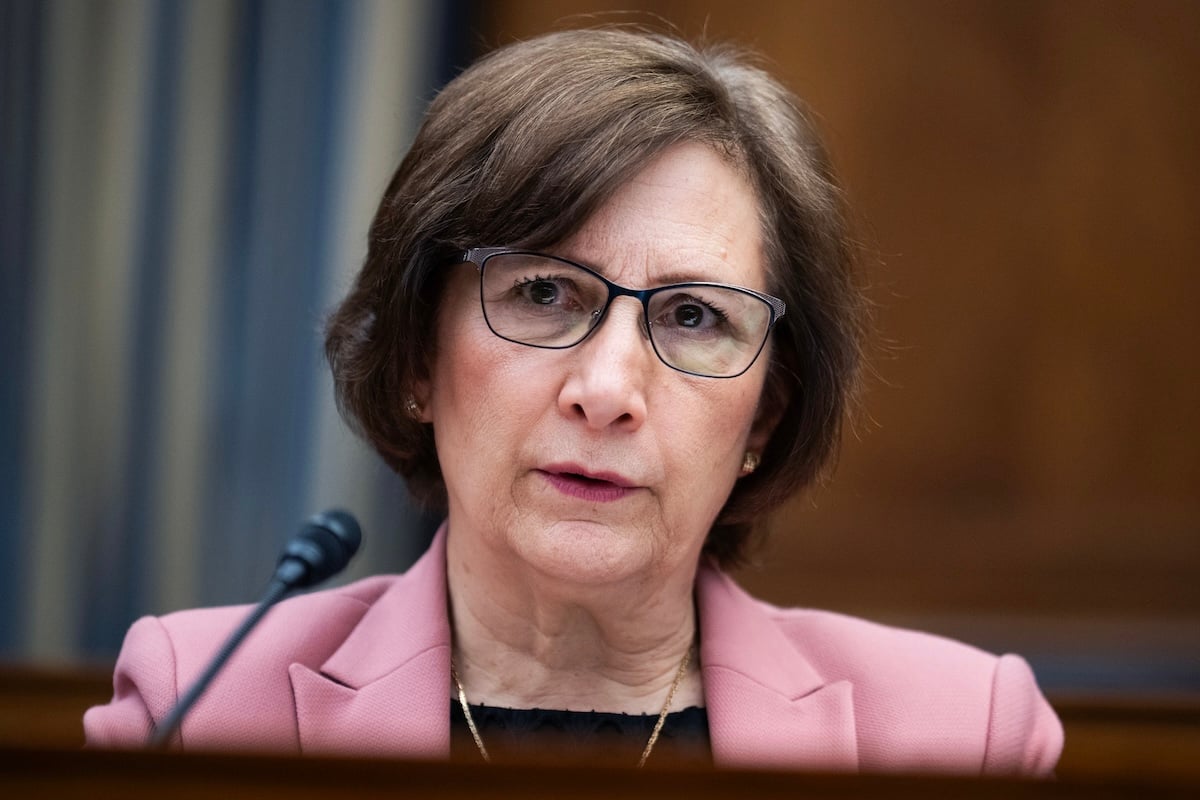
- Rep. Suzanne Bonamici’s Transforming Education for the Future Act bundles 22 Democratic bills into a single K-12 blueprint, and she is running to lead the House education committee if Democrats win the House.
- The plan would triple Title I funding, fully fund special education, create free universal preschool and repeal the new $1,700 federal school choice tax credit.
- With a Republican Senate and/or a Trump veto, oversight of the Education Department is the main tool a Democratic House could use alone.
Voters decide today whether Democrats win the House, the Senate or both. If they do, one of the most detailed pictures of their agenda for education and student loans comes from a single proposal. Rep. Suzanne Bonamici (D-Ore.) introduced the Transforming Education for the Future Act in September, and it folds 22 Democratic education bills into a single education policy blueprint.
As we’ve highlighted many times, proposed legislation that doesn’t seem to go anywhere usually finds its way into other larger pieces of legislation later. This is how it happens and why voicing your thoughts on individual proposals can help with future change.
If you want to see how you feel about different legislative ideas our education policy quiz shows where the two parties split on many of the same issues.
The bill is not the Democratic Party’s official platform. House Democratic leaders built their first 100 days agenda around health care costs, tariffs and oversight. Bonamici’s bill still matters because she plans to challenge Rep. Bobby Scott (D-Va.) for the top Democratic seat on the House education committee, according to The 74. She also filed a resolution to impeach Education Secretary Linda McMahon over the department’s breakup.
With the focus on education policy, here is what we might expect from new congressional leadership.
Would you like to save this?
What Is In The Transforming Education For The Future Act?
The Transforming Education for the Future Act (H.R. 10421) would rebuild federal K-12 policy around three goals:
- A well-rounded education
- Support for educators
- Fewer economic barriers to learning
Its biggest funding promises are tripling Title I for high-poverty schools and fully funding special education. It would also create free universal preschool for three- and four-year-olds through a federal-state partnership.
“Full funding” means Washington would cover 40% of the average per-pupil cost of special education, a pledge Congress made in 1975. Federal funding sat around 10% in 2025, according to the school superintendents group AASA.
The bill would also make school breakfast and lunch free for every child and stop relying on standardized test scores as a benchmark.
The package also folds in Rep. Frederica Wilson’s American Teacher Act, which would use federal grants to push states toward a $60,000 minimum teacher salary. That pay push lines up with a Senate Democratic bill to double TEACH Grants for future teachers.
The other bundled bills cover reading, school mental health, charter school transparency and student safety.
| Focus Area | Bundled Bills (Sponsor) |
|---|---|
| Teachers And Staff | American Teacher Act (Wilson) · PARA Educators Act (McBath) · Supporting the Mental Health of Educators and Staff Act (Bonamici) |
| Funding And Public Schools | IDEA Full Funding Act (Huffman) · Keep Public Funds in Public Schools Act (Moore) · CHARTER Act (DeLauro) · Full-Service Community Schools Expansion Act (Lee) · Universal School Meals Program Act (Omar) |
| Reading, Arts And History | Arts Education for All Act (Bonamici) · READ Act (McBath) · Right to Read Act (Grijalva) · Black History Is American History Act (Beatty) · HEAL Act (Gottheimer) · Teaching Asian American, Native Hawaiian, and Pacific Islander History Act (Meng) |
| Safety, Health And Research | Expanding Access to Mental Health Services in Schools Act (DeLauro) · FACTS Act (Bonamici) · Keeping All Students Safe Act (Beyer) · Protecting Our Students in Schools Act (Bonamici) · Safe Schools Improvement Act (Sánchez) · School Violence Prevention Act (Hayes) · Mitigating Electronic Access Losses for Students (Bonamici) · New Essential Education Discoveries Act (Bonamici) |
Would Democrats Repeal The Federal School Choice Tax Credit?
Repealing the federal school choice tax credit is one of the plan’s central goals. Bonamici’s bill targets what Democrats call the “federal school voucher program”, the Education Freedom Tax Credit created by the One Big Beautiful Bill Act. Starting January 1, 2027, donors can claim up to $1,700 for gifts to K-12 scholarship groups. Married couples can claim $3,400. 30 states have opted into the credit so far.
The bundled Keep Public Funds in Public Schools Act is a Senate bill from Senator Mark Kelly and 29 Democratic colleagues designed to repeal the credit before it launches.
What Do Democrats Want For College Costs And Student Loans?
Scott and Bonamici, two of the Democrats seeking the education committee gavel, both want to double the maximum Pell Grant, from $7,395 to $14,790. They told Inside Higher Ed they also want to repeal the new caps on graduate and Parent PLUS student loans and lower student loan interest rates. For a student who qualifies for the maximum Pell Grant, doubling the award would add $29,580 in grant money over four years.
The new student loan borrowing limits took effect July 1, 2026. Parent PLUS borrowing now cap at $20,000 a year and $65,000 per student, and most graduate students are capped at $20,500 a year under the new federal limits. Undoing them would take a new law signed by the president.
Oversight is the higher education item Democrats could move fastest. Scott has questioned the shift of student loan collections to Treasury, arguing Treasury treats the job as simply issuing and collecting student loans. A House majority could subpoena McMahon and call career staff to testify on how the transfers are working.
Interest rates are one area drawing interest from both parties. President Trump said he would “certainly consider” a Republican plan to cap federal student loan interest at 2.5%. Many House Democrats back a separate bill that would set the rate at 0%.
One area that’s not being talked about is changes to student loan repayment plans. A lot of borrowers are frustrated by the end of the SAVE plan and the launch of the new RAP plan. However, we have not seen any movement from Democratic leadership to revise the RAP plan or launch a new repayment plan of their own. For student loan borrowers frustrated by the cost of repayment, this is one area that is not being focused on.
How Much Of This Plan Could Become Law?
Most of the Bonamici package would need Republican votes to pass, even if Democrats win both chambers. Republicans hold the Senate 53-47, and Democrats need a net gain of four seats for control. Most bills would still need 60 Senate votes, and President Trump is still President with his veto power through January 2029.
That same math is why the House Republican bills to close the Education Department have not passed.
Spending bills are the bigger lever. Scott and Bonamici both support adding language to must-pass funding bills that would block the Education Department’s interagency agreements, Education Week reported. A Senate committee already advanced a bill to block four office transfers with Republican Senators Susan Collins and Lisa Murkowski as cosponsors. HELP Committee Chairman Bill Cassidy opposed it, saying the administration should be allowed to test the agreements.
At least one bundled bill already has Republican support. Rep. Glenn Thompson (R-Pa.) co-led the 2025 version of the IDEA Full Funding Act. Education Week also flagged early childhood education and career and technical education as possible areas of agreement. Bonamici has already pressed McMahon on special education in a House hearing on the department’s breakup.
And there are also multiple pieces of legislation to lower student loan interest rates, though there is disagreement as to how far they should go. The Democratic bill wants to set federal student loan interest rates at 0%, while the Republican bill wants to set interest rates at 2%.
What Does This Mean For Families Right Now?
Nothing changes for families or borrowers on Election Day. Current law governs the 2027-28 school year, including the federal student loan caps, the Repayment Assistance Plan and the school choice credit. Families should plan with today’s rules and treat any Democratic proposal as a possible upside.
An interest rate cut would not change monthly bills for borrowers on income-driven plans, since those payments are set by income. A borrower on RAP can check a payment with our RAP calculator before counting on new relief.
K-12 families have their own planning tools under current law – but many are state-driven. A 529 plan can now cover up to $20,000 a year of K-12 tuition and related costs under the 2026 529 plan expansion (depending on whether you state complies).
What Families And Borrowers Should Do Now
- Build your 2027-28 college budget around the current student loan borrowing limits, not a promised repeal.
- Check whether you qualify for a student loan forgiveness program under the rules in place today.
- If you plan to give to a scholarship group in 2027, read how the Education Freedom Tax Credit works first, since it reains the law unless it is repealed.
- Watch the next Pell Grant budget fight, because Congress sets the maximum award each year.
Frequently Asked Questions
Is The Transforming Education For The Future Act Official Democratic Policy?
No. It is Bonamici’s bill, backed by more than a dozen Democratic cosponsors and groups such as the American Federation of Teachers and National PTA. House leaders have not adopted it, though it shows where many Democrats on the House education committee want to go.
Would A Democratic Congress Forgive Student Loans?
The priorities Scott and Bonamici described before the election focus on Pell Grants, borrowing caps, interest rates and oversight. There are no current proposals for broad student loan forgiveness.
When Would Any Changes Take Effect?
The new Congress is seated in January 2027, and oversight hearings could start soon after. New laws would need to clear both the House and Senate and be signed by the president, so families should keep using student loan rules in place for now.
Editor: Colin Graves

Robert Farrington is the founder of The College Investor and is widely recognized as one of the nation’s leading voices on student loan debt and saving for college. He holds an MBA from UC San Diego Rady School of Management and has spent over 15 years researching, writing, and advising on student loans, 529 plans, financial aid programs, and saving and investing for young professionals.
Robert has been featured in the The New York Times, The Wall Street Journal, The Washington Post, NBC News, and Forbes, where he has been a regular personal finance contributor for over a decade. His work combines both professional expertise and personal experience – he successfully navigated his own student loan repayment journey and has helped thousands of readers do the same.
He is committed to making the intersection of personal finance and education transparent and accessible. You can learn more about Robert on the About Page or on his personal site RobertFarrington.com.