Key Points
- House Education and Workforce Committee Republicans introduced 10 bills that would permanently transfer nearly all Department of Education functions (including federal student loans, Pell Grants, and the FAFSA) to the Treasury, Labor, HHS, State, and Interior departments.
- The student aid bill contains a provision that would force mandatory collections of defaulted student loans, locking in tax refund offsets, wage garnishment, and Social Security offsets by statute.
- The package faces long odds in the Senate, but the Trump administration is already carrying out most of these transfers through interagency agreements and these bills would make them permanent and harder to challenge in court.
House Republicans took their most concrete step yet toward breaking up the Department of Education.
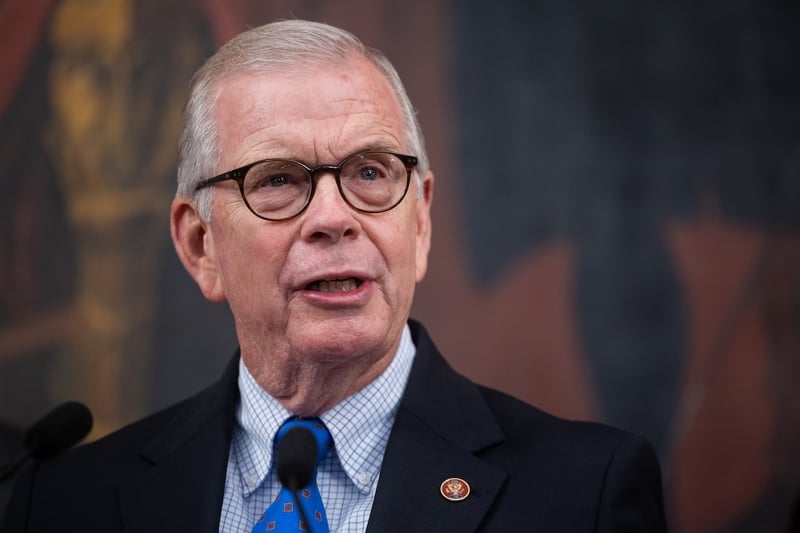
Education and Workforce Committee Chairman Tim Walberg (R-MI) announced the introduction of 10 bills last week under the banner "Less Bureaucracy, Better Education" — a legislative package that would transfer nearly every major function of the Education Department to five other federal agencies.
Federal student loans, Pell Grants, and the FAFSA would move to the Treasury Department. TRIO, GEAR UP, and the grant programs supporting HBCUs and Hispanic-serving institutions would move to the Labor Department. Campus child care grants would go to Health and Human Services, international education programs to the State Department, and tribal college funding to the Interior Department.
For more than a year, the Trump administration has been carrying out this same reorganization through interagency agreements, moving defaulted student loan collections to Treasury, and cutting the department's workforce roughly in half. Those moves have drawn lawsuits, and Senate Democrats have argued the transfers are illegal without an act of Congress.
That is exactly the problem this legislative package is designed to solve. If these bills become law, the legal question disappears and the transfers become permanent.
Would you like to save this?
Where Everything Would Go
The 10 bills share a common template: each transfers the "functions" of specific Education Department programs (along with the staff, appropriations, contracts, and unexpended funds attached to them) to a new agency. Existing grants, regulations, and pending applications stay in force, and funding levels don't change. Here's the map:
Programs Moving | New Home |
|---|---|
Federal student loans (Direct Loans, FFEL, Perkins), Pell Grants, work-study, FSEOG, the FAFSA, PSLF and income-driven repayment, college aid eligibility rules | Treasury |
TRIO and GEAR UP, Title III and Title V grants for HBCUs, HSIs, and other minority-serving institutions, HBCU Capital Financing, graduate fellowships (GAANN), the Howard University relationship | Labor |
Career and technical education (Perkins CTE), adult education, plus most K–12 programs including Title I | Labor |
Campus child care grants (CCAMPIS), foreign medical school accreditation, family engagement and school safety programs | HHS |
International education (HEA Title VI), Fulbright-Hays, foreign gift reporting by colleges (Section 117) | State |
Tribal colleges and universities, Native American education and job training programs | Interior |
The centerpiece is the Less Bureaucracy, Better Student Aid Act (PDF File), sponsored by Walberg himself, which moves the entire Office of Federal Student Aid to Treasury in three phases: defaulted loan collections first, then servicing of loans in good standing, then everything else, with the Education and Treasury secretaries setting the timeline jointly. That sequence mirrors what is already happening via interagency agreement, with Treasury taking over collections on a defaulted portfolio that has swelled to $179 billion.
A few long-dormant programs would be repealed outright, such as the LEAP state grant program, Byrd Honors Scholarships, and the College Access Challenge Grant, all unfunded for years.
What stays at the Education Department for now: the Office for Civil Rights, special education, and the recognition of college accreditors. The department itself would still exist... just stripped of nearly everything it does.
A Potentially Massive Change To Student Loan Collections
Section 9 of the student aid bill has received little attention, but it may be the most consequential paragraph in the entire package for struggling borrowers.
Current law gives the government authority to exempt federal student loans from the Debt Collection Improvement Act (the law that requires federal agencies to refer delinquent debt to Treasury's centralized collection machinery). That exemption authority is what allowed the Education Department to pause collections during the pandemic and delay them again while repayment plans were being restructured.
The bill terminates that authority. If the bill passes, delinquent and defaulted federal student loans could no longer be exempted from mandatory Treasury collections. That means tax refund offsets, administrative wage garnishment of up to 15% of paychecks, and offsets of federal payments including Social Security benefits would be required by law.
It also means that no future administration could unilaterally pause defaulted loan collections the way the government did from 2020 through 2025. Roughly 7.8 million borrowers are in default or late-stage delinquency, and millions more are behind on payments. For them, this provision would make the consequences of default automatic and permanent.
What This Means For Students And Families
Nothing in this package cuts a dollar of Pell Grants or student loan availability. The statutory benefits (Pell eligibility rules, loan forgiveness options, repayment plans) are unchanged.
What changes is who runs them, and the transition could be messy.
Borrowers would deal with Treasury, not Education. Loan servicing questions, forgiveness processing, and default resolution would run through an agency whose core mission is revenue collection. Every major student aid transition in recent memory (servicer transfers, the 2024 FAFSA overhaul) produced lost records, processing errors, and caused borrower harm.
Moving a $1.7 trillion portfolio and the FAFSA system into a new agency, with a legal requirement that no new staff be added, is a bigger lift than any of the prior changes. However, it's not likely the underlying contractors would change - which could allow for some continuity. That is also a complicated web...
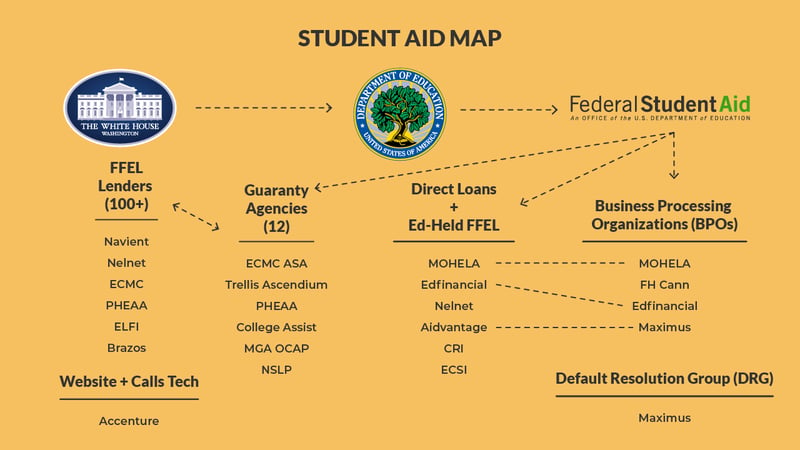
Students would also potentially have to interact with multiple agencies. A first-generation student at a community college could have a Pell Grant from Treasury, a TRIO advisor funded through Labor, and campus child care supported by HHS. Colleges (especially HBCUs, HSIs, and tribal colleges) would see their entire federal support system re-homed to agencies with no history of running higher education grant programs. And the administrations at these colleges would likely grow trying to deal with multiple agencies instead of one.
Defaulted borrowers would face the biggest change. The end of the collections exemption means anyone who falls into default should expect garnishment and offsets to follow and should act before that point through rehabilitation, consolidation, or getting current while options still exist. There would be no more pauses delaying collection activity.
Will Any Of This Pass?
The committee has tentatively scheduled a markup for July 15, according to Education Week, and House passage on party lines is plausible. The Senate is the wall: these are ordinary bills that need 60 votes, and Democrats are unified in opposition.
But the package's failure wouldn't restore the old Education Department. The administration is executing most of these transfers through interagency agreements right now, and Secretary Linda McMahon has defended the approach as legal reorganization rather than elimination.
The bills are best understood as an insurance policy. They are an attempt to convert a contested executive action into settled law before the courts or a future administration can unwind it.
Don't Miss These Other Stories:
Editor: Colin Graves

Robert Farrington is the founder of The College Investor and is widely recognized as one of the nation’s leading voices on student loan debt and saving for college. He holds an MBA from UC San Diego Rady School of Management and has spent over 15 years researching, writing, and advising on student loans, 529 plans, financial aid programs, and saving and investing for young professionals.
Robert has been featured in the The New York Times, The Wall Street Journal, The Washington Post, NBC News, and Forbes, where he has been a regular personal finance contributor for over a decade. His work combines both professional expertise and personal experience – he successfully navigated his own student loan repayment journey and has helped thousands of readers do the same.
He is committed to making the intersection of personal finance and education transparent and accessible. You can learn more about Robert on the About Page or on his personal site RobertFarrington.com.