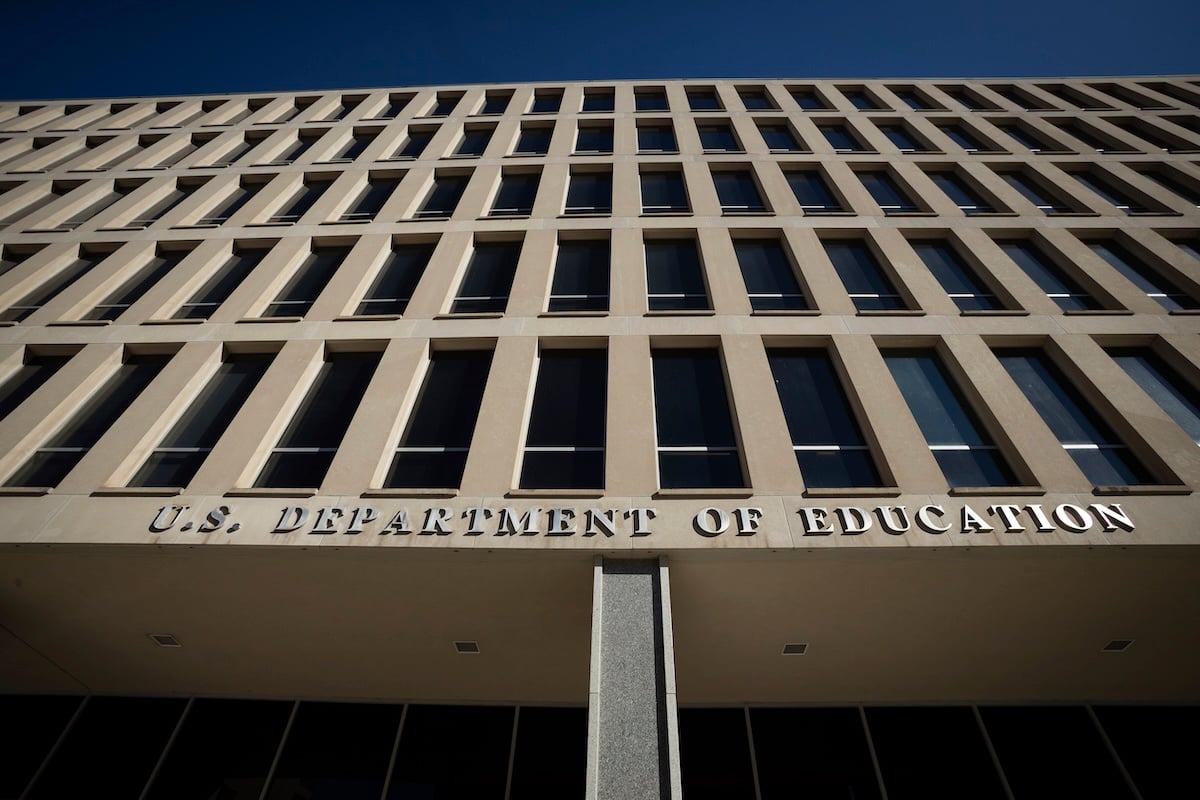
Three former U.S. Secretaries of Education and the union representing department staff filed a formal request last week asking the Education Department’s Office of Inspector General to investigate the cost and impact of the agency’s 2025 mass layoffs.
Arne Duncan (2009-2015), John B. King Jr. (2016-2017), and Miguel Cardona (2021-2025) signed the 12-page letter with Rachel Gittleman, president of AFGE Local 252, which represents more than 2,000 department employees.
The letter, addressed to Acting Inspector General Mark Priebe, covers three actions: the February 2025 firing of more than 70 probationary employees, the March 2025 reduction in force (RIF) notices sent to nearly 1,400 workers, and the October 2025 shutdown RIF aimed at another 465. It also asks the OIG to put a dollar figure on the reinstatements and rehiring that followed.
Would you like to save this?
Why It Matters
The Department of Education manages a $1.7 trillion federal student loan portfolio and the FAFSA, and the office that does that work took the largest hit.
Federal Student Aid dropped from 1,440 employees at the close of 2024 to 868 at the close of 2025, according to Office of Personnel Management workforce data cited in the letter. That loss of more than one-third of FSA staff overlapped with a repayment plan application backlog affecting hundreds of thousands of borrowers.
The signers argue taxpayers are now paying twice. According to documents the department gave the union, 114 job postings went up between September 2025 and May 2026, some covering as many as 10 vacancies each, with descriptions the letter calls nearly identical to the eliminated jobs.
FSA alone plans to hire 380 workers, while laid-off employees who applied were told they were unqualified for their old roles, the letter says.
The Five Questions
The letter asks the inspector general to answer five cost questions and publicly release itemized budgets, expenditures, and audits of staff time. Each one ties back to a function that touches federal student aid contractors and servicers or the staff who oversee them.
- Legal defense. The cost of defending the firings across 12 federal lawsuits, 11 national union grievances in arbitration, 76 individual grievances, and at least 70 Merit Systems Protection Board appeals, including any settlements.
- Running the RIF. Salary and benefits for 1,378 employees held on paid administrative leave from March 2025 until their August 2025 separation, plus severance and equipment retrieval. The letter cites a GAO report putting the tab for idled Office for Civil Rights staff alone at up to $38 million.
- Reinstatements. What it cost to bring back about a dozen FSA employees almost immediately after the March notices, dozens of probationary workers, and all 260 Office for Civil Rights employees starting in August 2025, per union sources.
- Rehiring and contractors. A full list of outside contracts signed to backfill eliminated positions, how much was spent, and how many new hires fill jobs substantially identical to the ones cut.
- Statutory duties. Overtime, comp time, new contract support, and reorganizations in four offices needed to keep legally required work going with fewer people.
How This Connects
The inspector general has already documented the staffing damage, which is why the letter’s authors want the next step to be a price tag. A June 22, 2026 OIG flash report found 1,579 departures from a 3,902-person workforce, a 40% cut that left 32 FSA suboffices with zero employees and eliminated loan servicer oversight functions entirely.
The letter says that report and the OIG’s FY 2026 management challenges report stop short of quantifying waste.
Congress is split on the broader breakup. Sen. Elizabeth Warren separately asked GAO to measure lost college oversight, and a Senate panel in July advanced a bipartisan bill blocking four office transfers to other agencies.
House Republicans moved the opposite direction with a package that shrinks the department’s responsibilities, and Treasury has already taken over student loan collections.
What’s Next
An inspector general decides independently whether to open a review, and the letter sets no deadline for Priebe to respond.
Watch for an OIG announcement, rulings in the pending RIF lawsuits, and floor action on the Senate and House bills. Borrowers dealing with slow processing in the meantime can track which federal student loan servicer holds their account and document every request in writing.
Editor: Colin Graves

Robert Farrington is the founder of The College Investor and is widely recognized as one of the nation’s leading voices on student loan debt and saving for college. He holds an MBA from UC San Diego Rady School of Management and has spent over 15 years researching, writing, and advising on student loans, 529 plans, financial aid programs, and saving and investing for young professionals.
Robert has been featured in the The New York Times, The Wall Street Journal, The Washington Post, NBC News, and Forbes, where he has been a regular personal finance contributor for over a decade. His work combines both professional expertise and personal experience – he successfully navigated his own student loan repayment journey and has helped thousands of readers do the same.
He is committed to making the intersection of personal finance and education transparent and accessible. You can learn more about Robert on the About Page or on his personal site RobertFarrington.com.