• Skip to primary navigation
  • Skip to main content
  • Skip to primary sidebar
  • Skip to footer

Navigating Money And Education

  • About
  • Podcasts
  • Social
  • Newsletter
  • Save For College
  • Student Loans
  • Investing
  • Banking
  • Taxes
  • Scholarships
  • Forum
  • Search
Home / News / Department Of Education Releases Rules For Cutting Part-Time Students’ Loan Limits

Department Of Education Releases Rules For Cutting Part-Time Students’ Loan Limits

Updated: August 10, 2026 By Robert Farrington | < 1 Min Read Leave a Comment

Many or all of the products featured here may be from our partners who compensate us. This doesn't influence our evaluations or reviews. Our opinions are our own. Investing information is for educational purposes only. Learn more here.Advertiser Disclosure

There are thousands of financial products and services out there, and we believe in helping you understand which is best for you, how it works, and will it actually help you achieve your financial goals. We're proud of our content and guidance, and the information we provide is objective, independent, and free.

But we do have to make money to pay our team and keep this website running! Our partners compensate us. TheCollegeInvestor.com has an advertising relationship with some or all of the offers included on this page, which may impact how, where, and in what order products and services may appear. The College Investor does not include all companies or offers available in the marketplace. And our partners can never pay us to guarantee favorable reviews (or even pay for a review of their product to begin with).

For more information and a complete list of our advertising partners, please check out our full Advertising Disclosure. TheCollegeInvestor.com strives to keep its information accurate and up to date. The information in our reviews could be different from what you find when visiting a financial institution, service provider or a specific product's website. All products and services are presented without warranty.

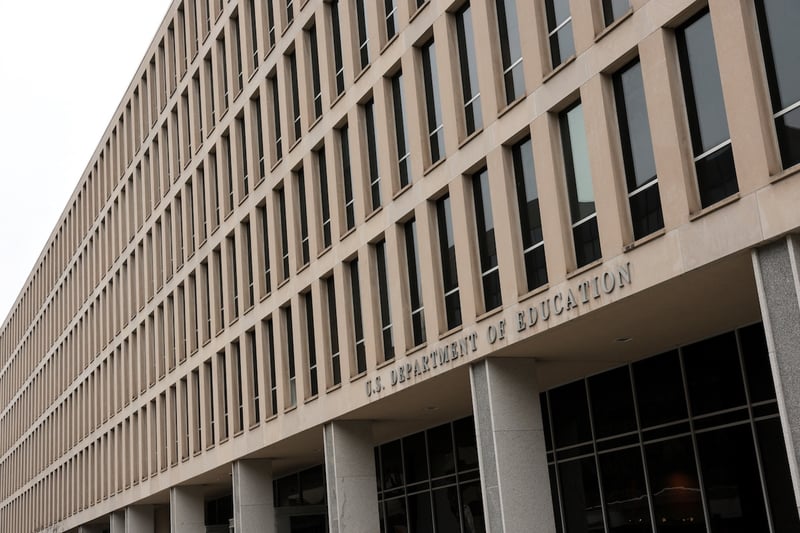
The U.S. Department of Education headquarters as U.S. President Donald Trump's administration is taking steps to dismantle the department, in Washington, D.C., U.S., November 20, 2025. REUTERS/Jonathan Ernst

The Department of Education released a 24-question FAQ this week explaining how colleges must reduce annual federal student loan limits for students enrolled less than full-time.

The document spells out the Schedule of Reductions (the math behind the cuts required by the One Big Beautiful Bill Act) and answers questions financial aid offices have been asking since ED published the final rule on May 1, 2026.

The reductions apply to any loan period that begins on or after July 1, 2026.

Would you like to save this?

We'll email this article to you, so you can come back to it later!

Why It Matters

Part-time students can no longer borrow the full annual loan amount, even at high-cost schools where they previously could. The Schedule of Reductions cuts a borrower's annual loan limit in direct proportion to enrollment intensity, rounded to the nearest whole percent.

The FAQ's one main example: a freshman enrolled in 12 credits against a 24-credit academic year gets 50% of the $5,500 limit, or $2,750.

That formula now applies to millions of borrowers as part of the changes that took effect July 1, 2026.

The Details

  • Who's covered: Every less-than-full-time borrower (undergraduate, graduate, and professional) including Grad PLUS borrowers who kept eligibility under the interim exception. Parent PLUS loans are exempt.
  • Grad PLUS order of operations: Schools reduce the Direct Unsubsidized Loan first, then calculate the Grad PLUS limit from the remaining cost of attendance, then reduce that amount under the schedule as well.
  • No double-prorating: Loans already prorated under existing rules (undergraduate programs with a remaining period shorter than an academic year) don't get a second reduction, since enrollment hours are already built into that calculation.
  • Borrower requests: A student who asks for less than the reduced limit gets the lower amount. A student who asks for more is capped at the reduced limit.
  • Systems: The Common Origination and Disbursement (COD) system now collects a disbursement-level Enrollment Intensity field, required for all new Direct Loan disbursements starting with the 2026-27 award year.

How This Connects

The Schedule of Reductions is one piece of OBBBA's borrowing overhaul, which also ends new Grad PLUS loans, sets a $257,500 lifetime borrowing cap that includes prior Grad PLUS balances, and caps graduate borrowing at levels that could nearly double private student loan volume.

The new graduate borrowing limits are also being challenged in court, with 23 states suing over the graduate loan caps. However, there's no similar challenge for the undergraduate limits.

ED says it will update the FAQ periodically, marking new answers as "NEW," and is posting resources on its OBBBA information page.

Watch for more worked examples (the document includes just one full calculation) and for how schools apply the rules to spring 2027 disbursements as the multi-year rollout of federal loan changes continues.

Don't Miss These Other Stories:

Under Secretary of Education Nicholas Kent Explains the July 1 Student Loan Changes

Under Secretary of Education Nicholas Kent Explains the July 1 Student Loan Changes

Community College Enrollment Climbs as 18-to-20-Year-Olds Lead

Community College Enrollment Climbs as 18-to-20-Year-Olds Lead

Student Loan Borrowing Limits For 2026 And 2027

Student Loan Borrowing Limits For 2026 And 2027

Editor: Colin Graves

Robert Farrington
Robert Farrington

Robert Farrington is the founder of The College Investor and is widely recognized as one of the nation’s leading voices on student loan debt and saving for college. He holds an MBA from UC San Diego Rady School of Management and has spent over 15 years researching, writing, and advising on student loans, 529 plans, financial aid programs, and saving and investing for young professionals.

Robert has been featured in the The New York Times, The Wall Street Journal, The Washington Post, NBC News, and Forbes, where he has been a regular personal finance contributor for over a decade. His work combines both professional expertise and personal experience – he successfully navigated his own student loan repayment journey and has helped thousands of readers do the same.

He is committed to making the intersection of personal finance and education transparent and accessible. You can learn more about Robert on the About Page or on his personal site RobertFarrington.com.

Please Share And Support

  • Facebook
  • X
  • LinkedIn
  • Reddit
  • Flipboard
  • Bluesky
  • Print
  • Email
Editorial Disclaimer: Opinions expressed here are author’s alone, not those of any bank, credit card issuer, airlines or hotel chain, or other advertiser and have not been reviewed, approved or otherwise endorsed by any of these entities.
Comment Policy: We invite readers to respond with questions or comments. Comments may be held for moderation and are subject to approval. Comments are solely the opinions of their authors'. The responses in the comments below are not provided or commissioned by any advertiser. Responses have not been reviewed, approved or otherwise endorsed by any company. It is not anyone's responsibility to ensure all posts and/or questions are answered.
Subscribe
Notify of
0 Comments
Oldest
Newest Most Voted

Primary Sidebar

Student Loan Resources
Add The College Investor as a Preferred Source on Google

Featured Lender Reviews

>  Credible (recommended)
>  Juno (recommended)
>  Ascent (recommended)
>  ELFI
>  College Ave
>  Earnest
>  Sallie Mae

Paying For College

  • Best Student Loans And Rates
  • Best Private Student Loans
  • Student Loan And Financial Aid Programs By State
  • Student Loans For Community College
  • Best International Student Loans
  • Best Student Loans For Graduate School
  • Best Student Loans For Your MBA
  • Best Student Loans For Medical School
  • Best No-Cosigner Private Student Loans Of 2026
  • How To Get A Student Loan With Bad Credit Or No Credit

Navigating Repayment

  • Best Student Loan Repayment Plans (Updated For OBBBA)
  • 5 Legal Ways To Lower Your Student Loan Payment
  • Can You Use A 529 Plan To Pay Student Loans?
  • Student Loan Repayment Assistance: Employers Offering SLRA

Student Loan Forgiveness

  • How To Get Student Loan Forgiveness [Full Program List]
  • Student Loan Forgiveness Programs By State
  • Public Service Loan Forgiveness
  • For-Profit College Student Loan Forgiveness List
  • Private Student Loan Forgiveness
  • Trade School Loan Forgiveness Programs

Student Loan Refinance

  • Best Student Loan Refinance Companies
  • Best Student Loan Refinancing Bonuses And Promotional Offers
  • Lenders That Offer Student Loan Refinancing Without A Degree
  • How To Refinance An International Student Loan
  • Best Medical School Student Loan Refinance Lenders

More On Student Loans

  • Student Loan Debt Statistics
  • Top Student Loan Scams (2026): Spot & Avoid Red Flags
  • Does The Government Profit Off Of Student Loans?
  • What Should You Do With Your Old FFELP Loans?
  • How To Get A Refund Of Your Federal Student Loan Payments

Footer

Who We Are

The College Investor® provides the latest news and analysis for saving and paying for college, student loan debt, personal finance, banking, and college admissions.

Connect

  • Social
  • Contact
  • Newsletter
  • Advertise
  • Press & Media
  • Helpful Calculators

About

  • About
  • In The News
  • Research
  • Editorial Guidelines
  • How We Make Money
  • Archives

Social

Copyright © 2026 · The College Investor® · 2514 Jamacha Rd, Ste 502, El Cajon, CA 92019

Privacy Policy ·Terms of Service · DO NOT Sell My Personal Information

wpDiscuz