Key Points
- The House Ways and Means Committee passed their budget bill, with several changes and updates to higher education.
- The bill extends some student loan tax breaks and eligible expands 529 plan expenses.
- Calls for the creation of a new "Trump Account" for childhood savings.
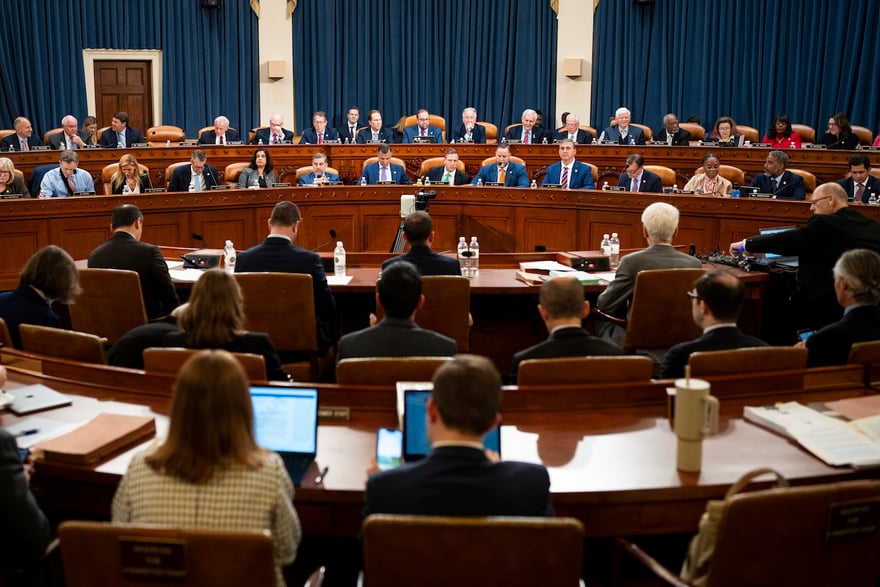
The House Ways and Means Committee's budget reconciliation bill, passed along party lines on May 13, 2025, largely preserves existing education tax benefits.
The legislation permanently extends key student loan tax breaks, expands qualified expenses for 529 plans and ABLE accounts, and increases the excise tax on college endowments and private foundations.
The bill also introduces "Trump Accounts" (previously called MAGA accounts) for childhood savings and a federal tax credit for contributions to K-12 scholarship-granting organizations, while limiting corporate charitable deductions.
On May 12, 2025, the House Committee on Ways and Means unveiled its proposals for tax law changes as part of the budget reconciliation process. This 389-page legislation (PDF File), which advanced from the committee on a 26-19 party-line vote following the May 13 markup, now proceeds to the House Budget Committee for consolidation with other budget reconciliation measures.
This legislation is distinct from the proposals concerning amendments to the Higher Education Act of 1965 reported by the House Committee on Education and the Workforce.
Would you like to save this?
Preservation Of Core Education Tax Credits
The proposed tax legislation largely retains existing education tax benefits, many of which had previously been identified as potential sources of budget savings.
The Student Loan Interest Deduction, the American Opportunity Tax Credit (AOTC), the Lifetime Learning Tax Credit (LLTC), and the tax-free status of qualified scholarships remain untouched.
This is not surprising, given the relatively modest budgetary impact of eliminating these tax breaks within the broader context of the budget reconciliation bill.
However, the legislation does introduce a requirement for taxpayers claiming the AOTC or LLTC to include the student's Social Security Number and the college's Employer Identification Number (EIN) on their tax return.
Permanent Extension Of Student Loan Tax Breaks
The legislation proposes making two significant student loan tax benefits permanent, extending them beyond their scheduled expiration date of December 31, 2025. These include the exclusion from income for student loan discharges due to death or disability and the exclusion from income for employer-paid student loan repayment assistance programs (LRAPs).
The permanent status of the employer LRAPs may encourage more employers to offer these benefits.
Expansion Of Qualified Expenses For 529 Plans
The bill expands the definition of qualified expenses for K-12 education under 529 plans beyond tuition (which remains capped at $10,000 per student per year).
The expanded list now includes:
- Curriculum and curricular materials
- Books or other instructional materials
- Online educational materials
- Tuition for certain tutoring or educational classes outside the home
- Fees for specific tests (e.g. college admissions tests and AP tests)
- Fees for dual enrollment in higher education
- Certain educational therapies for students with disabilities.
Qualified expenses for 529 plans for postsecondary education will be expanded to include workforce education programs, in addition to registered apprenticeship programs, reflecting a broader view of educational pathways after high school.
Changes To ABLE Accounts
The legislation introduces changes to Achieving a Better Life Experience (ABLE) accounts.
The annual contribution limit is tied to the annual gift-tax exclusion, using a 1996 base year instead of 1997, resulting in a slight increase in the contribution limit.
ABLE account beneficiaries who do not contribute to a 401(k), 403(b), or governmental 457 plan can continue to contribute up to their annual compensation or the poverty line for a family of one (whichever is less), and these contributions will now qualify for the Saver's Credit.
The tax benefits associated with ABLE accounts, including the rollover of funds from 529 plans, are made permanent.
Increase The College Endowment Tax
The legislation proposes increasing and tiering the 1.4% excise tax on the net investment income of large college endowments based on the endowment assets per student.
The tiered tax rates are shown in this table.
Tax Rate | Endowment Assets Per Student |
|---|---|
1.4% | $500,000 to $750,000 |
7% | $750,000 to $1,250,000 |
14% | $1,250,000 to $2,000,00 |
21% | $2,000,000 or more |
Only U.S. citizens and permanent residents are counted in the per-student calculation, potentially subjecting more colleges with significant international student enrollment to the tax.
Exemptions are included for religiously-affiliated institutions established after July 4, 1776, public colleges, and colleges with fewer than 500 students.
Eight colleges will fall into the 21% bracket, including Harvard, Yale, Princeton, Stanford, MIT and Caltech.
This increased tax is estimated to cost private colleges $6.7 billion over ten years and may potentially lead to reductions in student financial aid funding provided by colleges.
Related: Most Expensive Colleges In 2025
Increase The Excise Tax On Private Foundations
The tax on the net investment income of private foundations will also increase and become tiered based on the foundation's net asset value. This change could potentially affect the funding available for private scholarship programs sponsored by private foundations.
Tax Rate | Endowment Assets Per Student |
|---|---|
1.39% | Less Than $50 Million |
2.78% | $50 Million to $250 Million |
5% | $250 Million to $5 Billion |
10% | $5 Billion or more |
Creation Of MAGA Accounts (Trump Account)
The legislation establishes "Money Account for Growth and Advancement" (MAGA) accounts, designed as savings vehicles for children. The MAGA account was later renamed to the Trump account.
The MAGA accounts have the following requirements.
- MAGA accounts can be established for beneficiaries under age 8, with banks generally serving as trustees.
- Annual contributions are capped at $5,000 (adjusted annually for inflation), with exceptions for government agencies and certain tax-exempt organizations.
- Investments are limited to established indexes of U.S. securities.
- Distributions are restricted until the beneficiary reaches age 18. Distributions between ages 18 and 25 are limited to half of the value of the account at age 18.
- The earnings portion of distributions for qualified expenses is taxed as capital gains. The earnings portion of non-qualified distributions before age 30 is taxed as ordinary income and also subject to a 10% tax penalty.
- Qualified expenses include qualified higher education expenses, qualified post-secondary credentialing expenses, the beneficiary’s small business/farm expenses, and the beneficiary’s first-time home purchase.
- The MAGA account is treated as distributed to the beneficiary at age 31.
A pilot program will provide a $1,000 federal contribution to the MAGA accounts of qualifying children born between 2025 and 2028.
However, the tax benefit is minimal, especially when contrasted with 529 plans. The gains are taxed as capital gains if you use them for qualified expenses, no different than if you invested in stocks. Non-qualified distributors are treated as ordinary income (on the gains) plus a 10% tax penalty.
Other Tax Provisions
The legislation makes the increased lifetime gift and estate tax exclusions permanent, increasing them to $15 million in 2026.
It also creates a federal tax credit for contributions to qualified elementary and secondary school scholarship-granting organizations, equal to the contribution amount, capped at 10% of AGI or $5,000 (whichever is greater), and limited by a $5 billion annual volume cap for 2026-2029.
This credit is reduced by any state tax credit for similar contributions, and taxpayers cannot claim both this credit and a charitable deduction for the same contribution. Unused credits can be carried forward for up to five years.
The legislation establishes limits on corporate charitable contribution deductions, setting a 1% floor below which no deduction is allowed and capping deductions at 10% of taxable income, potentially impacting corporate scholarship programs.
Common Questions
Based on the proposals in the bill, here are the short tldr; versions:
Will student loan forgiveness remain tax-free?
Yes, but only in specific cases.
The bill makes permanent the tax-free treatment of federal student loan forgiveness due to death or permanent disability. It does not extend tax-free status to other types of forgiveness, such as income-driven repayment or Public Service Loan Forgiveness.
Are employer student loan repayment programs still tax-free?
Yes.
The bill permanently extends the tax-free treatment of employer-paid student loan assistance programs, often referred to as LRAPs. Employers can contribute up to $5,250 annually toward an employee’s student loans without the amount being taxed.
What changes are being made to 529 college savings plans?
529 plans will cover more expenses.
New rules for 529 plans expand eligible expenses for K–12 education (beyond tuition) to include items like curriculum, tutoring, online educational tools, testing fees, and dual enrollment. For college, eligible expenses now include workforce education programs.
What are MAGA accounts and who can open them?
They are new child savings accounts.
MAGA (Money Account for Growth and Advancement) accounts are tax-advantaged savings accounts for children under age 8. Contributions are limited, and distributions are restricted until age 18, with penalties for early, non-qualified withdrawals.
How does the bill affect college endowments?
It increases the tax on investment income.
The excise tax on large private college endowments will rise and be tiered by assets per student. Colleges with more international students may face higher taxes because only U.S. citizens and permanent residents count toward the per-student calculation.
Don't Miss These Other Stories:
Editor: Colin Graves Reviewed by: Robert Farrington

Mark Kantrowitz is an expert on student financial aid, scholarships, 529 plans, and student loans. He has been quoted in more than 10,000 newspaper and magazine articles about college admissions and financial aid. Mark has written for the New York Times, Wall Street Journal, Washington Post, Reuters, USA Today, MarketWatch, Money Magazine, Forbes, Newsweek, and Time. You can find his work on Student Aid Policy here.
Mark is the author of five bestselling books about scholarships and financial aid and holds seven patents. Mark serves on the editorial board of the Journal of Student Financial Aid, the editorial advisory board of Bottom Line/Personal, and is a member of the board of trustees of the Center for Excellence in Education. He previously served as a member of the board of directors of the National Scholarship Providers Association. Mark has two Bachelor’s degrees in mathematics and philosophy from the Massachusetts Institute of Technology (MIT) and a Master’s degree in computer science from Carnegie Mellon University (CMU).