Key Points
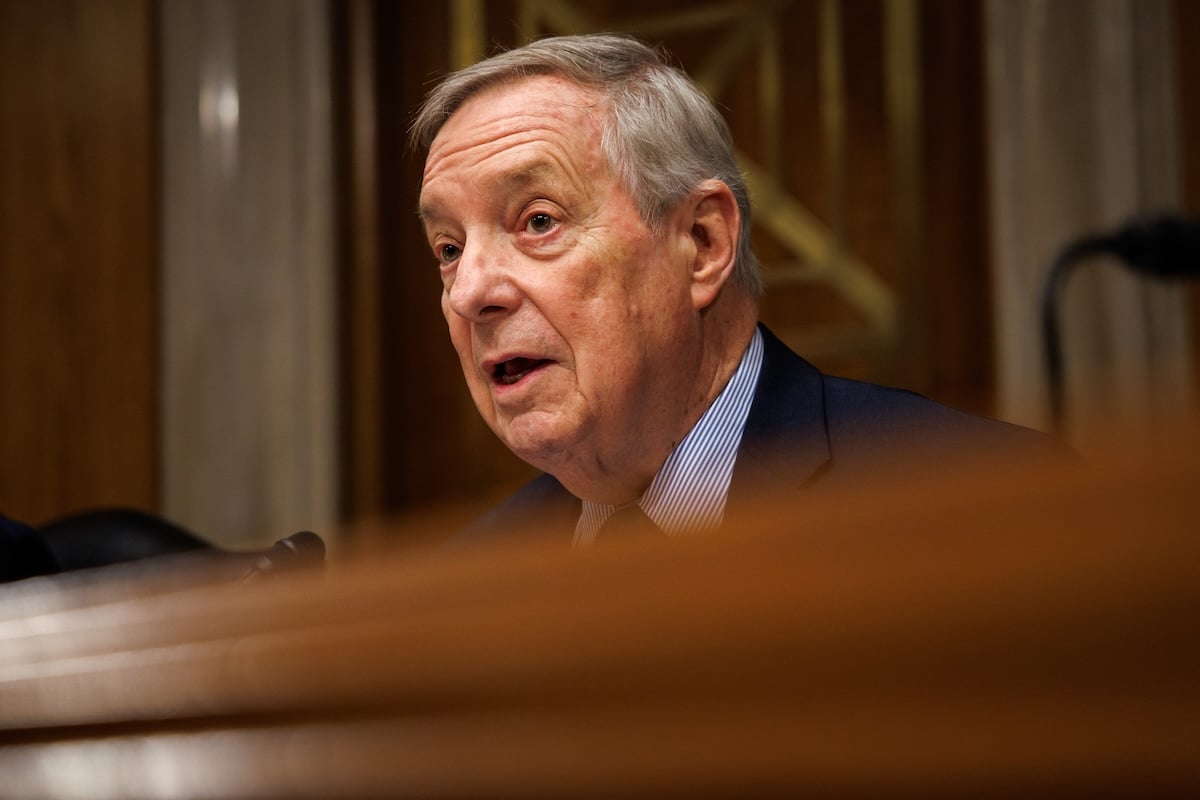
- Senator Dick Durbin and 11 Democratic cosponsors reintroduced the Student Loan Borrower Bill of Rights on November 18, 2026, with servicing rules for both federal and private student loans.
- The bill would standardize how payments are applied, clear default records for borrowers who fix a defaulted student loan, require private lenders to discharge student loans on death or disability, and add accountability processes for loan servicers.
- It arrives weeks before Durbin’s term ends, so the bill would need a new lead sponsor if it doesn’t pass by January 3, 2027.
Senator Dick Durbin (D-IL) reintroduced the Student Loan Borrower Bill of Rights on November 18, 2026, with 11 Democratic cosponsors. The bill would set one standard for how servicers treat borrowers across federal and private student loans, an area where borrowers filed nearly 20,000 student loan servicer complaints in the last 12 months.
The problems it targets show up again and again in our reporting. Borrowers deal with payments applied incorrectly, billing errors after a servicer transfer away from MOHELA, and forgiveness counts that drop without warning.
The bigger issue is recourse. Borrowers tell us they feel they have nowhere to turn when a servicer breaks the current rules, and only 1.8% of student loan complaints have ended with relief over the past year. The bill would create accountability processes for servicers and lenders that would give borrowers a clearer path to recourse when a servicer gets it wrong.
Would you like to save this?
What Is The Student Loan Borrower Bill Of Rights?
The Student Loan Borrower Bill of Rights is a proposed federal law that would set minimum servicing and disclosure standards for federal and private student loans. It would also let the Secretary of Education raise those standards for federal servicers through regulation.
The bill isn’t new. Durbin introduced it in 2015 and tried it again in 2019 and again in 2023. This time, Durbin’s office points to the One Big Beautiful Bill Act, which is phasing out the SAVE, PAYE and ICR repayment plans, as a reason the system has become harder to navigate.
What Would The Bill Change For Borrowers?
The bill would change how servicers handle payments, errors, defaults and disputes. It would force private student loans to have several discharge protections that federal student loans already carry.
The full bill text and number weren’t public at publication, so the details below come from the summary released by Durbin’s office.
| Provision | What It Would Do | Who It Helps Most |
|---|---|---|
| Servicer Accountability | Sets accountability processes to make sure servicers and lenders serve borrowers properly | Borrowers with unresolved servicer problems |
| Payment Allocation | Applies payments across multiple student loans in the way most beneficial to the borrower | Borrowers making extra payments |
| Servicer Errors | Requires timely resolution of servicer mistakes | Borrowers with billing or payment errors |
| Default Records | Removes a default from credit history once the borrower fixes the defaulted student loan | Borrowers leaving default |
| Repayment Specialists | Creates trained servicer teams to keep at-risk borrowers out of default without pushing forbearance | Borrowers falling behind |
| Court Access | Bans forced arbitration, class action limits and immunity defenses | Borrowers who want to sue a servicer |
| Death And Disability | Requires private student loans to be discharged on death or disability | Private student loan borrowers and cosigners |
| School Certification | Requires schools to confirm federal student loan eligibility is used first | Students considering private student loans |
| Payment Counter | Puts a forgiveness payment counter into law | Borrowers working toward forgiveness |
The default provision builds on a tool borrowers already have. Today, student loan rehabilitation removes a default from a credit report, while consolidation leaves the default record on your credit report. The bill would remove the default record when a borrower takes action to fix the defaulted student loan.
The private student loan rules stand out most. Federal student loans are discharged for borrowers who are totally and permanently disabled, but the CFPB says private lenders aren’t legally required to cancel student loans on death or disability. To be considered a qualified education loan, private lenders would now have to have those options.
How Much Could Payment Allocation Save?
The bill would require servicers to apply payments across multiple student loans in the way most beneficial to the borrower. For a borrower with several student loans, sending extra money to the highest-rate student loan first saves the most interest.
We ran the numbers on two $15,000 private student loans at 10% and 5% on 10-year terms. The borrower pays $200 extra each month. Sending that $200 to the 10% student loan first costs $5,914 in interest. Splitting it evenly costs $6,724, so a servicer’s allocation choice is worth about $810 to this borrower. That math is the core of the avalanche method for paying off debt.
| Payment Approach | Total Interest | Months To Payoff |
|---|---|---|
| Minimum Payments Only | $12,879 | 120 |
| Extra $200 Split Evenly | $6,724 | 66 |
| Extra $200 To Highest Rate First | $5,914 | 65 |
What Do Student Loan Complaints Show?
Complaint data shows student loan servicing standards are failing. Our student loan servicer complaint tracker counted 19,895 complaints to the CFPB in the 12 months ending August 2026.
Bad information about the student loan led all issues with 5,001 complaints, followed by payment handling at 3,192 and incorrect credit report status at 1,921. MOHELA drew 7,050 complaints, or 10.3 for every 10,000 borrowers. It answered 71% of them after the CFPB’s 15-day response window.
The CFPB’s own ombudsman logged a record of about 22,900 student loan complaints (PDF File) from July 2024 through June 2025.
Each of those categories lines up with a provision in the bill. The payment counter provision matters too, since PSLF payment counts dropped for some borrowers as the Department of Education corrected IDR account adjustment errors.
Can The Bill Pass Before Durbin Leaves?
The calendar works against it. All 12 sponsors are Democrats, and Republicans hold a 53-47 Senate majority in the current Congress. The last major student loan law, the One Big Beautiful Bill Act, passed in party-line votes through both chambers.
Any bill that doesn’t pass by January 3, 2027 has to be reintroduced in the new Congress. Durbin isn’t seeking reelection, and cosponsors Tina Smith and Jeanne Shaheen are retiring too. Democrats won control of the Senate in the November 3 midterms, which changes who sets committee agendas in 2027.
A new sponsor would need to reintroduce the bill next year.
What Should Borrowers Do While The Bill Waits?
Nothing changes for borrowers until a version of the bill becomes law, and your student loan repayment plan options stay the same in the meantime. You can still protect yourself today with the same habits the bill would require of servicers.
- Keep your own records. Save statements, payment confirmations and call notes, especially before a servicer transfer.
- Push back on forbearance as the default answer. Student loan forbearance lets interest keep building, so ask about repayment plan options first.
- Read your private student loan contract. Check whether it discharges the balance on death or disability, since a cosigner could owe it if it doesn’t.
- Escalate unresolved errors. File with the FSA Feedback Center or the CFPB, using the steps in our complaint tracker.
Editor: Colin Graves

Robert Farrington is the founder of The College Investor and is widely recognized as one of the nation’s leading voices on student loan debt and saving for college. He holds an MBA from UC San Diego Rady School of Management and has spent over 15 years researching, writing, and advising on student loans, 529 plans, financial aid programs, and saving and investing for young professionals.
Robert has been featured in the The New York Times, The Wall Street Journal, The Washington Post, NBC News, and Forbes, where he has been a regular personal finance contributor for over a decade. His work combines both professional expertise and personal experience – he successfully navigated his own student loan repayment journey and has helped thousands of readers do the same.
He is committed to making the intersection of personal finance and education transparent and accessible. You can learn more about Robert on the About Page or on his personal site RobertFarrington.com.