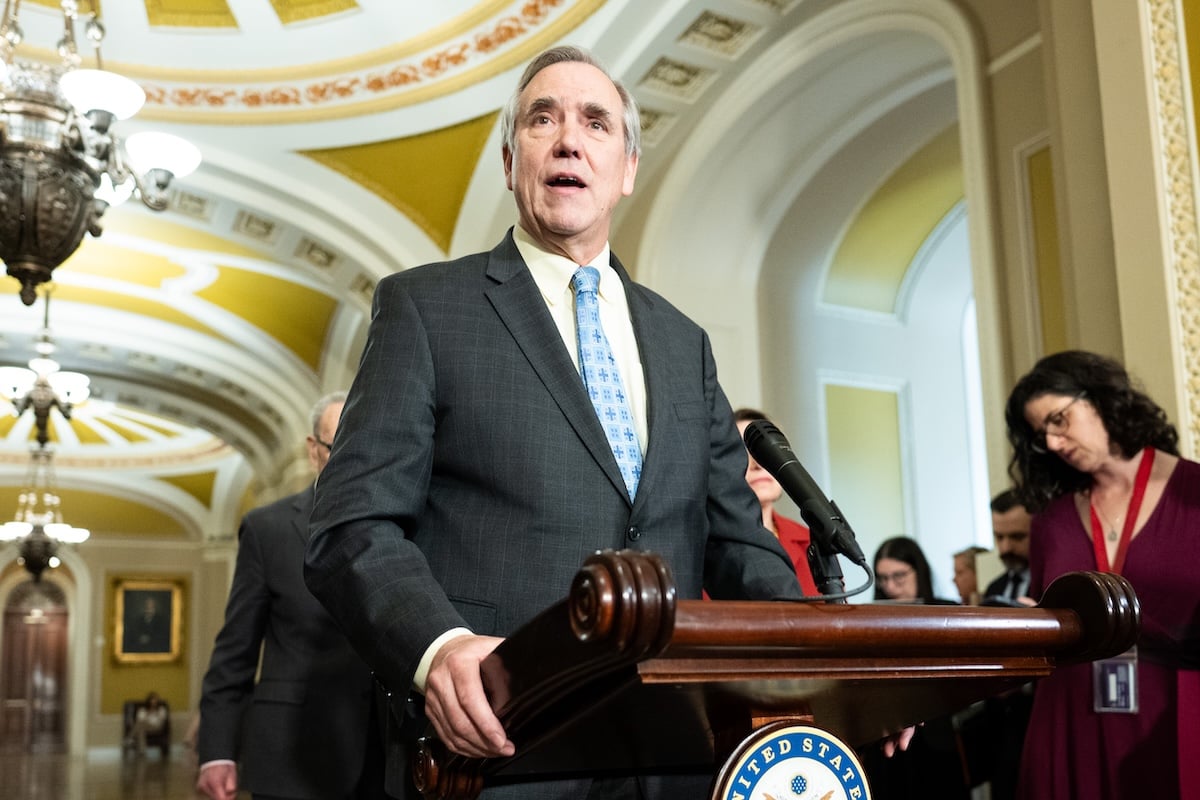
Sen. Jeff Merkley (D-OR) and Rep. Raja Krishnamoorthi (D-IL) introduced companion bills on last month that would block federal student aid from programs whose graduates cannot qualify for the jobs those programs advertise. S. 5021 went to the Senate HELP Committee with Sens. Dick Durbin (D-IL) and Richard Blumenthal (D-CT) cosponsoring, and H.R. 9748 went to House Education and Workforce with Rep. Danny Davis (D-IL) signed on. Both texts are identical, and both are titled the Protecting Students from Worthless Degrees Act.
This bill seeks to solve the same problem that federal borrower defense to repayment loan forgiveness tries to fix after the damage is done.
The bill makes federal aid conditional on two things a school now only has to promise. A program preparing students for a licensed occupation would have to qualify its graduates for licensure in the state where they live, and the school itself would have to arrange the clinical placement or apprenticeship that license requires.
Krishnamoorthi said in the announcement that students “should never spend years earning a degree, take on tens of thousands of dollars in debt, and then discover they were never actually qualified for the career they were promised.” That failure shows up most in health care and counseling, where which health science master’s degrees pay off turns on whether the credential clears a state licensing board. TICAS, Third Way, New America, EdTrust, AFT, and The Century Foundation all endorsed the bill.
Would you like to save this?
Why It Matters
Accountability rules for financial and and career programs have changed with every administration because they live in regulation, not statute. The goal with these bill is to codify the requirements into law, to make them less likely to change from administration to administration.
The licensure requirement is the piece that students should care about the most. A school that enrolls nursing or counseling students without securing their clinical placements would lose access to federal student aid programs like student loans. This would make false promises a financial problem for the college. Nothing in the current financial aid overhaul goes that far.
The Details
- Two thresholds, both must fail. A cohort fails only when its discretionary debt-to-earnings rate hits 20% or higher and its annual rate hits 8% or higher. Two failures in any three consecutive award years end Title IV eligibility for that program.
- Amortization varies by credential. Certificates and associate degrees amortize over 10 years, bachelor’s and master’s over 15, doctoral and first-professional over 20, and median debt counts private student loans, not just federal.
- Medicine and clinical fields get a residency adjustment. Programs in medicine, osteopathy, dentistry, clinical psychology, and three counseling and social work fields can be measured seven to 10 years after completion when the Secretary identifies outlier earnings growth, rather than at year four.
- Warnings come before the cutoff. The Education Department would publish program-level rates each year and make schools warn current and prospective students when a program fails or sits one year from failing.
- Rebranding gets blocked. A failed program cannot come back for three years, and neither can a “substantially similar” replacement with the school’s most senior executive signing a certification to that effect.
- Certificates face the high school earnings test. The earnings premium (does a typical graduate out-earn a typical high school graduate) would extend to undergraduate certificate and diploma programs.
- Online programs would need approval in every state where students live. Section 5 conditions eligibility on legal authorization in each state a school enrolls from, and reciprocity agreements would count only where the student’s state runs a complaint process it can enforce and make public.
- The tipped-profession delay dies. Section 4(e) would void the carve-out in the July 2026 STATS and Earnings Accountability final rule that pauses judgment on cosmetology, barbering, and massage therapy programs, effective July 1, 2027.
How This Connects
Changes of this scale would have a massive ripple effect through certain career programs, and the data is still thin. And while this bill is forward looking, it doesn’t help those students who already enrolled or recently graduated and may be struggling.
The department reported this year that nearly 1,800 colleges had not submitted required earnings data — the data every debt-to-earnings calculation depends on. Add the graduate school loan limits already capping what students can borrow for these credentials, and the practical move for a family is unchanged: run a college ROI calculation before signing anything.
What’s Next
Both bills sit in committee under Republican majorities that have shown no appetite to make more changes. What is worth watching is the Education Department’s first earnings calculation in early 2027, which produces the program-level failure list under the existing rules. That list will show how much of this bill’s work the broader financial aid overhaul already does, and where the licensure gap Merkley and Krishnamoorthi are focused on needs more attention.
Editor: Colin Graves

Robert Farrington is the founder of The College Investor and is widely recognized as one of the nation’s leading voices on student loan debt and saving for college. He holds an MBA from UC San Diego Rady School of Management and has spent over 15 years researching, writing, and advising on student loans, 529 plans, financial aid programs, and saving and investing for young professionals.
Robert has been featured in the The New York Times, The Wall Street Journal, The Washington Post, NBC News, and Forbes, where he has been a regular personal finance contributor for over a decade. His work combines both professional expertise and personal experience – he successfully navigated his own student loan repayment journey and has helped thousands of readers do the same.
He is committed to making the intersection of personal finance and education transparent and accessible. You can learn more about Robert on the About Page or on his personal site RobertFarrington.com.