• Skip to primary navigation
  • Skip to main content
  • Skip to primary sidebar
  • Skip to footer

Navigating Money And Education

  • About
  • Podcasts
  • Social
  • Newsletter
  • Save For College
  • Student Loans
  • Investing
  • Earn More Money
  • Banking
  • Taxes
  • Forum
  • Search
Home / News / Education Department’s New Rules May Block PAYE Enrollment Before July 1 Deadline

Education Department’s New Rules May Block PAYE Enrollment Before July 1 Deadline

Updated: May 31, 2026 By Robert Farrington | < 1 Min Read 8 Comments

Many or all of the products featured here may be from our partners who compensate us. This doesn't influence our evaluations or reviews. Our opinions are our own. Investing information is for educational purposes only. Learn more here.Advertiser Disclosure

There are thousands of financial products and services out there, and we believe in helping you understand which is best for you, how it works, and will it actually help you achieve your financial goals. We're proud of our content and guidance, and the information we provide is objective, independent, and free.

But we do have to make money to pay our team and keep this website running! Our partners compensate us. TheCollegeInvestor.com has an advertising relationship with some or all of the offers included on this page, which may impact how, where, and in what order products and services may appear. The College Investor does not include all companies or offers available in the marketplace. And our partners can never pay us to guarantee favorable reviews (or even pay for a review of their product to begin with).

For more information and a complete list of our advertising partners, please check out our full Advertising Disclosure. TheCollegeInvestor.com strives to keep its information accurate and up to date. The information in our reviews could be different from what you find when visiting a financial institution, service provider or a specific product's website. All products and services are presented without warranty.

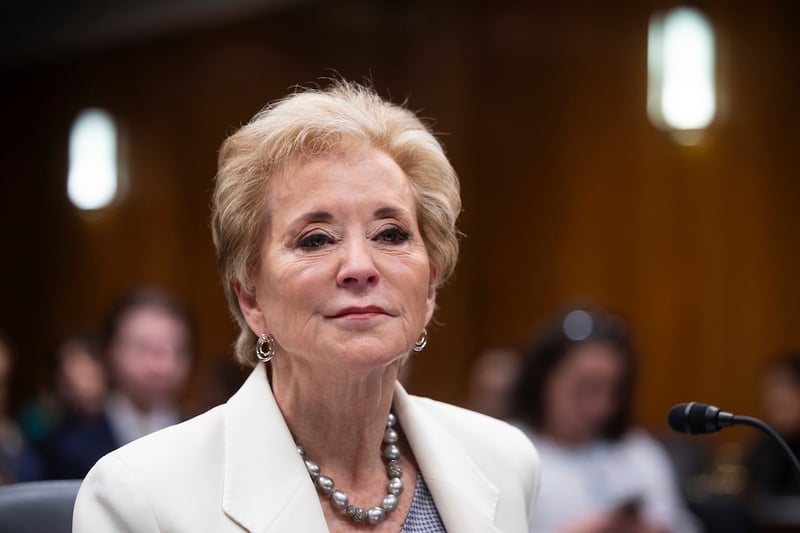
Education Secretary Linda McMahon testifies during an appropriations hearing on Capitol Hill June 3, 2025. (Francis Chung/POLITICO via AP Images)

Editor's Note: The Department of Education has released guidance in a blog post that PAYE enrollment is open until July 1, 2027. While this doesn't explicitly address the discrepancy between the rules and guidance, borrowers should take note of this deadline being communicated.

Federal student loan borrowers wanting to enroll in the Pay As You Earn (PAYE) plan as their next move after SAVE may have a much narrower window to enroll than expected.

New regulations released last week (PDF File) and set to take effect on July 1, 2026, impose conditions on PAYE enrollment that could lock out a large share of borrowers — including many who are about to be pushed off the SAVE plan this summer. PAYE was already scheduled to be phased out entirely by July 2028, but borrowers not enrolled in the plan may have a limited to to sign up.

Why It Matters: With SAVE terminating this summer, PAYE could offer the lowest monthly payment among the remaining income-driven options for borrowers who qualify - especially borrowers who first took out loans between 2011 and 2014.

Using a 10% discretionary income formula and 20-year forgiveness timeline, PAYE typically beats both old IBR and ICR. 

The new Repayment Assistance Plan (RAP), launching July 1, 2026, requires 30 years in repayment before forgiveness — the longest timeline of any income-driven option. However, RAP will likely be better than old IBR for many borrowers.

What The New Rules Say: The regulations published in the Federal Register state that through June 30, 2028, a borrower may repay under PAYE only if they:

  • Have loans eligible for the plan
  • Are a "new borrower"
  • Elect to have their aggregate monthly payment recalculated at entry
  • Were repaying under PAYE on July 1, 2024

The rules also state: "A borrower who was repaying under the PAYE plan on or after July 1, 2024, and changes to a different repayment plan… may not re-enroll in the PAYE plan."

As such, the language appears to block two groups of people: borrowers who were eligible for or previously enrolled in PAYE but switched to another plan (like SAVE) before July 1, 2024, and borrowers who leave PAYE for another plan and later try to return.

The bottom line is that borrowers not currently in PAYE before July 1, 2026 may not be able to enroll in the plan.

Conflicting Guidance: The regulatory text appears to contradict the Education Department's own guidance on StudentAid, which currently states there will be "If your loans are all first disbursed before July 1, 2026, you’ll have access to the following repayment plans, if you’re eligible:"

PAYE Eligibility Screenshot StudentAid

The restrictions also are not expressly written into the One Big Beautiful Bill Act, the underlying law the regulations are intended to implement.

Why didn't ED remove or directly address this in the Final Rule? Best guess: timing and litigation posture. The March 10, 2026 vacatur of the SAVE rules came roughly 7 weeks before the May 1 publication. The Final Rule was already drafted around an OBBBA framework that assumed the old July 1, 2024 cutoff. ED chose to acknowledge Missouri v. Trump in the preamble but defer specific implementation guidance.

What Borrowers Should Do Now: Borrowers already in PAYE should think twice before switching out. Once they leave, the new rules suggest they cannot return.

Eligible borrowers not yet enrolled (especially those still in SAVE forbearance) may want to apply for PAYE before July 1, 2026, when the new rules take effect. Online applications at StudentAid.gov with IRS data linkage typically process fastest - 7 to 10 business days.

How This Connects: The College Investor has been tracking the end of the SAVE forbearance closely. Roughly 7 million borrowers in SAVE forbearance will be moved off the plan starting July 1, with a 90-day window to select a replacement before being auto-enrolled in the Standard plan. For many of those borrowers, PAYE was a good alternative.

PAYE has always carried a narrower eligibility test than other income-driven plans, requiring no outstanding federal loans as of October 1, 2007, and a new Direct Loan disbursement on or after October 1, 2011, along with requiring a partial financial hardship. For borrowers with loans after 2014, IBR repayment is generally the same.

Don't Miss These Other Stories:

SAVE Plan Forbearance Ending: What To Know

SAVE Plan Forbearance Ending: What To Know

Strategic Default On Student Loans: It Always Backfires

Strategic Default On Student Loans: It Always Backfires

How To Qualify For Public Service Loan Forgiveness [Guide]

How To Qualify For Public Service Loan Forgiveness [Guide]

Editor: Colin Graves

Robert Farrington
Robert Farrington

Robert Farrington is the founder of The College Investor and is widely recognized as one of the nation’s leading voices on student loan debt and saving for college. He holds an MBA from UC San Diego Rady School of Management and has spent over 15 years researching, writing, and advising on student loans, 529 plans, financial aid programs, and saving and investing for young professionals.

Robert has been featured in the The New York Times, The Wall Street Journal, The Washington Post, NBC News, and Forbes, where he has been a regular personal finance contributor for over a decade. His work combines both professional expertise and personal experience – he successfully navigated his own student loan repayment journey and has helped thousands of readers do the same.

He is committed to making the intersection of personal finance and education transparent and accessible. You can learn more about Robert on the About Page or on his personal site RobertFarrington.com.

Please Share And Support

  • Facebook
  • X
  • LinkedIn
  • Reddit
  • Flipboard
  • Bluesky
  • Print
  • Email
Editorial Disclaimer: Opinions expressed here are author’s alone, not those of any bank, credit card issuer, airlines or hotel chain, or other advertiser and have not been reviewed, approved or otherwise endorsed by any of these entities.
Comment Policy: We invite readers to respond with questions or comments. Comments may be held for moderation and are subject to approval. Comments are solely the opinions of their authors'. The responses in the comments below are not provided or commissioned by any advertiser. Responses have not been reviewed, approved or otherwise endorsed by any company. It is not anyone's responsibility to ensure all posts and/or questions are answered.
Subscribe
Notify of
8 Comments
Oldest
Newest Most Voted

Primary Sidebar

Student Loan Resources
Add The College Investor as a Preferred Source on Google

Featured Lender Reviews

>  Credible (recommended)
>  Juno (recommended)
>  Ascent (recommended)
>  ELFI
>  College Ave
>  Earnest
>  Sallie Mae

Paying For College

  • Best Student Loans And Rates
  • Best Private Student Loans
  • Student Loan And Financial Aid Programs By State
  • Student Loans For Community College
  • Best International Student Loans
  • Best Student Loans For Graduate School
  • Best Student Loans For Your MBA
  • Best Student Loans For Medical School
  • Best No-Cosigner Private Student Loans Of 2026
  • How To Get A Student Loan With Bad Credit Or No Credit

Navigating Repayment

  • Best Student Loan Repayment Plans (Updated For OBBBA)
  • 5 Legal Ways To Lower Your Student Loan Payment
  • Can You Use A 529 Plan To Pay Student Loans?
  • Student Loan Repayment Assistance: Employers Offering SLRA

Student Loan Forgiveness

  • How To Get Student Loan Forgiveness [Full Program List]
  • Student Loan Forgiveness Programs By State
  • Public Service Loan Forgiveness
  • For-Profit College Student Loan Forgiveness List
  • Private Student Loan Forgiveness
  • Trade School Loan Forgiveness Programs

Student Loan Refinance

  • Best Student Loan Refinance Companies
  • Best Student Loan Refinancing Bonuses And Promotional Offers
  • Lenders That Offer Student Loan Refinancing Without A Degree
  • How To Refinance An International Student Loan
  • Best Medical School Student Loan Refinance Lenders

More On Student Loans

  • Student Loan Debt Statistics
  • Top Student Loan Scams (2026): Spot & Avoid Red Flags
  • Does The Government Profit Off Of Student Loans?
  • What Should You Do With Your Old FFELP Loans?
  • How To Get A Refund Of Your Federal Student Loan Payments

Footer

Who We Are

The College Investor® provides the latest news and analysis for saving and paying for college, student loan debt, personal finance, banking, and college admissions.

Connect

  • Social
  • Contact
  • Newsletter
  • Advertise
  • Press & Media
  • Helpful Calculators

About

  • About
  • In The News
  • Research
  • Editorial Guidelines
  • How We Make Money
  • Archives

Social

Copyright © 2026 · The College Investor® · 2514 Jamacha Rd, Ste 502, El Cajon, CA 92019

Privacy Policy ·Terms of Service · DO NOT Sell My Personal Information

wpDiscuz