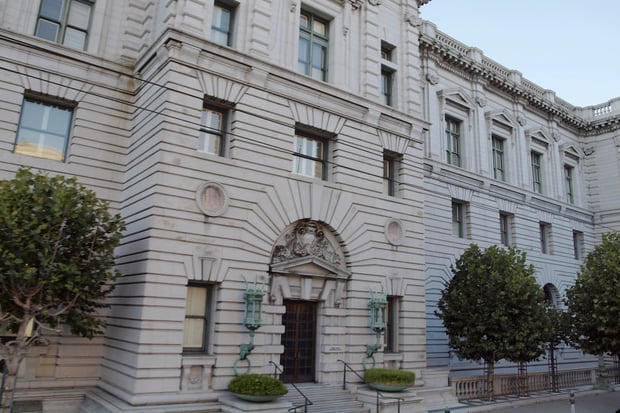
Exterior view of the United States Court of Appeals, Ninth Circuit
Key Points
- The Ninth Circuit Court of Appeals heard arguments today on the Education Department’s motion to stop the Sweet v. McMahon borrower defense settlement.
- Judge Wardlaw signaled impatience with the government’s delays, stating: “The time for negotiating is over. You missed your deadline.”
- More than 200,000 student loan borrowers are awaiting loan forgiveness as a result of this litigation and should receive a notification by March 30.
A federal appeals court heard arguments on Friday over whether the Education Department can further delay a court-approved settlement that promises loan discharges, payment refunds, and credit report corrections to more than 200,000 student loan borrowers who say they were defrauded by their colleges.
On Wednesday, March 25, 2026, the court denied the emergency stay - meaning the lower court ruling stands as of now.
The case, Sweet v. McMahon, has been working through the courts since 2019 (as a result, the case has changed names a few times: Sweet v. DeVos and Sweet v. Cardona). The settlement, valued at up to $12 billion, set firm deadlines for the Department to process borrower defense to repayment applications. The Department has missed those deadlines and asked for extensions multiple times. So far, those requests have been denied.
During Friday’s hearing before the Ninth Circuit Court of Appeals, Judge Kim McLane Wardlaw offered a blunt assessment: “The time for negotiating is over. You missed your deadline.”
On March 25, 2026, the Ninth Circuit court denied an emergency stay (PDF File) on the appeal, and set a timeline to hear the merits of the case. However, as a result of not stopping the lower court verdict, Exhibit C post-class applicants who did not receive a decision by the 1/28/26 deadline must receive notice of their eligibility for full settlement relief by March 30.
Editor's Note: Updated to reflect the Ninth Circuit denying the request for emergency stay.

Screenshot from the court hearing where the Judge Wardlaw rebukes the government's attorney.
Would you like to save this?
What Is Sweet v. McMahon?
Sweet v. McMahon (many times still referred to as Sweet v. Cardona) is a class-action lawsuit filed during the first Trump administration. It accused the Education Department of delaying decisions on borrower defense to repayment applications — a federal program designed to provide debt relief to students defrauded by their schools.
The College Investor team filed a FOIA Request in 2023, and at that time, 59% of all borrower defense claims were still pending.
Under the Biden administration, the Department struck a settlement that established deadlines for processing applications and promised either timely decisions or automatic relief to three groups of borrowers. A central piece of the settlement is Exhibit C, a list of 151 schools that the Department identified as having strong indicators of substantial misconduct. Borrowers who attended those schools and filed applications during the class period were promised expedited treatment.
Full settlement relief includes forgiveness of the borrower’s federal student loan balance, refunds of past payments, and correction or removal of adverse credit reporting.
This relief is a contractual obligation under the court-approved settlement.
Loan Forgiveness Claims Delayed
The current appeal is the latest in a series of efforts by the Education Department to avoid meeting its settlement obligations. Here is how the timeline has unfolded:
Late 2025: The Department asked U.S. District Judge William Alsup for an 18-month extension to process borrower defense claims. Under Secretary of Education Nicholas Kent argued the settlement “imposes a timeline that would require the Department to automatically cancel up to $12 billion in student loans by January 2026 without proper vetting.” At the time, the Department reported it was adjudicating about 1,500 applications per month, with roughly 193,000 applications still lacking decisions.
December 11, 2025: Judge Alsup ruled that applications involving Exhibit C schools must be adjudicated by the original deadline of January 28, 2026, or be automatically approved. He called the 18-month request “unacceptable.”
January 28, 2026: The Department missed the court-ordered deadline, triggering the settlement’s automatic relief provision for Exhibit C post-class borrowers who did not receive decisions.
February 24, 2026: The Department filed a notice of appeal (PDF File) and on February 27, filed a motion to stay in the Ninth Circuit.
March 20, 2026: The Ninth Circuit heard oral arguments on the Department’s motion.
March 25, 2026: The Ninth Circuit denied the emergency request to stay the lower court orders. This means that an appeals hearing will still happen, but borrowers expecting forgiveness notifications by March 30 should receive them.
What This Hearing Signals For Borrowers
Judge Wardlaw’s statement that “the time for negotiating is over” is a strong signal from the appellate bench. While the Ninth Circuit has not yet issued a ruling, the remark suggests limited patience for the Department’s ongoing attempts to delay.
It's important to remember that filing an appeal does not automatically pause the lower court’s orders. Unless the Ninth Circuit separately issues a stay, automatic discharges must proceed under the settlement terms.
You can watch the hearing here:
What This Means For Student Loan Borrowers Awaiting Loan Forgiveness
If you filed a borrower defense application and attended a school on the Exhibit C list, your situation depends on whether you received a decision by January 28, 2026.
Exhibit C post-class applicants who did not receive a decision by January 28, 2026 are entitled to full settlement relief. The Education Department must send you a notice of eligibility by March 30, 2026. Your loan forgiveness and other eligible relief should be delivered within one year of receiving that notice.
Post-class applicants who did not attend an Exhibit C school are owed a decision from the Department by April 15, 2026.
Meanwhile, borrowers need to continue to watch the outcome of this case and see how the court will rule.
FAQs
What is Sweet v. McMahon?
Sweet v. McMahon was a court case brought by borrowers who filed borrower defense applications that were not being processed timely. The result is that the Department is finally working through the forgiveness related to these applications.
What does the Ninth Circuit's denial of the emergency stay mean for borrowers awaiting loan forgiveness?
This means that Exhibit Class-C applications will receive their notice that loan forgiveness will happen within one year of March 31, 2026.
What is the timeline of the Education Department's delays in processing borrower defense applications?
Generally, the processing of borrower defense applications is relatively slow, with some borrowers waiting almost 5 years.
What should borrowers who attended an Exhibit C school do next?
Borrowers who attended an Exhibit C school and submitted an application before the deadline should receive notice of loan forgiveness.
What is the borrower defense to repayment program?
The borrower defense to repayment program allows borrowers who were defrauded by their college to receive loan forgiveness.
Don't Miss These Other Stories:
Editor: Colin Graves

Robert Farrington is the founder of The College Investor and is widely recognized as one of the nation’s leading voices on student loan debt and saving for college. He holds an MBA from UC San Diego Rady School of Management and has spent over 15 years researching, writing, and advising on student loans, 529 plans, financial aid programs, and saving and investing for young professionals.
Robert has been featured in the The New York Times, The Wall Street Journal, The Washington Post, NBC News, and Forbes, where he has been a regular personal finance contributor for over a decade. His work combines both professional expertise and personal experience – he successfully navigated his own student loan repayment journey and has helped thousands of readers do the same.
He is committed to making the intersection of personal finance and education transparent and accessible. You can learn more about Robert on the About Page or on his personal site RobertFarrington.com.