Key Points
- FAFSA verification is a routine federal review process. Being selected does not mean you made a mistake.
- Colleges must confirm certain FAFSA information before releasing federal aid. That often requires tax records, income documentation, or identity confirmation.
- Failing to complete verification can delay (or eliminate) your financial aid eligibility.
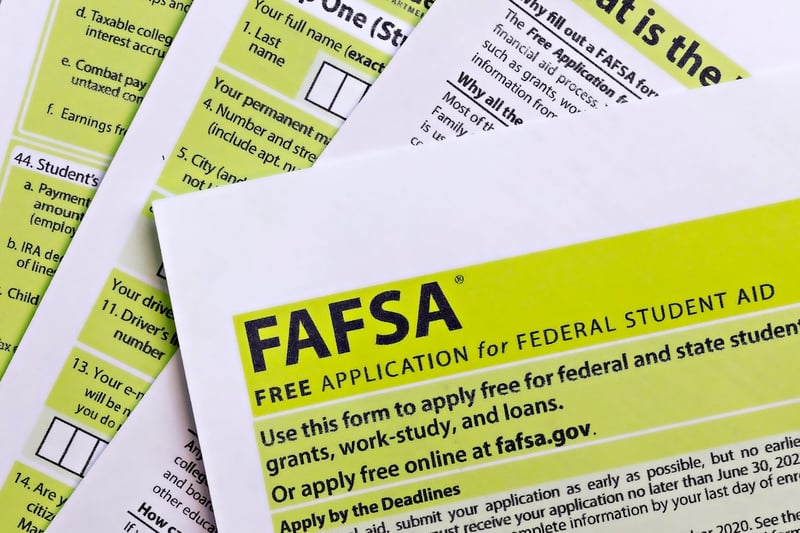
Each year, millions of students complete the Free Application for Federal Student Aid, better known as the FAFSA. For many, the process ends with a financial aid offer. For others, it pauses unexpectedly with a request for “verification.”
Verification can feel unsettling. It should not. This is NOT like an IRS audit and it doesn't mean you did anything wrong. The Department of Education requires that a certain number of applications are verified each year. If you are appealing your financial aid award, it's required the school verifies your information. Sometimes the college may want to verify your information to avoid financial aid fraud.
Below is what FAFSA verification means, what schools expect from families, and what happens if you do not respond.
Would you like to save this?
What Is FAFSA Verification?
U.S. Department of Education oversees the FAFSA and requires colleges to confirm certain information reported by applicants. This confirmation process is called verification.
Each year, a portion of FAFSA filers are selected. According to federal data in recent years, roughly 30% of applicants are flagged for some form of verification, though the percentage can vary depending on federal policy changes.
Selection may be random. In other cases, it is triggered by:
- Inconsistent income data
- Missing information
- Household size discrepancies
- Unusual tax situations
- Conflicts between reported income and IRS records
If selected, the student’s FAFSA Submission Summary will indicate that additional information is required. Colleges listed on the FAFSA will then contact the student directly with next steps or the family can follow the steps on StudentAid.gov.

Verification is not optional. Federal regulations require colleges to resolve discrepancies before disbursing federal student aid.
Why Does The Government Verify Financial Aid Information?
Federal student aid programs distribute tens of billions of dollars annually in Pell Grants, work-study funds, and student loans. Verification exists to ensure:
- Aid is distributed correctly
- Reported income and family data are accurate
- Tax information matches IRS records
- Students meet eligibility requirements
- Stop financial aid fraud and "ghost students"
The process also protects families. If an error underestimated your eligibility, verification can sometimes result in more aid, not less.
How Families Are Notified Of FAFSA Verification
Students learn about verification in two main ways:
- A notice on the FAFSA Submission Summary.
- Direct communication from the college’s financial aid office.
Each college handles its own verification process. If a student applied to five schools, they may need to complete verification five separate times. Requirements and submission portals can vary.
Colleges often request documentation through online portals. Some institutions use the Institutional Documentation Service (IDOC) connected to the CSS Profile for private institutional aid.
Families should always be checking:
- Email accounts
- Financial aid portals
- Physical mail
Delays in responding can slow down financial aid offers.
What Documents Are Required?
The documents requested depend on what is being verified. In many cases, income information is confirmed automatically through the IRS Direct Data Exchange (DDX), which securely transfers tax data into the FAFSA.
If tax information was transferred directly and remains unchanged, additional income verification may not be required.
When documentation is required, families may need to provide:
Income Documentation for Tax Filers
- IRS tax transcript
- Signed copy of the federal tax return (Form 1040 and schedules)
- W-2 forms
- 1099 forms
- Statements confirming IRA or pension rollovers
Special situations (such as divorce after filing a joint return or filing extensions) require additional signed statements and documentation.
For Non-Tax Filers
- Signed statement confirming non-filing status
- Statement listing income sources and amounts
- W-2 forms
Identity or Educational Purpose
Students may be asked to submit:
- Government-issued photo ID
- A signed Statement of Educational Purpose
Family Size Confirmation
If household size changed, colleges may request a signed statement listing family members and relationships.
What Are The Potential Outcomes Of FAFSA Verification?
Once documents are submitted, the financial aid office compares them with FAFSA data.
There are three possible outcomes:
1. No Change
This is the most common outcome. If documentation matches FAFSA information, the Student Aid Index (SAI) remains the same. Aid eligibility does not change.
2. Increased Student Aid Index (SAI)
If documentation shows higher income or fewer household members than originally reported, the SAI may increase. A higher SAI signals greater ability to pay, potentially reducing need-based aid such as Pell Grants.
3. Decreased Student Aid Index (SAI)
If verification shows lower income or higher household size, the SAI may decrease. A lower SAI can increase eligibility for need-based federal and institutional aid.
Colleges must send an updated financial aid offer if changes occur.
What Happens If You Don't Complete Verification?
If you do not complete verification:
- Federal grants and student loans cannot be disbursed.
- Pell Grant eligibility will not be finalized.
- Work-study funds cannot be awarded.
- Institutional aid may be canceled.
In practical terms, the student will not receive a financial aid package.
For some families, that can mean thousands (or tens of thousands) of dollars in lost assistance.
Colleges are required to resolve verification flags before releasing federal funds. They cannot “override” the process.
Bottom Line
FAFSA verification is a safeguard in the federal student aid system. It ensures aid is calculated accurately and distributed correctly.
For families, the most important steps are simple:
- Do not panic. Selection is common.
- Read all instructions carefully.
- Submit requested documents promptly.
- Communicate with the financial aid office if anything is unclear.
Verification can feel intimidating, but in most cases it results in no change to aid eligibility. The risk comes not from being selected, but from ignoring the request.
Financial aid cannot move forward until verification is complete.
Don't Miss These Other Stories:
Editor: Colin Graves

Robert Farrington is the founder of The College Investor and is widely recognized as one of the nation’s leading voices on student loan debt and saving for college. He holds an MBA from UC San Diego Rady School of Management and has spent over 15 years researching, writing, and advising on student loans, 529 plans, financial aid programs, and saving and investing for young professionals.
Robert has been featured in the The New York Times, The Wall Street Journal, The Washington Post, NBC News, and Forbes, where he has been a regular personal finance contributor for over a decade. His work combines both professional expertise and personal experience – he successfully navigated his own student loan repayment journey and has helped thousands of readers do the same.
He is committed to making the intersection of personal finance and education transparent and accessible. You can learn more about Robert on the About Page or on his personal site RobertFarrington.com.