• Skip to primary navigation
  • Skip to main content
  • Skip to primary sidebar
  • Skip to footer

Navigating Money And Education

  • About
  • Podcasts
  • Social
  • Newsletter
  • Save For College
  • Student Loans
  • Investing
  • Earn More Money
  • Banking
  • Taxes
  • Forum
  • Search
Home / News / Deferment And Forbearance Are Not Student Loan Default

Deferment And Forbearance Are Not Student Loan Default

Updated: April 22, 2025 By Robert Farrington | < 1 Min Read Leave a Comment

Many or all of the products featured here may be from our partners who compensate us. This doesn't influence our evaluations or reviews. Our opinions are our own. Investing information is for educational purposes only. Learn more here.Advertiser Disclosure

There are thousands of financial products and services out there, and we believe in helping you understand which is best for you, how it works, and will it actually help you achieve your financial goals. We're proud of our content and guidance, and the information we provide is objective, independent, and free.

But we do have to make money to pay our team and keep this website running! Our partners compensate us. TheCollegeInvestor.com has an advertising relationship with some or all of the offers included on this page, which may impact how, where, and in what order products and services may appear. The College Investor does not include all companies or offers available in the marketplace. And our partners can never pay us to guarantee favorable reviews (or even pay for a review of their product to begin with).

For more information and a complete list of our advertising partners, please check out our full Advertising Disclosure. TheCollegeInvestor.com strives to keep its information accurate and up to date. The information in our reviews could be different from what you find when visiting a financial institution, service provider or a specific product's website. All products and services are presented without warranty.

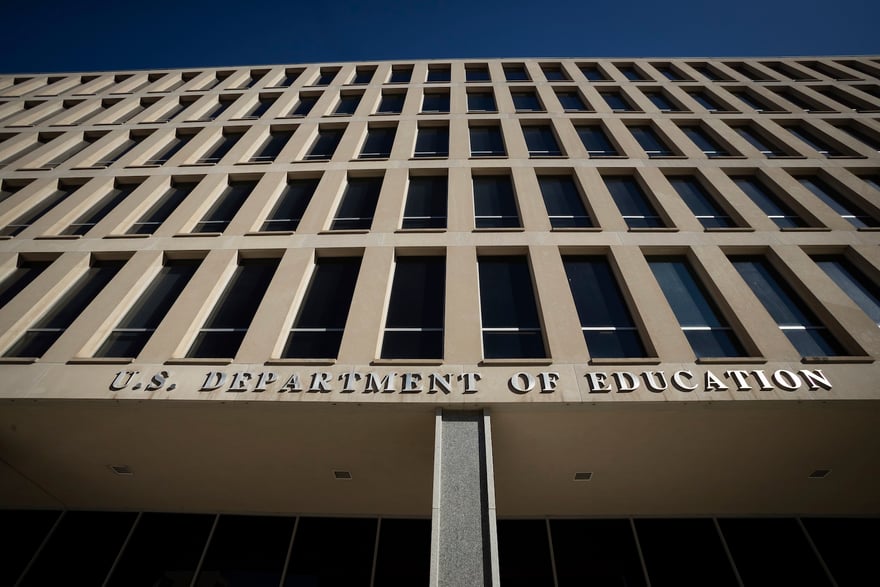
The Department of Education building is seen the morning after Donald Trump signed an executive order dismantling of the department, in Washington, on March 21, 2025. Whether Trump has the authority under the U.S. constitution to close a congressionally mandated agency remains an unanswered question. (Photo by Allison Bailey/NurPhoto via AP)

Key Points

  • Collection activity on defaulted student loans will resume on May 5, 2025.
  • There's confusion about whether the SAVE forbearance or administrative forbearance is considered default.
  • Borrowers are reporting struggles to get through to their loan servicers or even login to websites to check their loans.

The Department of Education announced on Monday that collection activity on defaulted student loans would resume on May 5, 2025. Along with that announcement, the said that 5 million student loan borrowers are currently in default, and another 4.5 million are delinquent on their loans.

This has shocked a lot of student loan borrowers who may be confused on what student loan default even means. Specifically, student loan default occurs when a borrower hasn't made a complete required payment on their student loans in 270 days.

Quick summary of common situations we've been getting from readers and viewers this week:

  • Save Forbearance: Not Default
  • Processing Forbearance: Not Default
  • Administrative Forbearance: Not Default
  • In-School Deferment: Not Default
  • $0 IBR/PAYE/ICR Payment: Not Default

Here's a video with more details:

Would you like to save this?

We'll email this article to you, so you can come back to it later!

What Is Considered Student Loan Default?

We've covered the common questions we're seeing that aren't student loan default, so what is? Any borrower who has a required payment but has not made a full payment in 270 or more days.

Borrowers that have been required to make a payment since the payment pause ended in September 2023, but haven't. Remember, the Covid pause ended in September 2023, but President Biden allowed a grace period where no negative credit reporting or collections would happen for one year. That doesn't mean your payments weren't due, it's just that they weren't sending you to collections or dinging your credit score.

So, that got you to October 2024, and then loan servicers report late payments to the credit bureaus when they're 90 days late. So, that was through January, and the first people got negatively impacted in February and March, depending on the billing cycle. Remember seeing borrowers lose 100-200 points on their credit reports?

So, now we're here today, approaching May 5, 2025.

If you're a borrower who is required to make a payment: those in the standard, extended, graduated plan, or those that are in an active IDR plan like IBR, PAYE, or ICR. There's also many graduates who may have left college between 2020 and 2024 and need to select their first repayment plan. 

Finally, remember it has to be a full payment. If your required payment is $100, but you only paid $50, that's not a full payment and that's still considered delinquent. If you do this for 9 months, you will still end up in default.

Related: Student Loan Debt Statistics

How Do You Check Your Loan Status?

You need to login to your loan servicer and check your loan status. Remember, all of the loan servicer portals have migrated to StudentAid.gov. And we're seeing a lot of borrower confusion on this. Here are the main portals:

MOHELA - https://mohela.studentaid.gov/

NELNET - https://nelnet.studentaid.gov/

AIDVANTAGE - https://aidvantage.studentaid.gov/

EDFINANCIAL - https://edfinancial.studentaid.gov/

CRI - https://cri.studentaid.gov/

Once you login, you can check your loan status. If your loan has a past due payment date, you're delinquent. If you're in default already, it will say default.

If you already know you're in default, you want to contact the Default Resolution Group directly here: https://myeddebt.ed.gov/

Related: Student Loan Debt Collectors

How Do You Get Out Of Default

Ok, so you're in delinquency first. If that's you, simply paying the amount due will get you current. Check your current loan statement and see what you owe, and pay it. 

If that doesn't work because you cannot afford it, you can see if you can change your repayment plan, or go into a hardship forbearance until you can resolve your budget issues. 

If you're already in default, you have three main courses of action: consolidation, rehabilitation, paying in full (though this one likely isn't an option).

There are pros and cons to each option, and we have a full guide: How To Get Out Of Student Loan Default.

Final Thoughts

The upcoming end of the student loan collection pause was expected. It's been five years since payments were paused, it's been over a year since payments have resumed, it was only a matter of time before collection activity resumes.

It may sound shocking that 9-10 million borrowers may be in delinquency or default, but pre-pandemic, the student loan portfolio was averaging 7 million borrowers in delinquency or default at any given time. 

The bottom line is that collections are returning, and borrowers need to get out of default and into a repayment plan.

Don't Miss These Other Stories:

Where To Get Real Help With Your Student Loans: 4 Trusted Resources

Where To Get Real Help With Your Student Loans: 4 Trusted Resources

Can President Trump Reverse Student Loan Forgiveness?

Can President Trump Reverse Student Loan Forgiveness?

Student Loan Collections Resume May 5: What to Know

Student Loan Collections Resume May 5: What to Know

Editor: Colin Graves

Robert Farrington
Robert Farrington

Robert Farrington is the founder of The College Investor and is widely recognized as one of the nation’s leading voices on student loan debt and saving for college. He holds an MBA from UC San Diego Rady School of Management and has spent over 15 years researching, writing, and advising on student loans, 529 plans, financial aid programs, and saving and investing for young professionals.

Robert has been featured in the The New York Times, The Wall Street Journal, The Washington Post, NBC News, and Forbes, where he has been a regular personal finance contributor for over a decade. His work combines both professional expertise and personal experience – he successfully navigated his own student loan repayment journey and has helped thousands of readers do the same.

He is committed to making the intersection of personal finance and education transparent and accessible. You can learn more about Robert on the About Page or on his personal site RobertFarrington.com.

Please Share And Support

  • Facebook
  • X
  • LinkedIn
  • Reddit
  • Flipboard
  • Bluesky
  • Print
  • Email
Editorial Disclaimer: Opinions expressed here are author’s alone, not those of any bank, credit card issuer, airlines or hotel chain, or other advertiser and have not been reviewed, approved or otherwise endorsed by any of these entities.
Comment Policy: We invite readers to respond with questions or comments. Comments may be held for moderation and are subject to approval. Comments are solely the opinions of their authors'. The responses in the comments below are not provided or commissioned by any advertiser. Responses have not been reviewed, approved or otherwise endorsed by any company. It is not anyone's responsibility to ensure all posts and/or questions are answered.
Subscribe
Notify of
0 Comments
Oldest
Newest Most Voted

Primary Sidebar

Student Loan Resources
Add The College Investor as a Preferred Source on Google

Featured Lender Reviews

>  Credible (recommended)
>  Juno (recommended)
>  Ascent (recommended)
>  ELFI
>  College Ave
>  Earnest
>  Sallie Mae

Paying For College

  • Best Student Loans And Rates
  • Best Private Student Loans
  • Student Loan And Financial Aid Programs By State
  • Student Loans For Community College
  • Best International Student Loans
  • Best Student Loans For Graduate School
  • Best Student Loans For Your MBA
  • Best Student Loans For Medical School
  • Best No-Cosigner Private Student Loans Of 2026
  • How To Get A Student Loan With Bad Credit Or No Credit

Navigating Repayment

  • Best Student Loan Repayment Plans (Updated For OBBBA)
  • 5 Legal Ways To Lower Your Student Loan Payment
  • Can You Use A 529 Plan To Pay Student Loans?
  • Student Loan Repayment Assistance: Employers Offering SLRA

Student Loan Forgiveness

  • How To Get Student Loan Forgiveness [Full Program List]
  • Student Loan Forgiveness Programs By State
  • Public Service Loan Forgiveness
  • For-Profit College Student Loan Forgiveness List
  • Private Student Loan Forgiveness
  • Trade School Loan Forgiveness Programs

Student Loan Refinance

  • Best Student Loan Refinance Companies
  • Best Student Loan Refinancing Bonuses And Promotional Offers
  • Lenders That Offer Student Loan Refinancing Without A Degree
  • How To Refinance An International Student Loan
  • Best Medical School Student Loan Refinance Lenders

More On Student Loans

  • Student Loan Debt Statistics
  • Top Student Loan Scams (2026): Spot & Avoid Red Flags
  • Does The Government Profit Off Of Student Loans?
  • What Should You Do With Your Old FFELP Loans?
  • How To Get A Refund Of Your Federal Student Loan Payments

Footer

Who We Are

The College Investor® provides the latest news and analysis for saving and paying for college, student loan debt, personal finance, banking, and college admissions.

Connect

  • Social
  • Contact
  • Newsletter
  • Advertise
  • Press & Media
  • Helpful Calculators

About

  • About
  • In The News
  • Research
  • Editorial Guidelines
  • How We Make Money
  • Archives

Social

Copyright © 2026 · The College Investor® · 2514 Jamacha Rd, Ste 502, El Cajon, CA 92019

Privacy Policy ·Terms of Service · DO NOT Sell My Personal Information

wpDiscuz