New Hampshire Student Loan Forgiveness Programs
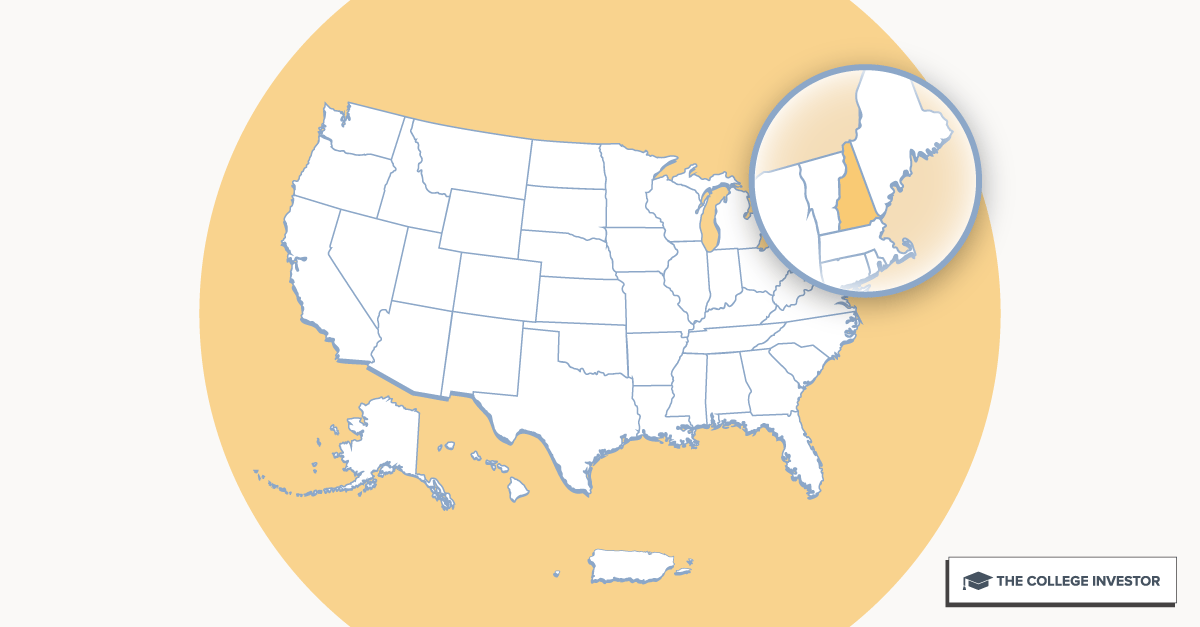
New Hampshire offers student loan repayment assistance only to health care providers in underserved areas. The State Loan Repayment Program is the one that matters, and it's taking applications again with quarterly deadlines. Teachers, lawyers, and everyone else in the state should start with federal forgiveness programs, where the bigger dollars are.
New Hampshire Programs At A Glance
| Program | Who Qualifies | Maximum Award | Service Required | Status |
|---|---|---|---|---|
| New Hampshire State Loan Repayment Program (SLRP) | Physicians, dentists, psychiatrists, APRNs, PAs, behavioral health clinicians, dental hygienists, and primary care RNs at eligible sites | $75,000 for 3 years plus $40,000 for a 2-year extension ($115,000) for Tier 1 full-time providers | 36 months full time or 24 months part time | Rolling |
| Private Practice Dentists State Loan Repayment Program (SLRP-PPD) | Private practice dentists in Medicaid priority areas with at least 15% Medicaid patients | $75,000 | 3 years | Rolling |
Programs That Help Repay Loans You Already Have
New Hampshire borrowers carry roughly $39,500 in federal student debt on average, according to our New Hampshire student loans and financial aid breakdown. Both state programs send money toward that debt once you're working in an eligible health care practice. Many eligible sites are nonprofit health centers, so compare each award with Public Service Loan Forgiveness.
New Hampshire State Loan Repayment Program (SLRP)
SLRP pays full-time Tier 1 providers (primary care physicians, dentists, psychiatrists, and hospitalists) $75,000 for a 36-month commitment, with an optional 24-month extension worth $40,000 (New Hampshire DHHS). Tier 2 providers such as APRNs, PAs, psychologists, and licensed counselors receive $45,000 plus a $20,000 extension, and Tier 3 dental hygienists, alcohol and drug counselors, and primary care RNs receive $30,000 plus $10,000. Doctors can compare those totals with federal offers in our breakdown of student loan forgiveness for doctors.
Contracts go first to applicants who line up a one-to-one match from their practice site or community, and all awards depend on SLRP funding in each year's state budget (New Hampshire DHHS). Behavioral health clinicians still working toward licensure can apply under supervision, which widens the program beyond the professions covered in our nursing and health care forgiveness roundup.
| Administered by | New Hampshire DHHS Division of Public Health, Rural Health and Primary Care Section |
| Who qualifies | U.S. citizens licensed in New Hampshire (or behavioral health professionals under supervision toward licensure) who have no other unserved service obligation and receive no other loan repayment money |
| Award | Full time: $75,000 (Tier 1), $45,000 (Tier 2), or $30,000 (Tier 3) for 36 months, plus extensions of $40,000, $20,000, or $10,000 for 24 more months. Part time: $27,500 for physicians, dentists, psychiatrists, and hospitalists, or $17,500 for other eligible providers, for 24 months, plus a 12-month extension of $10,000 or $5,000 |
| Eligible sites | Practices in federally designated shortage areas, medically underserved areas, Governor's Exceptional Medically Underserved Populations, or organizations funded by DHHS programs; sites must use a sliding-fee scale and accept Medicaid and Medicare |
| Restrictions | General surgeons and hospitalists must work full time at a New Hampshire Critical Access Hospital |
| Status | Rolling applications reviewed quarterly, with deadlines of January 1, April 1, July 1, and October 1 |
| Official source | DHHS SLRP page |
Private Practice Dentists State Loan Repayment Program (SLRP-PPD)
New Hampshire runs a separate SLRP track for dentists in private practice, paying $75,000 for a three-year state contract (New Hampshire DHHS). Private practices don't count as PSLF employers, which makes this one of the few forgiveness routes for these dentists, alongside the options in our list of student loan forgiveness programs.
| Administered by | New Hampshire DHHS Rural Health and Primary Care Section |
| Who qualifies | Dentists in private practice located in a Medicaid-defined priority area who are enrolled New Hampshire Medicaid providers and serve at least 15% Medicaid patients |
| Award | $75,000 total |
| Commitment | Three years under a state contract |
| Status | DHHS posts the SLRP-PPD application alongside the main SLRP and doesn't publish a separate deadline |
| Official source | DHHS SLRP page |
Federal Forgiveness Options For New Hampshire Borrowers
Federal programs reach far more New Hampshire borrowers than the two state programs, and each one sets its own rules for stacking with a state award. Our full list of forgiveness programs covers every federal option.
Public Service Loan Forgiveness (PSLF). Borrowers who make 120 qualifying payments while working full time for a government agency or qualifying nonprofit get their remaining Direct Loan balance forgiven tax-free (StudentAid.gov). New Hampshire public school teachers, state and town employees, and University System of New Hampshire staff all work for qualifying employers, and our PSLF breakdown covers the 2026 employer rule litigation.
Teacher Loan Forgiveness. Teachers with five consecutive years at a low-income school can receive up to $17,500 if they teach secondary math, science, or special education, or up to $5,000 in other subjects (StudentAid.gov). The same years can't count toward both Teacher Loan Forgiveness and PSLF, which our teacher forgiveness breakdown walks through.
Repayment Assistance Plan (RAP) and IBR. RAP launched July 1, 2026, and forgives any remaining balance after 360 qualifying payments (How RAP Works). Borrowers deciding between plans can run the numbers in our RAP vs. IBR comparison.
Health care programs. The National Health Service Corps pays full-time primary care providers up to $75,000 for a two-year commitment in its 2026 cycle, plus a $5,000 Spanish-language bonus (HRSA). Nurse Corps pays 60% of qualifying nursing debt for two years of service and another 25% for a third year (HRSA), and the STAR program pays up to $250,000 for six years in substance use disorder treatment (HRSA). SLRP participants can't take loan repayment money from another program at the same time, so pick one, and our nursing and health care forgiveness roundup covers eligibility for each.
Is Student Loan Forgiveness Taxed In New Hampshire?
New Hampshire doesn't tax wages, and its Interest and Dividends Tax was repealed for taxable periods beginning after December 31, 2024 (New Hampshire Department of Revenue Administration). That puts New Hampshire among the states where forgiven student loans aren't taxed at the state level, according to our state taxes on student loan forgiveness breakdown.
Federal tax still applies, and forgiveness under income-driven plans became federally taxable again on January 1, 2026, when the American Rescue Plan exclusion expired (Taxes And Student Loan Forgiveness). Borrowers expecting IBR or RAP forgiveness can estimate the federal bill with our student loan tax bomb calculator.
Ask DHHS whether your SLRP award will be reported to the IRS as income, and read our explainer on the 1099-C and student loan forgiveness before filing.
If Your Job Isn't Covered
Borrowers outside health care won't find a New Hampshire program, but three options remain. Employers can pay up to $5,250 a year toward your student loans tax-free, and our list of companies that offer student loan repayment assistance shows who offers it.
Borrowers with private loans or high-rate federal loans they don't plan to have forgiven can lower their rate through student loan refinancing. Refinancing federal loans into a private loan ends eligibility for PSLF, RAP, and IBR, so don't refinance a balance you expect to have forgiven.
Families with leftover 529 money can put up to $10,000 per beneficiary toward student loans, which our 529 plan for student loan repayment explainer covers. New Hampshire savers should also review the UNIQUE College Investing Plan.
Frequently Asked Questions
Does New Hampshire Have A Student Loan Forgiveness Program?
New Hampshire offers student loan repayment assistance programs rather than broad loan forgiveness. DHHS runs the State Loan Repayment Program and a private practice dentist track for health care providers in underserved areas. Borrowers outside health care rely on federal programs like PSLF and income-driven plan forgiveness.
Is The New Hampshire State Loan Repayment Program Still Suspended?
No, DHHS now accepts SLRP applications on a rolling basis and reviews them each quarter, though awards depend on each year's state budget (New Hampshire DHHS). Providers who don't qualify can check the federal options in our nursing and health care forgiveness roundup.
Does New Hampshire Have Student Loan Forgiveness For Teachers?
New Hampshire has no state loan repayment program for teachers, and the Department of Education's higher education division says it doesn't provide financial aid itself (New Hampshire Department of Education). Teachers should look at federal Teacher Loan Forgiveness and PSLF, covered in our teacher forgiveness breakdown.
Is Student Loan Forgiveness Taxable In New Hampshire?
New Hampshire doesn't tax wages and repealed its Interest and Dividends Tax starting with 2025 tax periods, so forgiven student loans aren't taxed by the state (New Hampshire Department of Revenue Administration). Income-driven plan forgiveness can still trigger a federal bill, and our tax bomb calculator estimates it.
Related New Hampshire Resources
How We Sourced This Data
Program details on this page come from the administering agency, the New Hampshire Department of Health and Human Services Division of Public Health, Rural Health and Primary Care Section, and its Healthcare Workforce Financial Assistance Resources page. Tax details come from the New Hampshire Department of Revenue Administration, and the New Hampshire Department of Education's Division of Educator Support and Higher Education states that it doesn't provide financial aid. Federal program details come from StudentAid.gov and HRSA. Read more about how we fact-check and update content.
Page refreshed annually in August, after New Hampshire's legislative session and agency rule approvals, and reviewed in January for tax season. Last full refresh: September 23, 2026.
Editor: Clint Proctor Reviewed by: Claire Tak