Key Points
- The Debt-Free College Act of 2026, S. 5403 and H.R. 10455, would match state funding for public colleges dollar for dollar if states commit to covering students’ full unmet need, not just tuition.
- States would have to cap tuition increases at inflation, maintain funding, and adopt five-year plans, while a separate $3 billion program would fund need-based aid at HBCUs, Tribal Colleges, and other minority-serving institutions.
- The bill would also open Pell Grants and other federal aid to certain DREAMers, and it has only Democratic cosponsors after four earlier versions failed to advance.
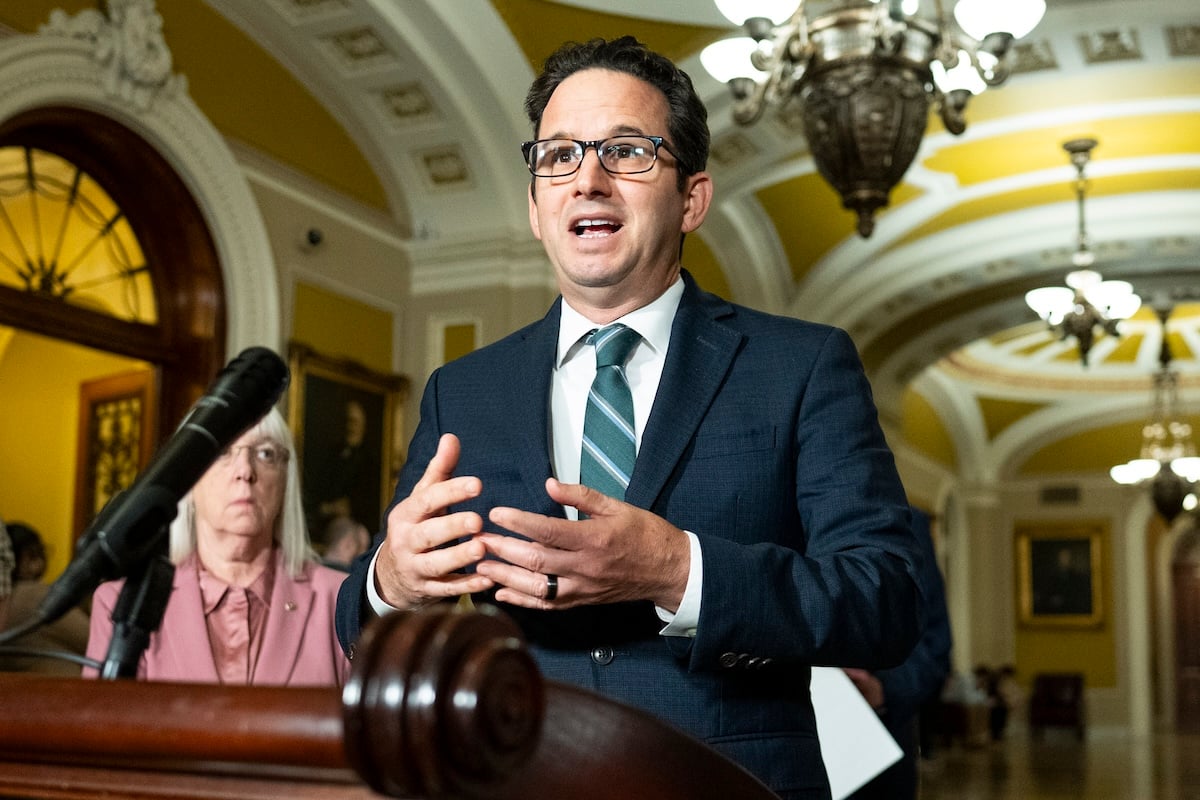
Sen. Brian Schatz (D-HI) introduced the Debt-Free College Act of 2026 (S. 5403) last month. Rep. Mark Pocan (D-WI) introduced the House version (H.R. 10455) to be a companion bill. The bills would create federal-state partnerships so students can attend public colleges in their home state without borrowing, and they target helping families cover unmet need.
“Student debt isn’t just about tuition—it’s books, housing, supplies, and food,” Pocan said, according to Maui Now’s report on the bill. The Senate bill has nine Democratic cosponsors, and the House bill has 18.
Schatz and Pocan first introduced the idea in 2018, as free-tuition proposals gained ground and states began offering free community college.
Would you like to save this?
Why It Matters
Tuition is the one of the cheapest parts of the cost at public colleges. The College Board puts average 2025-26 in-state tuition and fees at public four-year schools at $11,950, but the full student budget is $30,990 once housing, food, books, and transportation are included. After grant aid, average net tuition is only about $2,300, so living costs drive most borrowing.
That’s why the average cost of college in 2026 looks so different from the sticker tuition.
And student loan borrowing remains a key way to pay for college. According to the College Board, 47% of 2023-24 bachelor’s degree recipients from public and private nonprofit four-year schools borrowed, averaging $29,560. That’s in line with the average student loan debt for recent graduates, and it’s the debt this bill aims to replace with grant aid.
How The Federal-State Partnership Would Work
The S. 5403 bill sets up the program like this. States would choose whether to join, so the benefit would depend on where a student lives, much like state 529 plan tax benefits do today:
- Federal match: A participating state’s grant equals its net state operating support for public colleges. Merit aid, capital projects, research, hospitals, and athletics don’t count toward that total.
- Spending order: Money first covers unmet need for Pell Grant recipients, then other students by financial need. Up to 1% can go to administration, and none can go to endowments or athletic venues.
- Unmet need: Cost of attendance at an in-state public college minus the student’s Student Aid Index and federal, state, and local grants.
- Tuition cap: Tuition and fees stay at their level on the date the bill becomes law, with yearly increases limited to inflation.
- Funding floor: State support per full-time student can’t fall below its prior three-year average.
- Benefits outreach: States must help students enroll in Medicaid, SNAP, TANF, and WIC (similar to what the BASIC Act is proposing).
States would submit five-year plans with yearly benchmarks to reach debt-free college. The bill authorizes $84 billion for fiscal 2027, then “such sums as may be necessary” through fiscal 2036.
Congress would still need to provide that money each year, the same budget fight that has left the Pell Grant program facing a shortfall.
| Provision | What The Bill Requires |
|---|---|
| Federal Match | Equal to state operating support for public colleges |
| First In Line | Pell Grant recipients with unmet need |
| Covered Costs | Full cost of attendance at in-state public colleges |
| Tuition Cap | Frozen at enactment, then inflation increases only |
| State Funding Floor | Per-student support at prior 3-year average |
| MSI Grants | $3 billion for HBCUs, TCUs, and other MSIs |
| DREAMers | Eligible for Pell Grants and federal aid |
| Private Colleges | Excluded from state partnership |
Who Would Benefit Most?
Pell Grant recipients at in-state public colleges come first under the bill, so low-income students would see help before anyone else. Private colleges are excluded from the state partnership, which matters for families who already weigh the value of in-state tuition at public schools. Community colleges are included, and the HBCU and minority-serving institution grants would also reach private nonprofit schools where at least 35% of students receive Pell.
Here’s how the unmet need math could work. A student with a $0 or negative SAI at a public four-year college with the College Board’s average $30,990 budget would receive the maximum Pell Grant of $7,395 for 2026-27. If the state adds $5,000 in grants, the student still faces about $18,600 in unmet need. Today that gap gets filled with loans, work hours, or family help, and the bill would aim to cover it with grant aid instead.
The bill would also expand federal aid to certain DREAMers. Undocumented students, including DACA recipients, can’t get federal student aid today, according to a Federal Student Aid fact sheet.
Under the bill, a student who entered the U.S. before age 16 and finished high school here, completed two years of college, or served four years in the uniformed services could qualify for Pell Grants and other federal aid. That would show up in the Pell Grant eligibility rules for the first time.
How This Connects
Federal support would arrive as states pull back. SHEEO reported that state education appropriations fell 1.0% to $12,082 per full-time student in fiscal 2025, the first per-student decline since 2012.
States like New Mexico already cover full tuition and fees at public colleges, but not books or housing. For families facing a gap now, our steps to close a last-minute tuition gap still apply.
What’s Next
S. 5403 went to the Senate HELP Committee, and H.R. 10455 went to the House Education and Workforce Committee. Schatz and Pocan introduced versions in 2018, 2019, 2021, and 2023, and none received a committee vote.
No Congressional Budget Office estimate is available. With Republicans controlling both chambers and the 119th Congress ending January 3, 2027, the bill works more as a marker for a future Democratic majority than a near-term change. Families should keep planning around current aid, starting with the 2027-28 SAI chart.
Editor: Colin Graves

Robert Farrington is the founder of The College Investor and is widely recognized as one of the nation’s leading voices on student loan debt and saving for college. He holds an MBA from UC San Diego Rady School of Management and has spent over 15 years researching, writing, and advising on student loans, 529 plans, financial aid programs, and saving and investing for young professionals.
Robert has been featured in the The New York Times, The Wall Street Journal, The Washington Post, NBC News, and Forbes, where he has been a regular personal finance contributor for over a decade. His work combines both professional expertise and personal experience – he successfully navigated his own student loan repayment journey and has helped thousands of readers do the same.
He is committed to making the intersection of personal finance and education transparent and accessible. You can learn more about Robert on the About Page or on his personal site RobertFarrington.com.