Schedule C
Definition
Schedule C is an IRS tax form used by sole proprietors and single-member LLCs to report income and expenses from their business and calculate net profit or loss for the tax year.
Detailed Explanation
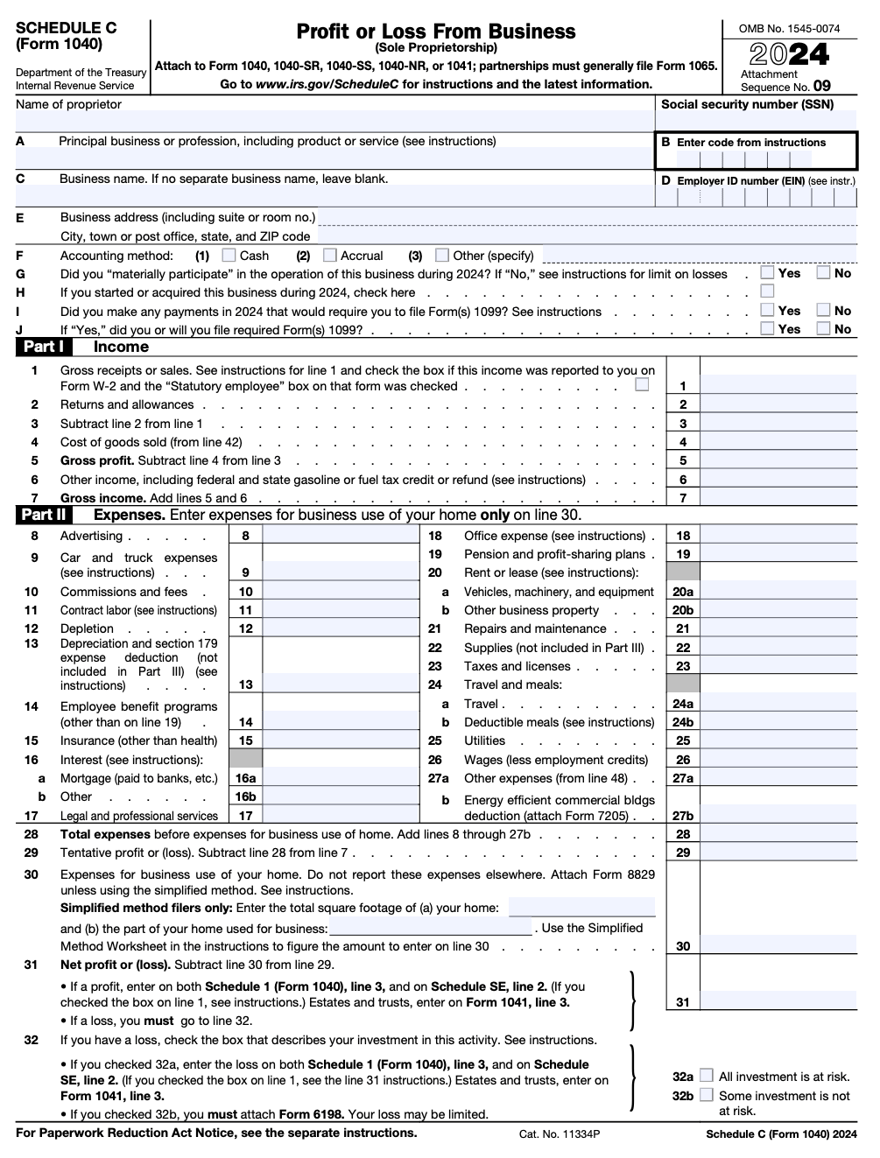
Schedule C, also known as “Profit or Loss from Business,” is part of Form 1040 and is required for individuals who operate as sole proprietors or single-member LLCs. This form allows business owners to report their gross income, business expenses, and net profit or loss, which is then included in their personal income tax return.
On Schedule C, taxpayers list their business’s income and various deductible expenses, such as advertising, office supplies, travel, meals, and home office costs. These deductions reduce taxable business income, lowering the owner’s overall tax liability. The net profit calculated on Schedule C is also subject to self-employment taxes, which cover Social Security and Medicare contributions.
Accurate recordkeeping is essential when completing Schedule C, as the IRS may require documentation to substantiate income and expenses. Filing Schedule C is generally straightforward for small businesses, but more complex cases, such as those involving inventory or depreciation, may require additional forms and calculations.
Schedule C is often used by freelancers, independent contractors, and small business owners without employees. Businesses with more complex structures, such as partnerships or corporations, file different forms.
Example
A freelance graphic designer earns $60,000 in gross income and has $20,000 in deductible business expenses for software, equipment, and office rent. They report these amounts on Schedule C, resulting in a net profit of $40,000, which is then included in their personal income.
Key Articles Related To Schedule C
Related Terms
Depreciation: The allocation of the cost of a business asset over its useful life, reducing taxable income.
Gross Income: The total income earned by a business before any expenses are deducted.
Home Office Deduction: A deduction for the business use of a portion of a taxpayer’s home, available on Schedule C.
Self-Employment Tax: Taxes on net earnings from self-employment, including Social Security and Medicare contributions.
Sole Proprietor: An individual who owns and operates a business without a separate legal entity, reporting income on Schedule C.
FAQs
Who needs to file Schedule C?
Sole proprietors and single-member LLCs who earn income from a business or self-employment must file Schedule C.
What expenses can I deduct on Schedule C?
Deductible expenses include costs directly related to running the business, such as supplies, travel, advertising, and utilities.
Can I use Schedule C for rental income?
No, rental income is typically reported on Schedule E, unless you are a real estate professional.
Is Schedule C income subject to self-employment tax?
Yes, net profit reported on Schedule C is subject to self-employment tax.
What records should I keep for Schedule C?
Maintain records of all income, receipts, invoices, and proof of business expenses for tax compliance and potential audits.
Editor: Colin Graves