North Carolina Student Loan Forgiveness Programs
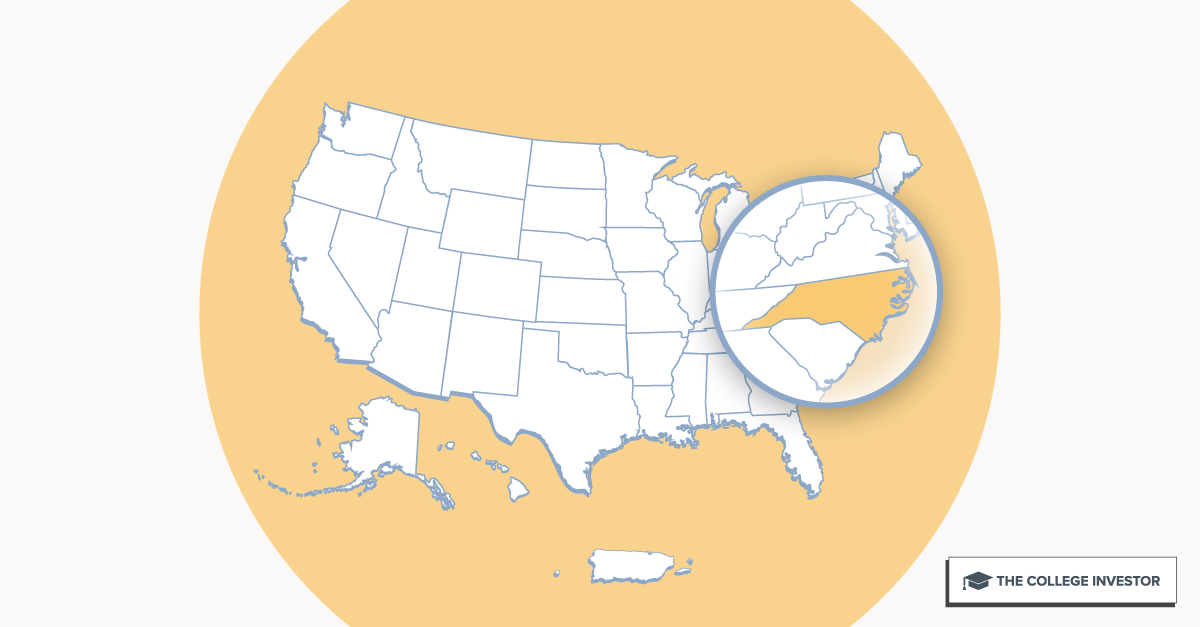
North Carolina offers student loan repayment assistance programs for doctors, dentists, nurses, and mental health clinicians who work in rural and underserved communities, plus two forgivable loan programs that pay for school up front. The NC Loan Repayment Program carries the biggest awards, and new nurse and mental health programs widened who can qualify in 2025. Everyone else should start with federal forgiveness programs, where the bigger dollars are.
North Carolina Programs At A Glance
| Program | Who Qualifies | Maximum Award | Service Required | Status |
|---|---|---|---|---|
| NC Loan Repayment Program (NC LRP) | Primary care physicians, psychiatrists, dentists, NPs, PAs, CNMs, and dental hygienists | $100,000 for physicians and dentists; $60,000 for NPs, PAs, CNMs, and hygienists | Up to 4 years at an eligible rural or underserved site | Rolling |
| NC Primary Care Physician Incentive (NC PCPI) | Primary care physicians and psychiatrists in independent practices in Tier 1 and Tier 2 counties | $100,000 | Practice in an eligible distressed county | Rolling |
| North Carolina Nurse Initiative (NCNI) | Registered nurses and clinical nurse specialists | $40,000 | Up to 4 years at an eligible site | Expanded |
| Licensed Workforce Loan Repayment Program | LCSWs, LCMHCs, LCASs, LMFTs, psychologists, and psychological associates | $50,000 over 3 years | 3 years in a rural or underserved community | Paused |
| Forgivable Education Loans for Service (FELS) | NC students in approved shortage-field programs | $7,000/year (undergrad), $14,000/year (graduate), $50,000/year for rural primary care doctors | 1 year of work per year of loan | Annual Cycle |
| NC Teaching Fellows | Students preparing to teach elementary, special education, or STEM | $10,000/year | 1 year of teaching per year of loan | Annual Cycle |
Programs That Help Repay Loans You Already Have
North Carolina borrowers carry roughly $38,600 in federal student debt on average, according to our North Carolina student loans and financial aid breakdown. These four programs, all run by the NC Department of Health and Human Services (NCDHHS), send money toward that debt once you're working at a qualifying site. Most of those sites, including health centers, health departments, and critical access hospitals, are also Public Service Loan Forgiveness employers.
NC Loan Repayment Program (NC LRP)
The Office of Rural Health pays up to $100,000, tax-free, to physicians and dentists and up to $60,000 to nurse practitioners, physician assistants, certified nurse midwives, and dental hygienists who commit up to four years to a rural or underserved site (NCDHHS Office of Rural Health). Eligible physicians practice family medicine, general internal medicine, OB-GYN, pediatrics, or psychiatry, plus general surgeons at critical access hospitals (NC LRP Program Rules). Compare it with the federal awards in our breakdown of student loan forgiveness for doctors.
Providers without student debt can apply instead for the High Needs Service Bonus, which pays the same amounts as a taxable bonus (NCDHHS Office of Rural Health). Borrowers who do carry debt should check whether their site also counts toward PSLF for medical group workers.
| Administered by | NCDHHS Office of Rural Health |
| Who qualifies | Physicians, dentists, NPs (including psychiatric NPs), PAs, CNMs, and dental hygienists at FQHCs, critical access hospitals, free and charitable clinics, rural health clinics, health departments, and state facilities; urgent care and emergency departments aren't eligible |
| Award | Up to $100,000 (physicians and dentists) or $60,000 (NPs, PAs, CNMs, and hygienists), prorated for part-time work of 20 to 31 hours a week |
| Commitment | Up to four years of at least 32 hours a week of direct patient care |
| Status | ORH takes applications electronically and notifies applicants of their status within 20 business days |
| Official source | NC LRP Program Rules |
NC Primary Care Physician Incentive (NC PCPI)
NCDHHS opened this incentive in 2025 to physicians in independent private practices in the state's 80 Tier 1 and Tier 2 distressed counties, who weren't automatically eligible for loan repayment before (NCDHHS). It pays up to $100,000, tax-free, with up to 16 awards in each of the six Medicaid regions (NCDHHS Office of Rural Health). Private practice doctors who don't win an award should look at our breakdown of medical school student loan refinancing.
| Administered by | NCDHHS Office of Rural Health |
| Who qualifies | Family medicine, general internal medicine, pediatrics, OB-GYN, and psychiatry physicians, plus general surgeons at critical access hospitals, in independent practices in Tier 1 and Tier 2 counties |
| Award | Up to $100,000 |
| Status | First-come, first-served while one-time funding lasts |
| Official source | NCDHHS PCPI announcement |
North Carolina Nurse Initiative (NCNI)
Registered nurses and clinical nurse specialists can receive up to $40,000, tax-free, for up to four years of full-time work at an eligible site in one of 76 counties, with part-time awards prorated (NCNI Program Rules). NCDHHS added independent private practices in rural areas when it expanded the program in October 2025, using part of $50 million the General Assembly set aside for health care providers (NCDHHS). Nurses can stack federal options from our roundup of student loan forgiveness for nurses.
| Administered by | NCDHHS Office of Rural Health |
| Who qualifies | RNs and clinical nurse specialists at FQHCs, critical access hospitals, free and charitable clinics, health departments, rural health centers, state facilities, school-based health centers, and independent private practices in Tier 1 and Tier 2 counties |
| Award | Up to $40,000 full time; prorated for 20 to 31 hours a week |
| Commitment | Up to four years |
| Status | Applications opened October 27, 2025; first-come, first-served while funding lasts |
| Official source | NCNI Program Rules |
Licensed Workforce Loan Repayment Program
This $20 million NCDHHS program pays up to $50,000 over three years, in payments every six months, to licensed clinical social workers, clinical mental health counselors, clinical addiction specialists, marriage and family therapists, psychologists, and psychological associates (NCDHHS). The agency is working through existing applications and has temporarily paused new ones. Clinicians at nonprofit agencies should also track nonprofit student loan forgiveness through PSLF.
| Administered by | NCDHHS Division of Mental Health, Developmental Disabilities and Substance Use Services |
| Who qualifies | The licenses listed above, at agencies in rural, underserved HPSAs that serve at least 40% Medicaid, uninsured, or underinsured clients |
| Award | Up to $50,000 over three years |
| Commitment | Three years |
| Status | Launched December 1, 2025; new applications temporarily paused |
| Official source | NCDHHS Licensed Workforce Loan Repayment Program |
Service-Based Funding For Students In Training
These two programs fund school up front and cancel the debt through work after graduation. They count as forgiveness only if you complete the service, and walking away means repaying in cash, so weigh them against a private student loan with no strings attached.
Forgivable Education Loans For Service (FELS)
FELS lends up to $7,000 a year for certificate, associate, and bachelor's programs and up to $14,000 a year for master's and doctoral programs in critical employment shortage professions, and up to $50,000 a year ($200,000 total) to future primary care physicians and psychiatrists who will practice in rural North Carolina (CFNC). One year of full-time work in an approved job generally forgives one year of loans, and borrowers who don't serve repay with 7% interest. Medical students can compare it with a standard medical school student loan before signing.
| Administered by | NC State Education Assistance Authority (NCSEAA) |
| Who qualifies | Legal North Carolina residents who are residents for tuition purposes, enrolled in a program on the FELS approved programs list |
| Award | Up to $7,000 a year (certificate through bachelor's), $14,000 a year (master's and doctoral), or $50,000 a year for rural primary care physicians and psychiatrists |
| Service | One year of full-time employment per academic year of loans, completed within 10 years of graduation; notify NCSEAA within 90 days of graduation |
| Deadlines | The 2026–27 application opened January 12, 2026, and closed March 1 |
| Official source | NCSEAA FELS |
NC Teaching Fellows
NC Teaching Fellows lends up to $5,000 a semester to students preparing to teach elementary education, special education, or STEM subjects at 10 partner colleges, and a record 522 students joined for 2026–27 (UNC System). For loans issued in 2024–25 and later, one year of teaching in a qualifying position forgives one year of loans, regardless of the school's performance status (NC Teaching Fellows). Pair it with the federal options in our teacher forgiveness breakdown.
| Administered by | NC Teaching Fellows Commission, UNC System |
| Who qualifies | Students at Appalachian State, East Carolina, Elon, Fayetteville State, NC A&T, NC State, Meredith, UNC Charlotte, UNC Chapel Hill, or UNC Pembroke in elementary, special education, or STEM licensure programs |
| Award | Up to $5,000 a semester ($10,000 a year) |
| Service | One year of teaching in a North Carolina public school per year of loans; Fellows have 10 years after finishing their program to repay through service or cash |
| Official source | NC Teaching Fellows |
Federal Forgiveness Options For North Carolina Borrowers
Federal programs reach far more North Carolina borrowers than the six state programs, and each one runs on its own rules for combining with a state award. Our full list of forgiveness programs covers every federal option.
Public Service Loan Forgiveness (PSLF). Borrowers who make 120 qualifying payments while working full time for a government agency or qualifying nonprofit get their remaining Direct Loan balance forgiven tax-free (StudentAid.gov). North Carolina public school teachers, state and county employees, and UNC System and community college staff work for qualifying employers, and our PSLF breakdown covers the 2026 employer rule litigation.
Teacher Loan Forgiveness. Teachers with five consecutive years at a low-income school can receive up to $17,500 if they teach secondary math, science, or special education, or up to $5,000 in other subjects (StudentAid.gov). The same years can't count toward both Teacher Loan Forgiveness and PSLF, which our teacher forgiveness breakdown walks through.
Repayment Assistance Plan (RAP) and IBR. RAP launched July 1, 2026, and forgives any remaining balance after 360 qualifying payments (How RAP Works). Borrowers deciding between plans can run the numbers in our RAP vs. IBR comparison.
Health care programs. The National Health Service Corps pays up to $75,000 for a two-year full-time commitment in primary care, plus a one-time $5,000 award for Spanish-language proficiency (HRSA). Nurse Corps pays 60% of qualifying nursing debt over two years and may add 25% for a third year (HRSA). Our nursing and health care forgiveness roundup covers eligibility for each.
Lawyers. North Carolina has no state-run attorney loan repayment program, but NC LEAF, a nonprofit that has helped public interest lawyers since 1990, assists full-time public interest attorneys earning no more than $101,299 (NC LEAF). Applications open each year in early November, and prosecutors and public defenders can also pursue PSLF.
Veterinarians. We didn't find a North Carolina veterinary loan repayment program, but the USDA Veterinary Medicine Loan Repayment Program pays up to $25,000 a year for service in designated shortage areas (USDA NIFA). Vets carrying private loans should also check our list of private student loan forgiveness options.
Is Student Loan Forgiveness Taxed In North Carolina?
North Carolina starts from federal adjusted gross income but ties it to the Internal Revenue Code as of a fixed date rather than updating automatically (The College Investor). The state never adopted the American Rescue Plan exclusion, so forgiveness that was federally tax-free from 2021 through 2025 had to be added back on North Carolina returns (NCDOR). PSLF, death and disability discharges, and forgiveness under IRC 108(f)(3) and 108(f)(4) weren't subject to that add-back.
Forgiveness under income-driven plans became federally taxable again on January 1, 2026, so IBR and RAP forgiveness now counts as income on both returns (Taxes And Student Loan Forgiveness). Borrowers expecting it can estimate the bill with our student loan tax bomb calculator.
NCDHHS describes NC LRP, PCPI, and NCNI payments as tax-free, while the High Needs Service Bonus is taxable (NC LRP Program Rules). Ask NCSEAA or NCDHHS how other awards are reported, and read our explainer on the 1099-C and student loan forgiveness before filing.
If Your Job Isn't Covered
Borrowers outside health care and teaching won't find a North Carolina program, but three options remain. Employers can pay up to $5,250 a year toward your student loans free of federal tax, though our state tax tracker notes North Carolina has taxed these payments since 2020, and our list of companies that offer student loan repayment assistance shows who offers them.
Borrowers with private loans or high-rate federal loans they don't plan to have forgiven can lower their rate through student loan refinancing. Refinancing federal loans into a private loan ends eligibility for PSLF, RAP, and IBR, so don't refinance a balance you expect to have forgiven.
Families with leftover 529 money can put up to $10,000 per beneficiary toward student loans, which our 529 plan for student loan repayment explainer covers. North Carolina savers should also review the NC 529 Plan.
Frequently Asked Questions
Does North Carolina Have A Student Loan Forgiveness Program?
North Carolina offers student loan repayment assistance programs rather than broad loan forgiveness. It runs four loan repayment programs for health care and mental health providers and two forgivable loan programs for students. Borrowers outside those fields rely on federal programs like PSLF and income-driven plan forgiveness.
Can North Carolina Teachers Get Student Loan Forgiveness?
The state helps future teachers through NC Teaching Fellows, which forgives up to $10,000 a year in loans for each year taught (UNC System). Teachers already in the classroom have no state repayment program and should use the federal options in our teacher forgiveness breakdown.
Can North Carolina Nurses And Mental Health Workers Get Help Repaying Loans?
RNs can receive up to $40,000 through NCNI, and licensed clinical social workers, counselors, and therapists can receive up to $50,000 through the Licensed Workforce Loan Repayment Program once it reopens (NCDHHS). Federal Nurse Corps and NHSC awards, covered in our nursing forgiveness roundup, are the other routes.
Is Student Loan Forgiveness Taxable In North Carolina?
PSLF and death and disability discharges are tax-free in North Carolina, but income-driven plan forgiveness is taxable, and the state also taxed forgiveness the federal government excluded from 2021 through 2025 (NCDOR). Use our tax bomb calculator to estimate what you'd owe.
Related North Carolina Resources
How We Sourced This Data
Program details on this page come from the administering agencies: the NCDHHS Office of Rural Health and its NC LRP and NCNI program rules, the NCDHHS Division of Mental Health, Developmental Disabilities and Substance Use Services, the NC State Education Assistance Authority and CFNC, the UNC System and NC Teaching Fellows Commission, and the NC Department of Revenue. Federal program details come from StudentAid.gov, HRSA, and USDA NIFA, and attorney assistance details come from NC LEAF. Read more about how we fact-check and update content.
Page refreshed annually in August, after North Carolina's legislative session and agency rule approvals, and reviewed in January for tax season. Last full refresh: September 23, 2026.
Editor: Clint Proctor Reviewed by: Claire Tak