District of Columbia Student Loan Forgiveness Programs
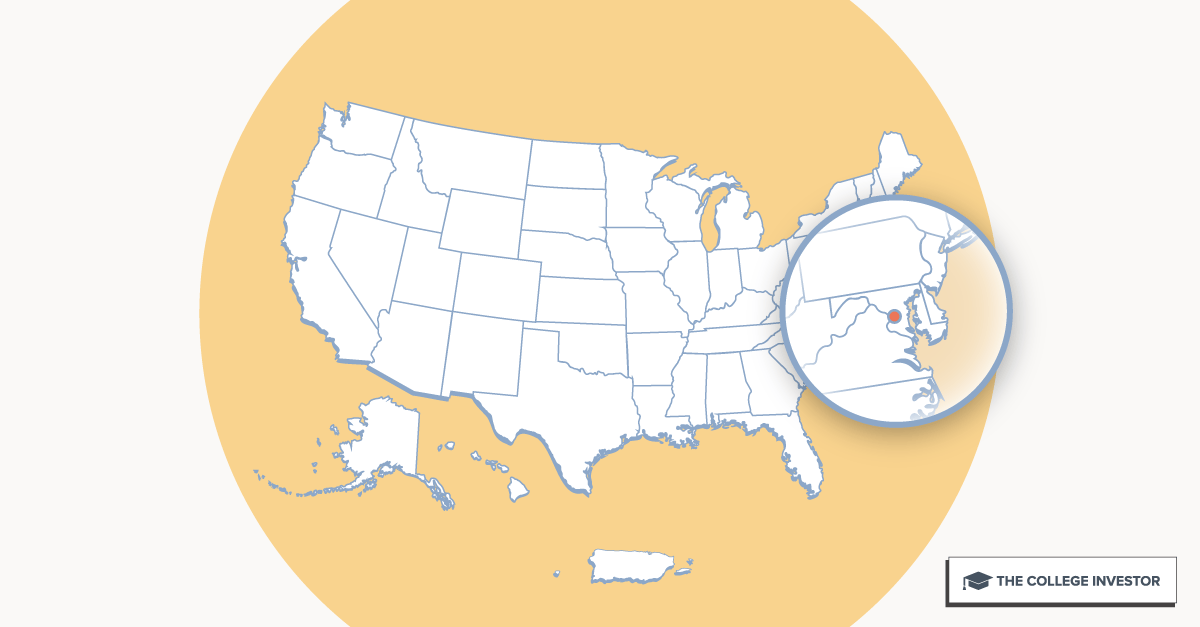
The District of Columbia offers two student loan repayment assistance programs: one for health care providers and one for civil legal aid lawyers. The Health Professional Loan Repayment Program is worth the most, paying physicians and dentists more than $150,000 over four years at clinics in underserved parts of the city. With so many federal, District, and nonprofit employers in DC, most borrowers, including teachers, should start with Public Service Loan Forgiveness.
District Of Columbia Programs At A Glance
| Program | Who Qualifies | Maximum Award | Service Required | Status |
|---|---|---|---|---|
| DC Health Professional Loan Repayment Program (HPLRP) | Physicians, dentists, nurses, APRNs, PAs, dental hygienists, and behavioral health clinicians | $151,841 over 4 years (physicians and dentists); $83,511 for other providers | 2 to 4 years at a certified site in a shortage or underserved area | Twice Yearly |
| DC Bar Foundation Loan Repayment Assistance Program (LRAP) | Civil legal aid attorneys at DC nonprofits earning under $100,000 | Up to $12,000/year in forgivable loans | Work at an eligible DC legal services nonprofit | Rolling |
Programs That Help Repay Loans You Already Have
Both District programs send money toward loans you already carry once you're working in a qualifying job. Neither one limits you to federal loans, which matters for providers and lawyers who borrowed privately, so read our list of private student loan forgiveness options alongside them. Most District employers in both fields also qualify for PSLF, so you can often pursue both.
DC Health Professional Loan Repayment Program (HPLRP)
DC Health's HPLRP pays up to $151,841.29 over four years to physicians and dentists and up to $83,510.61 to other eligible providers who work at HPLRP-certified sites in the District's shortage and medically underserved areas (DC Health). The program rules document lists higher amounts in some cases, including up to $210,780 over four years for specialists, OB-GYNs, and psychiatrists working full time in Wards 7 and 8 (HPLRP program rules). Confirm the current figure with DC Health, and compare it with the federal awards in our breakdown of student loan forgiveness for doctors.
| Administered by | DC Health (DC Department of Health) |
| Who qualifies | Licensed physicians, dentists, dental hygienists, registered nurses, advanced practice nurses including nurse practitioners and nurse midwives, physician assistants, licensed clinical social workers, clinical psychologists, psychiatric nurse specialists, and licensed professional counselors |
| Award | Up to $151,841.29 over four years for physicians and dentists and up to $83,510.61 for other providers, per DC Health's program page |
| Commitment | A two-year minimum contract, renewable up to four years, full time (1,800 hours a year) or part time (900 hours a year) at an HPLRP-certified site that accepts Medicare, Medicaid, and the DC Healthcare Alliance |
| Eligible loans | Government and commercial loans for tuition, fees, and reasonable educational expenses |
| Residency | DC residency isn't required, but District residents get priority |
| Penalties | Leaving early means repaying the amounts received for unserved time plus $7,500 per unserved month, with a $31,000 minimum |
| Status | Two application periods a year, in early fall and early spring |
| Official source | DC Health HPLRP page |
DC Bar Foundation Loan Repayment Assistance Program (LRAP)
The DC Bar Foundation lends civil legal aid attorneys up to $12,000 a year in interest-free, forgivable loans to cover their student loan payments, and it has forgiven more than $5 million in debt for more than 370 attorneys (DC Bar Foundation). The Public LRAP is funded by the District and requires attorneys to both live and work in DC, while the Private LRAP is funded by donations and requires only DC employment. Lawyers at these nonprofits also work for PSLF-qualifying employers, which our nonprofit student loan forgiveness breakdown covers.
| Administered by | DC Bar Foundation (Public LRAP funded by the District of Columbia) |
| Who qualifies | Attorneys earning less than $100,000 a year who work for a DC-based, tax-exempt nonprofit that provides free, direct civil legal services to the District's low-income or underserved residents |
| Award | Up to $12,000 a year in interest-free loans that the Foundation forgives; the Foundation's attorney page lists monthly caps of $550 for Public LRAP participants and $408 for federal loans or $592 for commercial loans in the Private LRAP (DC Bar Foundation) |
| Residency | Public LRAP requires DC residency and DC employment; Private LRAP requires DC employment only |
| Status | Eligibility is decided on a rolling basis rather than in an annual application round |
| Official source | DC Bar Foundation LRAP |
Federal Forgiveness Options For District Of Columbia Borrowers
Federal programs reach far more DC borrowers than the two District programs, and each one runs on its own rules for combining with a District award. Our full list of forgiveness programs covers every federal option.
Public Service Loan Forgiveness (PSLF). Borrowers who make 120 qualifying payments while working full time for a government agency or qualifying nonprofit get their remaining Direct Loan balance forgiven tax-free (StudentAid.gov). DC Public Schools teachers, District government employees, federal agency staff, and workers at the city's large nonprofit sector all work for qualifying employers, and our PSLF breakdown covers the 2026 employer rule litigation.
Teacher Loan Forgiveness. Teachers with five consecutive years at a low-income school can receive up to $17,500 if they teach secondary math, science, or special education, or up to $5,000 in other subjects (StudentAid.gov). The same years can't count toward both Teacher Loan Forgiveness and PSLF, which our teacher forgiveness breakdown walks through.
Repayment Assistance Plan (RAP) and IBR. RAP launched July 1, 2026, and forgives any remaining balance after 360 qualifying payments (How RAP Works). Borrowers deciding between plans can run the numbers in our RAP vs. IBR comparison.
Health care programs. HRSA lists HPLRP as the District's State Loan Repayment Program contact (HRSA), and the National Health Service Corps pays up to $75,000 for a two-year full-time primary care commitment plus a $5,000 Spanish-language bonus (HRSA). Nurse Corps pays 60% of nursing debt for two years of service and another 25% for a third year (HRSA), and the STAR program pays up to $250,000 for six years in substance use disorder treatment (HRSA). Our nursing and health care forgiveness roundup covers eligibility for each.
Is Student Loan Forgiveness Taxed In District Of Columbia?
The District bases its income tax on federal adjusted gross income and automatically adopts federal changes, so it follows federal treatment of student loan forgiveness (The College Investor). PSLF, Teacher Loan Forgiveness, and death and disability discharges stay tax-free at both levels.
Forgiveness under income-driven plans became federally taxable again on January 1, 2026, when the American Rescue Plan exclusion expired, and DC follows that treatment (Taxes And Student Loan Forgiveness). Borrowers expecting IBR or RAP forgiveness can estimate the bill with our student loan tax bomb calculator.
Ask DC Health or the DC Bar Foundation whether your award will be reported as income, and read our explainer on the 1099-C and student loan forgiveness before filing.
If Your Job Isn't Covered
Borrowers outside health care and legal aid won't find a District program, but three options remain. Employers can pay up to $5,250 a year toward your student loans tax-free, and our list of companies that offer student loan repayment assistance shows who offers it.
Borrowers with private loans or high-rate federal loans they don't plan to have forgiven can lower their rate through student loan refinancing. Refinancing federal loans into a private loan ends eligibility for PSLF, RAP, and IBR, so don't refinance a balance you expect to have forgiven.
Families with leftover 529 money can put up to $10,000 per beneficiary toward student loans, which our 529 plan for student loan repayment explainer covers. DC savers should also review the DC College Savings Plan.
Frequently Asked Questions
Does District Of Columbia Have A Student Loan Forgiveness Program?
DC offers student loan repayment assistance programs rather than broad loan forgiveness. It runs two repayment programs: HPLRP for health care providers and the DC Bar Foundation LRAP for civil legal aid lawyers. Everyone else relies on federal programs like PSLF and income-driven plan forgiveness.
Does DC Help Teachers With Student Loans?
Not directly, since the Student Loan Repayment Assistance for Educators Act of 2023 got a Council hearing in November 2023 but never passed (BillTrack50). DC teachers should look at PSLF and federal Teacher Loan Forgiveness in our teacher forgiveness breakdown.
Can DC Doctors And Nurses Get Help Repaying Student Loans?
HPLRP pays physicians and dentists up to $151,841 and nurses, PAs, and behavioral health clinicians up to $83,511 over four years at certified sites (DC Health). Nurses can add federal Nurse Corps funding, covered in our nursing forgiveness roundup.
Does The DC Bar Foundation LRAP Require DC Residency?
Only the Public LRAP, which the District funds, requires attorneys to live and work in DC, while the Private LRAP covers lawyers who work in DC and live elsewhere (DC Bar Foundation). Both groups can also pursue PSLF through their nonprofit employer.
Is Student Loan Forgiveness Taxable In District Of Columbia?
DC follows federal treatment, so PSLF and Teacher Loan Forgiveness are tax-free while income-driven plan forgiveness granted after 2025 is taxable (The College Investor). Use our tax bomb calculator to estimate what you'd owe.
Related District Of Columbia Resources
How We Sourced This Data
Program details on this page come from the administering agencies: DC Health's Health Professional Loan Repayment Program page and program rules document, and the DC Bar Foundation's LRAP pages and eligible employer list. Council bill B25-0499 was checked through BillTrack50, and HRSA's State Loan Repayment Program contact list confirmed the District's participation. Federal program details come from StudentAid.gov and HRSA. Read more about how we fact-check and update content.
Page refreshed annually in August, after the District's Council session and agency rule approvals, and reviewed in January for tax season. Last full refresh: September 23, 2026.
Editor: Clint Proctor Reviewed by: Claire Tak