Key Points
- Democrats take control of Congress in January, and Senator Elizabeth Warren says her 10% credit card interest cap bill is ready.
- Three federal student loan bills to cut rates are also on the table: a Democratic 0% bill, a Republican-led 2% bill, and a Democratic 2% bill.
- Nothing is set to pass before January, so keep paying and choose a repayment plan based on the rates you have today.
Interest rates are on the upcoming Congressional agenda: both student loans and credit cards.
Lawmakers are proposing a 0% plan, two different 2% plans, and a 10% cap on credit card rates as early affordability proposals. None of it is law yet, so estimate your student loan payment using the rate you have today.
Democrats won control of both the House and Senate in the November 3 midterms, and the new majorities take over in January.
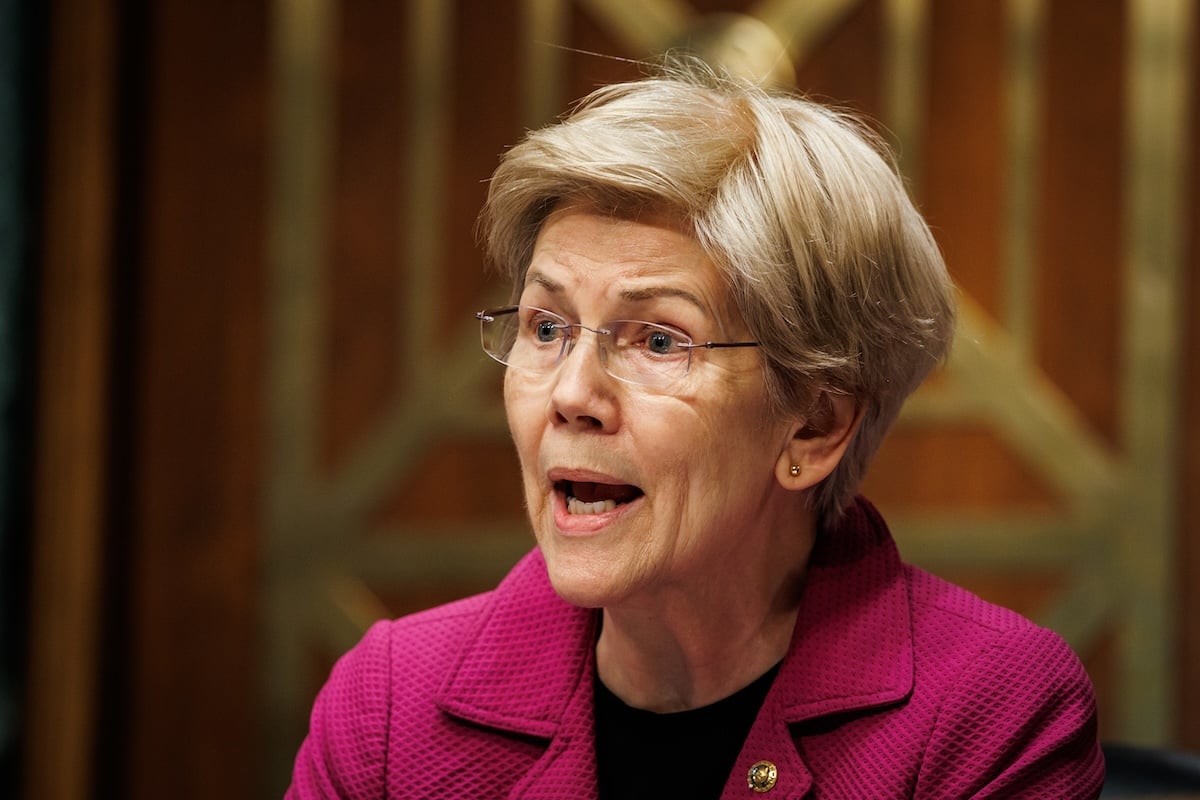
Senator Elizabeth Warren, the expected Senate Banking Committee chair, named a 10% credit card cap as her first example of a deal Democrats could cut with the White House. “I got the bill. I’m ready to go,” Warren told CBS’s Face the Nation.
In October, President Trump said he might back a student loan rate cap, telling reporters it’s “something that I would certainly consider.” That revives the 0% and 2% student loan rate bills we covered this spring.
Would you like to save this?
Why It Matters
Federal student loans interest rates for the 2026-27 school year carry fixed rates of 6.52% for undergraduates, 8.07% for graduate students and 9.07% for PLUS loans. Those rates went up again this year, and are likely to go up again next year as well. A 2% or 0% cap would cut roughly 4.5 to 9 percentage points off what borrowers pay.
Credit card accounts charged interest paid an average of 22.36% in the third quarter of 2026, according to Federal Reserve consumer credit data. That’s more than triple the undergraduate federal student loan rate, and your student loan interest rate matters less to your monthly payment than most borrowers expect.
How Do The 0% And 2% Student Loan Plans Compare?
One Democratic plan sets federal student loan interest at 0%, and the main Republican-led plan sets it at 2%. There’s a second Democratic bill that also wants to set student loan rates at 2% as well.
| Proposal | Rate | Led By | What It Covers |
|---|---|---|---|
| Student Loan Interest Elimination Act | 0% | Rep. Joe Courtney (D) and Senator Peter Welch (D) | Existing and new federal student loans |
| Affordable Loans For Students Act | 2% | Rep. Mike Lawler (R) and Rep. Anna Paulina Luna (R) | Existing and new federal student loans, including FFEL and Perkins |
| Lowering Student Loans Act | 2% | Rep. Mike Thompson (D) | New and existing Direct Loans |
| Warren Credit Card Cap | 10% | Senator Elizabeth Warren (D) | Credit card interest (draft bill) |
- The 0% bill. Rep. Joe Courtney (D-Conn.) and Senator Peter Welch (D-Vt.) reintroduced the Student Loan Interest Elimination Act in March. It would set existing and future federal student loans to 0%, paid for by a new Education Affordability Trust Fund. The sponsors pushed the bill a second time in July.
- The Republican-led 2% bill. Rep. Mike Lawler (R-N.Y.) introduced the Affordable Loans for Students Act (H.R. 2003) with Rep. Anna Paulina Luna (R-Fla.) and Rep. Jared Moskowitz (D-Fla.). It lowers existing and new federal student loans to 2%, and older FFEL and Perkins student loans could move into a 2% Direct Consolidation Loan. Luna filed a discharge petition in June to force a House vote.
- The Democratic 2% bill. Rep. Mike Thompson (D-Calif.) introduced the Lowering Student Loans Act in March with Del. James Moylan (R-Guam). It sets a fixed 2% rate on Direct Loans made on or after July 1, 2026, and cuts existing Direct Loans to 2%. That start date has already passed, so the bill would need new dates in the next Congress.
On a $30,000 federal student loan repaid over 10 years, a 2% rate saves an undergraduate about $7,800 in interest. A parent with the same PLUS balance would save about $12,600, based on our math using the standard repayment plan.
| Rate | Monthly Payment | Total Interest |
|---|---|---|
| PLUS Loans Today (9.07%) | $381 | $15,740 |
| Graduate Today (8.07%) | $365 | $13,811 |
| Undergraduate Today (6.52%) | $341 | $10,914 |
| GOP-Led Or Thompson Bill (2%) | $276 | $3,125 |
| Courtney And Welch Bill (0%) | $250 | $0 |
What About The 10% Credit Card Cap?
Warren’s draft bill would cap credit card interest at 10%, the same number Trump called for in January. Trump asked for a one-year cap starting January 20, 2026, months before he floated a student loan rate cap. In an April letter to regulators, Warren said the big banks had refused to act on that request. A law would force the change, and Warren will likely hold the committee gavel to move one.
On $6,000 of credit card debt paid off over three years, the 22.36% average rate costs about $2,289 in interest. At 10%, the same payoff costs about $970. An industry coalition including the American Bankers Association warned that a cap “would reduce credit availability,” CBS News reported.
Families carrying both kinds of debt can map out which balance to pay first with our debt payoff calculator.
What Should Borrowers Do Right Now?
Keep paying, and don’t plan around a rate cut that isn’t law. Bills that don’t pass this Congress expire when the new one is sworn in on January 3. That includes the 2% bill behind Luna’s discharge petition, so every proposal has to start over.
Democrats would also need Trump’s signature or enough Republican votes to override a veto.
- Income-driven repayment plan borrowers would see the smallest change. RAP already waives unpaid interest each month, so your payment is set by income, not your rate.
- Anyone weighing a plan change shouldn’t wait on Congress. Use our RAP vs. IBR comparison and switch on your own timeline.
- Borrowers thinking about private refinancing should know all three bills cover federal student loans only. Refinancing federal student loans with a private refinance lender gives up any future federal rate cut, along with federal protections.
- Credit card holders gain nothing by waiting. Pay down the highest-rate balance first, since no cap takes effect until Congress passes one and the President signs it.
How This Connects
The One Big Beautiful Bill Act rewrote repayment plans and borrowing limits but left the federal student loan interest rate formula alone. Cost is the main objection from critics. The American Enterprise Institute notes that the Covid payment pause’s 0% rate cost $60 billion a year, and it argues a 2% cap would mostly help high-balance professionals.
When it comes to credit card debt, any relief would be a big help to Americans.
What’s Next
Watch whether Warren files her credit card bill once the Senate convenes in January. In the House, look for Courtney, Lawler or Thompson to reintroduce a student loan bill. Until a bill is signed, federal student loan rates will keep following the May Treasury auction formula, with new 2027-28 rates set next spring.
Editor: Colin Graves

Robert Farrington is the founder of The College Investor and is widely recognized as one of the nation’s leading voices on student loan debt and saving for college. He holds an MBA from UC San Diego Rady School of Management and has spent over 15 years researching, writing, and advising on student loans, 529 plans, financial aid programs, and saving and investing for young professionals.
Robert has been featured in the The New York Times, The Wall Street Journal, The Washington Post, NBC News, and Forbes, where he has been a regular personal finance contributor for over a decade. His work combines both professional expertise and personal experience – he successfully navigated his own student loan repayment journey and has helped thousands of readers do the same.
He is committed to making the intersection of personal finance and education transparent and accessible. You can learn more about Robert on the About Page or on his personal site RobertFarrington.com.