Key Points
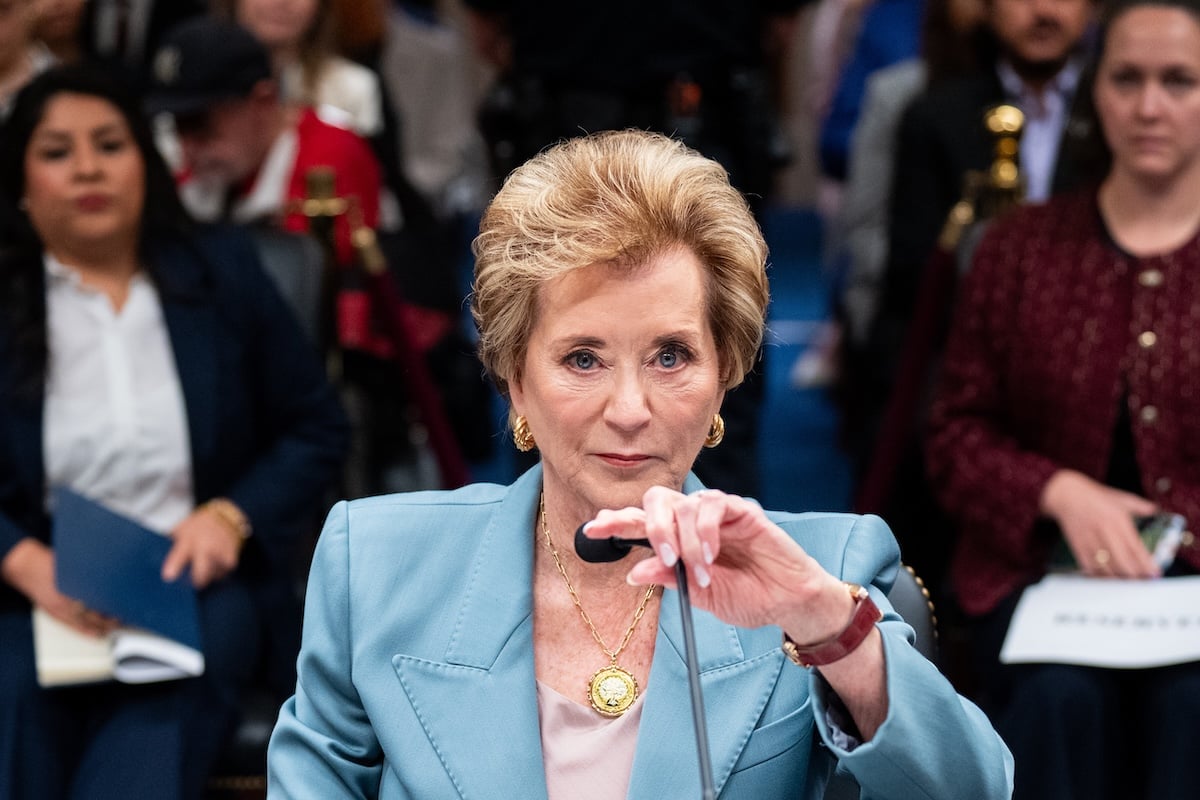
- Student Defense filed a class action on October 28, 2026, against the Education Department and Secretary Linda McMahon.
- The suit says a January 2025 decision expanded closed school discharges for CEC, EDMC, ECA and Bay State College students.
- It alleges the department hasn’t granted a single discharge under that decision and asks the court to force relief.
Student Defense filed a class action lawsuit (PDF File) on October 28, 2026, against the Department of Education and Secretary Linda McMahon. The suit claims the department has refused to carry out a January 2025 decision that expanded closed school discharge eligibility for thousands of former for-profit college students.
Closed school relief is one of the federal student loan forgiveness programs borrowers can qualify for, but it only helps if the department processes it.
The 2025 decision covered campuses run by Career Education Corporation (CEC), Education Management Corporation (EDMC), and Education Corporation of America (ECA), plus Bay State College. Those operators ran brands like Le Cordon Bleu, the Art Institutes, Argosy University, and Virginia College, which show up throughout our for-profit college student loan forgiveness list.
The lead plaintiff, Kendrick Gaussoin, attended the CEC-owned Brooks Institute and was denied a discharge in August 2026.
Would you like to save this?
Why It Matters
A closed school discharge cancels the federal loans a borrower took out to attend the school, and federal rules require a refund of payments already made on them. Borrowers without it keep accruing interest, and those in default face Treasury offset and wage garnishment on defaulted student loans.
A Government Accountability Office review found more than 1,100 colleges closed from 2010 through 2020, affecting about 246,000 borrowers. Only about 80,000 of those borrowers had loans forgiven through a closed school discharge.
Closures haven’t stopped, and our tracker of colleges closing in 2026 already counts nine (with more coming in 2027).
Which Schools And Dates Are Covered
Normally, a borrower qualifies for Closed School Discharge if they were enrolled when the school closed or withdrew within 120 days before closure. That window grows to 180 days for loans first disbursed on or after July 1, 2020. Career programs follow the same rules, as our breakdown of trade school loan forgiveness shows.
The Secretary of Education can extend the date when a school closes under “exceptional circumstances,” which the department did for these four operators on January 16, 2025.
| Operator | Extended Date | Schools Covered | Why This Date |
|---|---|---|---|
| Career Education Corp. | May 6, 2015 | Le Cordon Bleu, Brooks Institute, Missouri College, Briarcliffe College, Sanford-Brown | CEC announced it would close or sell all but two brands |
| Education Corp. Of America | Dec. 16, 2016 | Virginia College, Brightwood College, EcoTech, Golf Academies | ECA’s accreditor lost federal recognition |
| Education Management Corp. | Oct. 17, 2017 | Art Institutes, Miami International University of Art & Design, Argosy University | EDMC sold its schools to Dream Center Educational Holdings |
| Bay State College | April 23, 2021 | Bay State College (Massachusetts) | Accreditation problems began, and the school closed in August 2023 |
The decision also directed Federal Student Aid to notify eligible borrowers. It told the agency to pursue automatic discharges for closures between 2013 and 2020 when the borrower didn’t enroll elsewhere within three years.
Automatic relief has drawn legal fights before, which we covered in our look at whether automatic student loan forgiveness is legal.
How Gaussoin’s Claim Was Denied
Gaussoin enrolled at Brooks Institute in Ventura, California, in September 2014 and paid for it with federal student loans. He took an approved leave of absence after the fall 2015 term, and his last day of attendance was December 17, 2015. Brooks Institute closed in August 2016 before he could return. The leave put him outside the standard window but inside the May 6, 2015 date set for CEC schools.
He applied on August 23, 2026, citing the extended window. Eight days later, MOHELA, a servicer that has faced multi-state probes over its loan servicing, denied him on the department’s behalf. The letter said he “withdrew more than 180 days before the school closed” and never mentioned the 2025 decision. The complaint adds that his pre-2020 loans fall under the 120-day rule, so the letter cited the wrong standard.
Gaussoin owes nearly $22,000 including interest. His mother, Christine, owes about $28,000 in Parent PLUS loans for his schooling, and her application for forgiveness was also denied this month. Parent PLUS loans qualify when the student does, which matters given how few repayment and forgiveness options Parent PLUS borrowers have.
I qualify, but my application was denied anyway. Now I am a father of two, struggling to get by and still carrying debt for a school that failed me.” — Kendrick Gaussoin, in a statement
What The Lawsuit Asks For
The lawsuit claims the department violated the Administrative Procedure Act by refusing to process these discharges without public notice. It alleges the department has “not granted a single closed school discharge pursuant to the 2025 Decision” since January 2025. That claim echoes earlier suits accusing the Education Department of blocking student loan forgiveness.
The suit asks the court to:
- Certify a class of borrowers from covered schools who left on or after the extended date without a discharge
- Order the department to implement the 2025 decision and notify eligible borrowers
- Direct servicers to stop collection on class members’ loans until discharges go through
- Overturn Gaussoin’s denial and send his application back for approval
The Department cannot make promises to students and then pretend that those promises do not exist.” — Alexander Elson, co-founder and vice president of Student Defense
What The Education Department Says
The department told NPR it stands by how it has run the program. Spokesperson Ellen Keast said the Biden administration pursued “unlawful policies to shift student loan debt onto the back of every single hardworking American taxpayer.”
She added that a former undersecretary “used the stroke of a (digital) pen to inappropriately expand the closed-school discharge period.”
The department has lost related fights in court, including when the Ninth Circuit rejected its bid to delay loan forgiveness.
How This Connects
Gaussoin’s case follows another suit over Education Department loan forgiveness that borrowers say never fully processed. On September 24, 2026, the Project on Predatory Student Lending sued over $4.6 billion in cancelled loans the department still reports to credit bureaus. That case, Woods v. U.S. Department of Education, sits in the same D.C. federal court and covers group discharges for more than 1.5 million borrowers.
The two cases share more than a courthouse. MOHELA handled the lead plaintiff’s loans in both, and an FSA email cited in Woods admitted it had “not directed MOHELA to process your loan discharge.”
The Art Institutes appear in both cases, as one of the chains in the 2025 closed school decision and one of the schools in the Woods group discharges. The Art Institutes’ discharge status is tracked on our for-profit college student loan forgiveness list.
What Former Students Can Do Now
Check your school and last date of attendance against the table above. If you withdrew on or after your school’s extended date, you can still apply for a closed school discharge and cite the 2025 decision. Keep your transcripts and any denial letter, since eligibility turns on your enrollment dates.
Former students who were misled about costs or job prospects may also qualify for borrower defense to repayment, a separate type of student loan discharge.
A denial leaves you responsible for payments, so skipping them while the case plays out risks default. Borrowers already in default can get out of student loan default through rehabilitation or consolidation. If the court certifies the class, a single order would cover every eligible borrower without each one filing suit.
What’s Next
Federal agencies generally get 60 days after service to answer a complaint. The court will also rule on class certification, and any servicer guidance from the department would signal its next move.
We’ll follow the case in our student loan forgiveness news coverage.
Editor: Colin Graves

Robert Farrington is the founder of The College Investor and is widely recognized as one of the nation’s leading voices on student loan debt and saving for college. He holds an MBA from UC San Diego Rady School of Management and has spent over 15 years researching, writing, and advising on student loans, 529 plans, financial aid programs, and saving and investing for young professionals.
Robert has been featured in the The New York Times, The Wall Street Journal, The Washington Post, NBC News, and Forbes, where he has been a regular personal finance contributor for over a decade. His work combines both professional expertise and personal experience – he successfully navigated his own student loan repayment journey and has helped thousands of readers do the same.
He is committed to making the intersection of personal finance and education transparent and accessible. You can learn more about Robert on the About Page or on his personal site RobertFarrington.com.