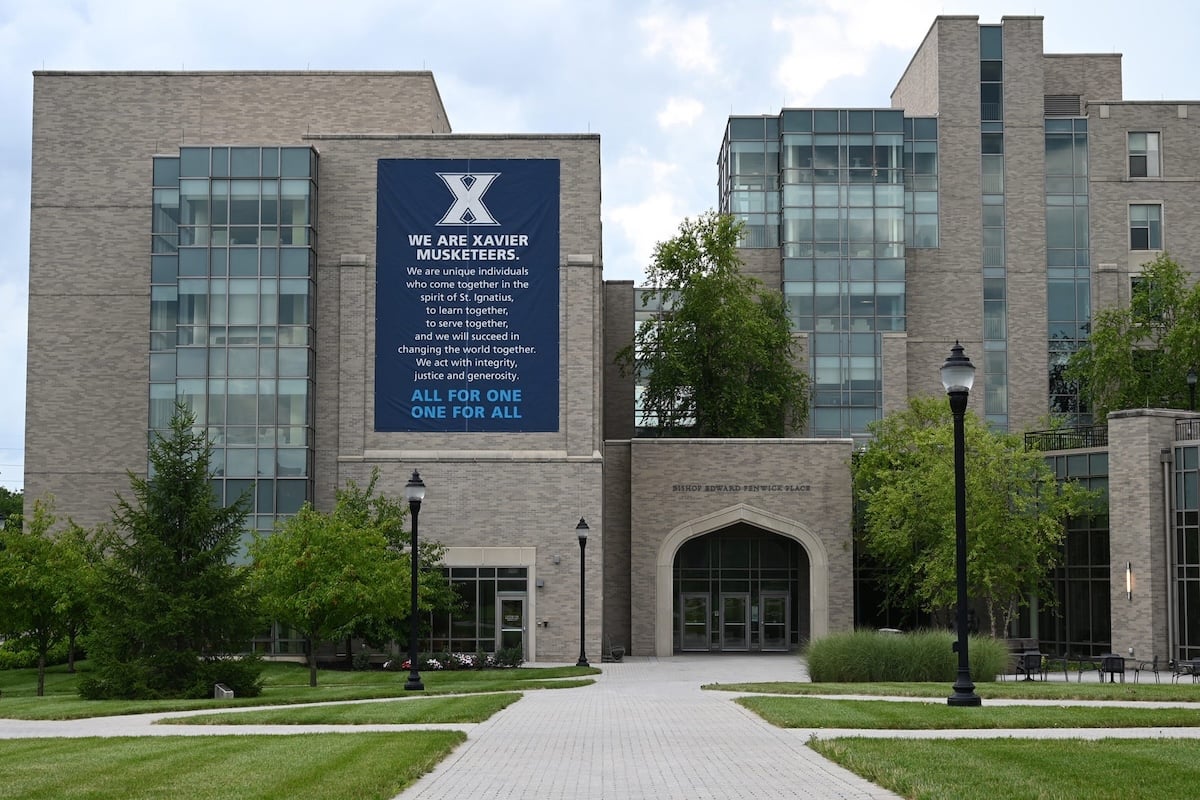
Fitch Ratings downgraded Xavier University to ‘BBB+’ from ‘A-‘ last week, and assigned a Negative Outlook. The action covers the Cincinnati Jesuit university’s issuer rating and $275.6 million in Ohio Higher Educational Facility Commission revenue bonds.
Operating deficits sit at the top of the warning signs families should watch at any college, and that’s what drove this decision.
Fitch cited “significantly weaker-than-expected” preliminary fiscal 2026 results and a budgeted deficit for fiscal 2027. The agency cut its Operating Risk assessment to ‘bb’ from ‘bbb’ and its Financial Profile assessment to ‘bbb’ from ‘a’.
Xavier joins a growing list of private schools under budget strain, including the University of Denver, which cut five departments to close a $30 million gap.
Would you like to save this?
Why It Matters
A ‘BBB+’ rating is still investment grade on Fitch’s rating scale. Fitch did not say Xavier is at risk of closing, and the school does not belong on any list of colleges shutting down in 2026. The downgrade does signal that the university is spending more than it earns, and a lower rating raises the cost of any future borrowing.
For students and parents, persistent deficits tend to show up as program cuts, staff reductions, and tighter aid budgets. Fitch noted that Xavier has already sunset some programs while launching others in health and technology.
Families comparing offers should weigh that against the record 56% average tuition discount at private colleges, which shows how much schools like Xavier already give up in sticker-price revenue to fill seats.
The Numbers Behind the Downgrade
Fitch’s report lays out a school with real strengths and a weak undergraduate pipeline. The details below come from the rating report, and they mirror the pattern behind the record 10.8 million applications that still left 4 in 10 colleges with fewer applicants.
- Enrollment: Total enrollment fell to 4,358 full-time equivalent students from 4,580 a year earlier, a drop of about 4.8%.
- Freshman class: Fall 2026 matriculation rebounded nearly 33% to about 920 students after a sharp drop in fall 2025. The smaller 2025 cohort will weigh on total enrollment for three more years.
- Retention: 86%, which Fitch called solid.
- Cash flow: Fitch-calculated cash flow margins are projected to stay below 5%, even with expected revenue growth.
- Revenue mix: Fundraising, investment income, and other non-student sources made up more than 20% of unrestricted revenue, supported by a $500 million campaign and record fundraising.
- One-time hits: An unplanned switch in enterprise software and a consultant-led “operational transformation” completed in early 2026 added costs.
Xavier also replaced its enrollment management vendor and hired a new enrollment chief in April 2026. Fitch flagged “execution risk” from running that many initiatives at once. Students evaluating aid packages from schools in this position can review how private colleges award merit grants to understand where negotiating room exists.
The Medical School Bet
Xavier’s largest project is its new College of Osteopathic Medicine, which received pre-accreditation from the Commission on Osteopathic College Accreditation in June 2026. Fitch said the build is on time and on budget, with a first class of 90 students planned for fall 2027. Those students will enroll under the new $50,000 annual and $200,000 lifetime federal loan caps for professional programs, with no Grad PLUS loans to cover the rest.
Fitch’s base case assumes “significant tuition revenue growth starting in fiscal 2028” from the medical school. The university must also move $56 million of unrestricted cash into a temporary escrow required for the program. Failing to enroll that first cohort of 90 is one of four triggers Fitch listed for another downgrade, which ties Xavier’s credit directly to how the graduate loan limits affect college finances.
How This Connects
Xavier is a Division I school with a national brand, a solid donor base, and an 86% retention rate, and its rating still fell. The pressure on tuition-dependent private colleges now reaches well past the small rural campuses that fill our tracker of 9 closures and 6 mergers in 2026.
Universities are also absorbing layoffs and program cuts tied to falling international graduate enrollment, which removes another revenue cushion.
What’s Next
Fitch named the signals to watch: fall 2027 new student enrollment, cash flow margins reaching at least 5%, debt service coverage of at least 1x, and available funds staying above 100% of adjusted debt. A planned energy-as-a-service deal will bring in cash, but Fitch will count the related service agreement as a debt-equivalent obligation.
If Xavier balances its budget and stress conditions don’t materialize, Fitch said the Outlook could return to Stable. Families with a student headed to any private college can run the same check using these five financial red flags.
Editor: Colin Graves

Get the latest financial news and actionable insights.
How it works:
- 1Enter your email and subscribe.
- 2Get the latest personal finance and education news delivered every week.
- 3Take control of your finances with real insights.
- 4We won't spam you, ever!

Robert Farrington is the founder of The College Investor and is widely recognized as one of the nation’s leading voices on student loan debt and saving for college. He holds an MBA from UC San Diego Rady School of Management and has spent over 15 years researching, writing, and advising on student loans, 529 plans, financial aid programs, and saving and investing for young professionals.
Robert has been featured in the The New York Times, The Wall Street Journal, The Washington Post, NBC News, and Forbes, where he has been a regular personal finance contributor for over a decade. His work combines both professional expertise and personal experience – he successfully navigated his own student loan repayment journey and has helped thousands of readers do the same.
He is committed to making the intersection of personal finance and education transparent and accessible. You can learn more about Robert on the About Page or on his personal site RobertFarrington.com.