• Skip to primary navigation
  • Skip to main content
  • Skip to primary sidebar
  • Skip to footer

Navigating Money And Education

  • About
  • Podcasts
  • Social
  • Newsletter
  • Save For College
  • Student Loans
  • Investing
  • Banking
  • Taxes
  • Scholarships
  • Forum
  • Search
Home / News / Bill Gates Says Heavy AI Use Could Cause Students To End Up Learning Less

Bill Gates Says Heavy AI Use Could Cause Students To End Up Learning Less

Updated: September 1, 2026 By Robert Farrington | 6 Min Read Leave a Comment

Many or all of the products featured here may be from our partners who compensate us. This doesn't influence our evaluations or reviews. Our opinions are our own. Investing information is for educational purposes only. Learn more here.Advertiser Disclosure

There are thousands of financial products and services out there, and we believe in helping you understand which is best for you, how it works, and will it actually help you achieve your financial goals. We're proud of our content and guidance, and the information we provide is objective, independent, and free.

But we do have to make money to pay our team and keep this website running! Our partners compensate us. TheCollegeInvestor.com has an advertising relationship with some or all of the offers included on this page, which may impact how, where, and in what order products and services may appear. The College Investor does not include all companies or offers available in the marketplace. And our partners can never pay us to guarantee favorable reviews (or even pay for a review of their product to begin with).

For more information and a complete list of our advertising partners, please check out our full Advertising Disclosure. TheCollegeInvestor.com strives to keep its information accurate and up to date. The information in our reviews could be different from what you find when visiting a financial institution, service provider or a specific product's website. All products and services are presented without warranty.

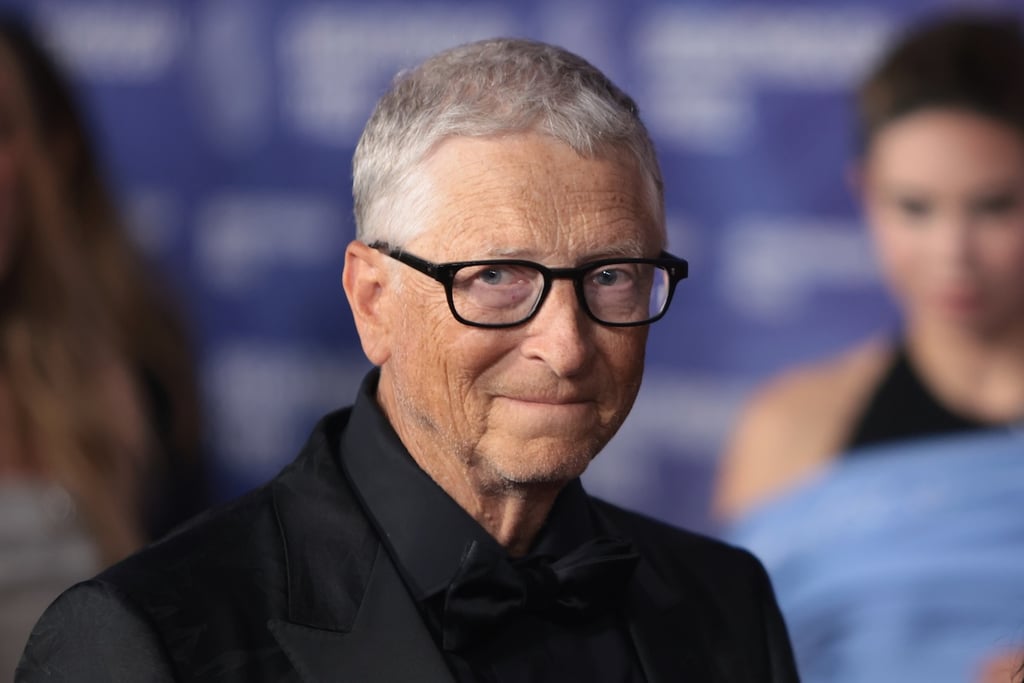
Bill Gates attends the 12th Breakthrough Prize Ceremony at Barker Hangar on April 18, 2026 in Santa Monica, California. Photo: CraSH/imageSPACE/Sipa USA

Bill Gates published a 6,000-word essay on the AI transition, calling it “one of the most turbulent times in human history” and arguing the world has no real plan for it. He organizes the essay around three key risks (permanent job losses, AI-empowered bad actors, and damage to how kids develop and their education), at a moment when AI anxiety is already boiling over on campuses.

The line that should stop educators cold: Gates writes that the same tool that will allow people to learn more than ever “could also lead to many people learning less.”

He points to a preliminary survey that associated heavier AI use with weaker critical thinking, with the effect strongest among younger users.

Would you like to save this?

We'll email this article to you, so you can come back to it later!

Why It Matters

The price of getting higher education wrong continues to rise. Families spent $34,019 on college last year, up 10%, and new analysis projects the Class of 2026 will borrow $43,500 for a bachelor’s degree. If AI use quietly erodes the critical thinking skills that degree is supposed to build, students end up paying record prices for less learning.

Students already sense the ground shifting. A Gallup and Lumina Foundation survey found 47% of college students have considered switching majors over AI, and Americans’ confidence in higher education has fallen to 38%, with AI doubts a named driver of the decline.

The risks translate to K-12 education as well, where many fundamentals of learning need to be build, but heavy dependence on AI tools and online learning tools may prevent them from forming.

The Three Risks Gates Lays Out

Jobs disappear forever. Entry- and mid-level roles are most vulnerable, and the new jobs AI creates will mostly require skills that take years to build. Gates says he’s especially worried about young people entering a workforce with fewer entry-level openings and notes employment has already fallen among young workers in AI-exposed jobs, but not among their older colleagues.

Bad actors get more power. AI-enabled fraud, deepfakes, and cyberattacks against hospitals, power grids, and benefits systems top his list, because attack capabilities are spreading faster than defenses.

Kids’ development gets stunted. This is the risk Gates frames most personally, and it goes well beyond friendships. He says he doubts he would have put in the hard work of building social skills as a kid if an AI companion had been available. They’re always there, never get mad, and, as he puts it, “They don’t push you outside your comfort zone.” Emotional growth is at stake because kids build the capacity to handle life’s bigger risks by facing small ones, and a companion designed to never upset you is, in his words, “a big, protected greenhouse.”

He also warns AI could magnify the harms already showing up with social media (compulsive use, disrupted sleep, cyberbullying, and exposure to harmful content) by making them more persuasive and harder to escape. Early evidence supports the concern: a study of more than 1,100 AI companion users by Stanford and Carnegie Mellon researchers found people with smaller social networks were most likely to turn to chatbots for companionship, and the heavier and more emotionally personal the use became, the worse they felt. Countries including Australia, the UK, and Norway are adopting protections for kids online in response, and China has gone furthest by restricting AI companion apps broadly and banning virtual romantic partners for minors.

What Gates Says About Learning Specifically

The education warning sits inside that third risk, and Gates is blunt about the timing: this is “the worst possible time for humans to lose their critical thinking skills,” because deepfakes and misinformation tailored to individuals make judging what’s true a basic survival skill. The evidence he cites is preliminary (one survey) but it comes when most college admissions offices can’t even tell applicants whether AI is allowed.

He’s not arguing for keeping AI out of school. Gates says AI tutoring can strengthen learning if it preserves what researchers call productive struggle — “the cognitive work that builds understanding.” Done right, the AI explains a new concept up front, then later “holds the answer back and helps them arrive at it on their own.” He also sees AI freeing teachers for one-on-one and small-group time, a real upside when colleges still can’t reliably detect AI-written work and are policing outputs instead of designing better instruction.

Gates also gives education a specific place in his thinking. He proposes a category he calls Human Reserved (jobs societies deliberately set aside for people, the way land gets set aside for nature reserves) and says education and mental health care should be a mix, with a human in charge who uses AI to extend their reach.

How This Connects

Gates’ two education worries compound each other. AI is shrinking the bottom rungs of the career ladder (Stanford research found entry-level software jobs down nearly 20% since 2022) at the same time heavy AI may be making that same cohort of individuals underprepared for the workforce.

The College Board’s Education Pays 2026 report shows the degree premium still holds, but that premium is still backward looking and assumes the graduates built the skills expected in college. The ROI math on college tightens from both ends if they didn’t.

What’s Next

Gates says he’ll publish more on each of the three risks in the coming months, and he floats early policy ideas: national planning for the AI transition, the Human Reserved concept, and a targeted tax on AI to slow the rush away from human labor and fund retraining.

For schools, watch for follow-up research that confirms or refutes the critical thinking concerns he cites. Also, continue to see how colleges formalize AI rules as some are already dropping supplemental essays for 2026-27 rather than fight AI-written applications.

The Gates Foundation, meanwhile, is putting its education dollars behind personalized learning tools, so expect Gates to keep making the case that classroom AI can be built to make students think more, not less.

Editor: Colin Graves

Robert Farrington
Robert Farrington

Robert Farrington is the founder of The College Investor and is widely recognized as one of the nation’s leading voices on student loan debt and saving for college. He holds an MBA from UC San Diego Rady School of Management and has spent over 15 years researching, writing, and advising on student loans, 529 plans, financial aid programs, and saving and investing for young professionals.

Robert has been featured in the The New York Times, The Wall Street Journal, The Washington Post, NBC News, and Forbes, where he has been a regular personal finance contributor for over a decade. His work combines both professional expertise and personal experience – he successfully navigated his own student loan repayment journey and has helped thousands of readers do the same.

He is committed to making the intersection of personal finance and education transparent and accessible. You can learn more about Robert on the About Page or on his personal site RobertFarrington.com.

Please Share And Support

  • Facebook
  • X
  • LinkedIn
  • Reddit
  • Flipboard
  • Bluesky
  • Print
  • Email
Editorial Disclaimer: Opinions expressed here are author’s alone, not those of any bank, credit card issuer, airlines or hotel chain, or other advertiser and have not been reviewed, approved or otherwise endorsed by any of these entities.
Comment Policy: We invite readers to respond with questions or comments. Comments may be held for moderation and are subject to approval. Comments are solely the opinions of their authors'. The responses in the comments below are not provided or commissioned by any advertiser. Responses have not been reviewed, approved or otherwise endorsed by any company. It is not anyone's responsibility to ensure all posts and/or questions are answered.
Subscribe
Notify of
0 Comments
Oldest
Newest Most Voted

Primary Sidebar


Add The College Investor as a Preferred Source on Google
As Featured In

Social Media

Popular Posts

Net Worth of Millennials

Average Net Worth Of Millennials By Age (2026 Update)

A dynamic infographic illustration titled "The College Investor: Best Side Hustles" features a stylized figure of a man in a black shirt on the lower center, gesturing with an open hand towards a list of icons on a light blue panel on the right. The background is a mix of white and light blue, adorned with scattered light blue polka dots and minimalist black line art shapes like plus signs and triangles. The man's gesture highlights three black icons arranged vertically: a funnel, a camera, and a chef's hat, each accompanied by five blue stars, suggesting high ratings for these side hustle categories. This visual aims to help readers identify worthwhile side hustles with high earning potential, good scheduling flexibility, and growth opportunities, tying into the article's focus on effective ways to earn extra money to achieve financial goals like paying off student loans or saving for retirement.

20 Best Side Hustles of 2026: Ranked by Earnings, Flexibility, and Growth

Photograph of the historic Vassar College, a private, coeducational, liberal arts college in the town of Poughkeepsie, New York. Founded in 1861 by Matthew Vassar

30 Most Expensive Colleges in 2026: Tuition Tops $72,000 at Every School on the List

A man with blonde hair, dressed in a white collared shirt, sits relaxed on a wooden bench with his hands clasped behind his head, gazing out over a calm body of water at sunset. A silver laptop is visible next to him on the bench, suggesting he has just finished working or is taking a break while his investments generate passive income. The warm, soft light of the setting sun creates a tranquil atmosphere, emphasizing the freedom and peace of mind associated with achieving financial independence through passive income streams. This image perfectly illustrates the article's core message about earning money without continuous active effort, highlighting the desired outcome of strategic monetary or time investments.

30 Passive Income Ideas To Build Wealth In 2026

IRS Refund Schedule

IRS Tax Refund Calendar And Schedule 2026 (Updated)

529 Plan By Age

How Much Should You Have In A 529 Plan By Age

SAI Chart EFC Chart

2026 – 2027 Student Aid Index (SAI) Chart And Calculator

Side Hustle Ideas

54 Side Hustle Ideas To Make Money Fast

Student Loan Forgiveness Programs

How To Get Student Loan Forgiveness [Full Program List]

wait to repay your student loans

For-Profit College Student Loan Forgiveness List

Ultimate Guides

How To Fill Out The FAFSA | Source: The College Investor

How To Fill Out The FAFSA: 2027-28 Step-By-Step Guide

Student Loan Forgiveness Programs By State

The Full List Of Student Loan Forgiveness Programs By State

529 Plan Guide

529 Plans: The Ultimate Guide To College Savings Plans

Student Loans and Financial Aid By State

Student Loan And Financial Aid Programs By State

Student Loan Advice

The Definitive Guide To Student Loan Debt

Latest Research

MINNEAPOLIS/USA - July 23: Tate Labratory on the campus of the University of Minnesota. The University of Minnesota is a university in Minneapolis and St. Paul, MN and the 6th largest university in the USA.

Why Is College So Expensive? 5 Forces Behind Rising Tuition Costs

EVANSTON, IL,USA - JUNE 20, 2021 - Entrance sign and gardens to Northwestern University.

Are Expensive Colleges Worth It? New Data on Price, Selectivity, and Graduation Rates

Profile views of a young woman and a young man facing each other, set against a grey background adorned with hand-drawn lightbulbs. A single bright yellow lightbulb glows centrally between them, symbolizing the realization or "bright idea" regarding the shifting gender dynamics in higher education. This visual metaphor accompanies an analysis of the growing gender gap in college degree attainment, where women now outpace men in earning Associate's, Bachelor's, Master's, and Doctoral degrees. Source: The College Investor

Gender Gap in College Degrees: 50 Years of Data Explained

Institutional Merit Grants

Who Gets Merit Based Scholarships At Private Colleges?

This image depicts a stylized graphic representing college education and its perceived value, set against a dynamic background of gold and black shapes. A prominent white circular icon in the center showcases a black graduation cap with a tassel, positioned above a rolled-up diploma tied with a ribbon, symbolizing academic achievement and a college degree. To the left, the top of a person's head and shoulders are visible, suggesting a student or individual considering their educational path. The background features various abstract shapes, including long, rounded rectangles in black and gold, smaller white dots, and thin diagonal lines, creating a sense of movement and modern relevance. This visual reinforces the article's theme about Americans weighing in on college costs, education policy, and the worth of a college degree in 2025, particularly given that public sentiment on college value is currently low.

New Poll Reveals How Americans Feel About College

Footer

Who We Are

The College Investor® provides the latest news and analysis for saving and paying for college, student loan debt, personal finance, banking, and college admissions.

Connect

  • Social
  • Contact
  • Newsletter
  • Advertise
  • Press & Media
  • Helpful Calculators

About

  • About
  • In The News
  • Research
  • Editorial Guidelines
  • How We Make Money
  • Archives

Social

Copyright © 2026 · The College Investor® · 2514 Jamacha Rd, Ste 502, El Cajon, CA 92019

Privacy Policy ·Terms of Service · DO NOT Sell My Personal Information

wpDiscuz