The Justice Department on August 27 filed complaints against Arizona, New Mexico, Oregon, and Washington, challenging state laws that allow undocumented students pay in-state tuition and, in some cases, receive state financial aid. The four lawsuits bring the administration’s campaign to 21 states, up from the 12 we counted when DOJ sued Massachusetts and Rhode Island in June.
The legal theory is that federal statutes bar states from giving residency-based higher education benefits to immigrants not lawfully present unless every U.S. citizen gets the same benefit regardless of where they live.
Associate Attorney General Stanley E. Woodward Jr. said the four states “are pushing citizens to the side and ignoring federal law,” per the DOJ release. The complaints also argue the laws create incentives for illegal immigration, a claim that goes beyond Arizona’s residency requirements and targets the policy itself.
Why It Matters
The DOJ’s Arizona complaint puts the difference between resident and nonresident tuition at roughly $24,000 per year, and KTAR reports Arizona State University charges $14,814 for residents versus $39,262 for out-of-state students. That spread is why we tell families that applying out of state can cost tens of thousands over a degree.
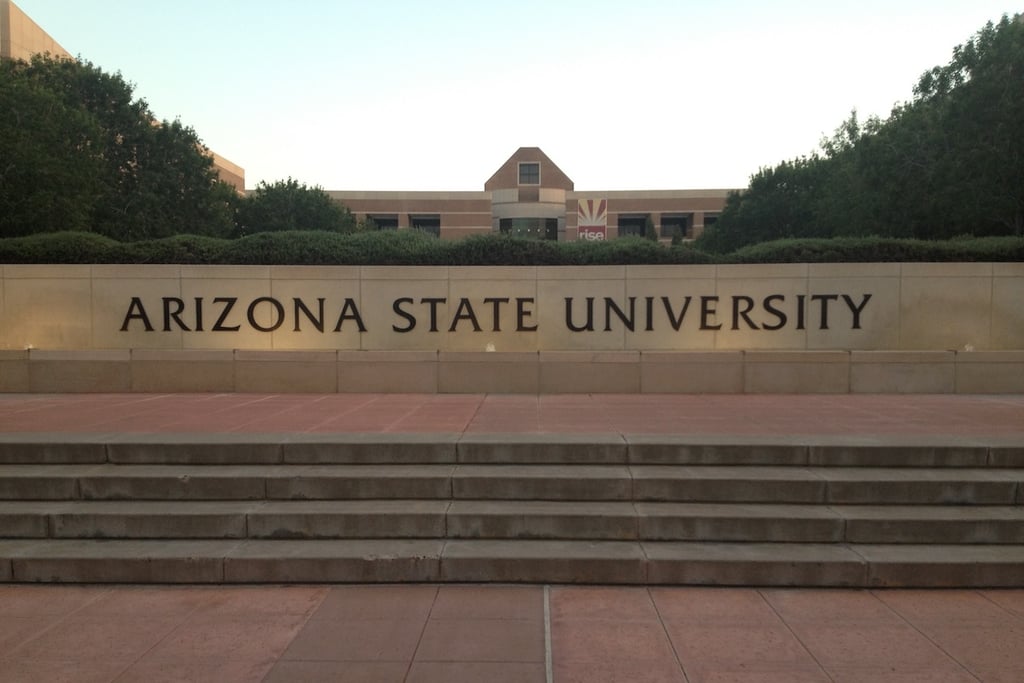
The DOJ says at least 720 undocumented students received in-state rates in Arizona in Fall 2025, including 432 at ASU, and estimates ASU alone gave up about $10.5 million in tuition as a result. Because undocumented students cannot file the FAFSA or receive federal aid, in-state pricing and state grants are often the only alternatives to private student loans available to them.
The Details
- Arizona: Proposition 308, approved by voters in 2022 with 51.2% support allows students to qualify for in-state tuition by attending an Arizona high school for at least two years and graduating. The Arizona Attorney General’s office says the law “doesn’t condition eligibility on residence” but on high school attendance, a distinction that matters under the federal statute’s residency language.
- Washington: Gov. Bob Ferguson told UPI the state “won’t be bullied into changing how we provide opportunities for young people” and expects to win in court.
- Other States: Courts have already blocked laws in Texas, Kentucky, Oklahoma, Nebraska, and Illinois, according to The Bulletin. Cases remain pending in Minnesota, Virginia, California, New Jersey, Kansas, Massachusetts, Rhode Island, Maryland, Colorado, New York, Connecticut, and Vermont.
How This Connects
Several of the five “wins” the DOJ cites happened quickly. Texas, Kentucky, and Oklahoma were permanently enjoined and Nebraska signed a consent decree, as we noted in our June coverage.
The new defendants are a bit different though. Arizona’s law was passed by voters, Arizona’s attorney general is already contesting DOJ’s reading of the statute, and Washington’s governor has said the state will litigate.
That sets up the first real test of whether the “high school attendance, not residency” structure that roughly two dozen states use survives in-state tuition challenges under § 1623.
What’s Next
Watch for motions to dismiss from the four states and whether DOJ seeks preliminary injunctions before the spring 2027 term. Any student currently paying in-state rates under these laws should check with their financial aid office about what happens to out-of-state tuition billing if a court blocks the law before or during a term, as Texas students faced in 2025.
Editor: Colin Graves

Robert Farrington is the founder of The College Investor and is widely recognized as one of the nation’s leading voices on student loan debt and saving for college. He holds an MBA from UC San Diego Rady School of Management and has spent over 15 years researching, writing, and advising on student loans, 529 plans, financial aid programs, and saving and investing for young professionals.
Robert has been featured in the The New York Times, The Wall Street Journal, The Washington Post, NBC News, and Forbes, where he has been a regular personal finance contributor for over a decade. His work combines both professional expertise and personal experience – he successfully navigated his own student loan repayment journey and has helped thousands of readers do the same.
He is committed to making the intersection of personal finance and education transparent and accessible. You can learn more about Robert on the About Page or on his personal site RobertFarrington.com.