
Key Points
- High school seniors often apply to dozens of scholarships, each with unique deadlines and requirements, making organization a challenge.
- A spreadsheet, calendar, or other system can help families manage tasks, track status, and avoid missed opportunities.
- Prioritizing high-value awards, organizing materials, and setting reminders can reduce stress and improve results.
As high school seniors gear up for college applications, many families also turn their attention to scholarships. With tuition costs continuing to rise, scholarships can provide meaningful assistance. But the process of applying for them (each with its own forms, deadlines, and essay prompts) can quickly become overwhelming.
Without a system in place, it’s easy to lose track of what’s due when, or to accidentally submit the wrong materials. Parents and students juggling multiple obligations often find it difficult to stay organized.
That’s why having a dedicated method to manage the process is not just helpful - it’s necessary.
Would you like to save this?
Create A Central Tracker For Everything
The first step is to consolidate all scholarship-related information in one place. A spreadsheet, whether in Google Sheets or Excel, works well for most families. It can include columns for scholarship name, deadline, award amount, status, requirements, submission method, and notes.
Here's an example:
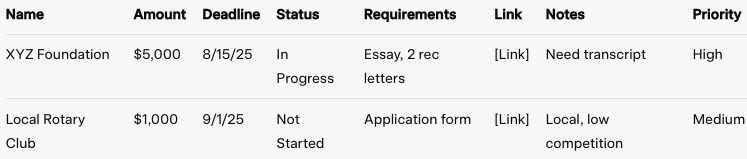
For a more visual option, students can use apps like Trello or Notion to build project boards with cards for each scholarship. Many of these tools allow users to add checklists, due dates, and attachments. They’re particularly helpful for tracking progress across multiple deadlines and requirements.
For families who prefer paper, a printed tracker or scholarship binder can work just as well. The key is consistency: all details should be recorded in the same place, whether that’s a digital file or a notebook.
Color-coding by deadline urgency or award amount can help students prioritize applications. Sharing the document with a parent or counselor adds a layer of accountability that may help students stay on track.
Build A Realistic Calendar
Even the best tracker won’t help if deadlines aren’t met. That’s where a calendar comes in. Whether digital or physical, it should include major scholarship deadlines, but also task reminders spaced out in advance.
For each scholarship, break down the steps: request transcripts, draft essays, follow up with recommenders, and submit the final application. Each of these should have its own internal deadline, ideally set at least a few days before the actual due date.
Setup blocks of time like Saturday afternoons or weeknight study sessions for scholarship work. These sessions help make the process routine rather than overwhelming.
Families should also remember that some scholarships have rolling deadlines or open limited application windows. Submitting early can make a difference, particularly when awards are given on a first-come, first-reviewed basis.
Organize Materials For Easy Re-Use
Many scholarship applications ask for similar documents: transcripts, a list of activities, financial aid forms (like your SAI Score), and personal essays. Keeping these files in a single folder (physical or digital) can save time and reduce errors.
Using a clear naming system for digital files is a small step that prevents big headaches. Instead of “essay-final.docx,” use names like “Smith_LeadershipScholarship_Essay.docx.”
Students should also keep a master personal statement that can be tweaked and reused across applications. With minor edits, this single document can serve as the base for multiple essays.
Requesting multiple copies of recommendation letters early on can also prevent last-minute scrambles. Some students ask their teachers or counselors for a general version of a letter that can be reused with minor updates.
Don't Forget The Follow Up
Once a scholarship is submitted, the process isn’t necessarily over. Some organizations follow up to confirm receipt or request additional information. Others may ask finalists for interviews or essays.
Students should have a dedicated folder in their email inbox for scholarship communications and should keep a log of follow-ups. A simple entry like “Emailed confirmation on 10/5/25” can help if issues arise.
A thank-you note after receiving an award, or even after an interview, is always appreciated and may be remembered when future awards are given. It's sad to see, but for our scholarship, we've maybe only received 2 or 3 thank you letters ever.
FAQs
What is the best tool or method for tracking multiple scholarship applications?
A simply spreadsheet (or shared sheet for families) is the idea tool for tracking scholarship applications.
How do I make sure I never miss a scholarship deadline?
Leverage both your scholarship tracker to include due dates, and include the dates on your calendar or planner.
What documents should I prepare and organize in advance for most scholarship applications?
Most applications will want transcripts, essays, and financial aid forms. Keeping these in a shared folder can make reusing them easy.
Final Tips
Applying for scholarships can be tedious, especially for students managing coursework, college applications, and extracurriculars. Setting small goals (such as “submit three applications this week”) and tracking total potential awards can help students stay motivated.
Even if many applications result in rejections, the return on time for one successful award can be worth hundreds of dollars per hour. Small, local, or niche awards often have less competition and are worth the effort.
Families that stay organized and consistent with their applications are more likely to complete them on time and less likely to leave money on the table.
Don't Miss These Other Stories:
Editor: Colin Graves

Robert Farrington is the founder of The College Investor and is widely recognized as one of the nation’s leading voices on student loan debt and saving for college. He holds an MBA from UC San Diego Rady School of Management and has spent over 15 years researching, writing, and advising on student loans, 529 plans, financial aid programs, and saving and investing for young professionals.
Robert has been featured in the The New York Times, The Wall Street Journal, The Washington Post, NBC News, and Forbes, where he has been a regular personal finance contributor for over a decade. His work combines both professional expertise and personal experience – he successfully navigated his own student loan repayment journey and has helped thousands of readers do the same.
He is committed to making the intersection of personal finance and education transparent and accessible. You can learn more about Robert on the About Page or on his personal site RobertFarrington.com.