
As I mentioned last week, I'm a believer that this upcoming decade will be a bull market, with a solid run over time. But I also forewarned that it may not be a perfect line, and it could be mired with a couple Black Swan Events. Black Swan Events are a metaphor for a surprise event that are beyond the realm of normal expectations, and have a major effect on the world - either financial or not. They are the extreme cases, with probabilities so low that they aren't traditionally computed in standard planning methodology.
The idea of the Black Swan Event has been around for a long time, but was first published by Nassim Nicholas Taleb in his 2004 book, Fooled By Randomness. According to his criteria, to be a Black Swan Event, you must have the following:
- The event has to be a surprise
- The event has to have a major effect (and it doesn't have to be negative)
- After the event, it is rationalized by hindsight as being able to be predicted and/or mitigated
Beyond the financial markets, he highlights the examples of the creation of the Internet and the September 11 attacks as Black Swan Events. He also reminds readers that banks and other financial institutions don't usually take Black Swan Events into consideration in their risk models, and so they aren't prepared to handle them - which we saw in the financial crisis of 2007.
As such, these events can happen again, and here are some of my thoughts on what you need to be aware of.
Black Swan Events to Watch Out For
While Black Swan Events must be a surprise by definition, based on recent history, I think there are several possible events that "experts" have disregarded as not being able to happen, that in reality, could very easily happen in the next decade. Here's what I think you should watch out for.
High Speed Computer Trading Tanks the Stock Market
We've already seen this happen twice:
- The Flash Crash of 2010
- The Knight Capital Debacle of 2012
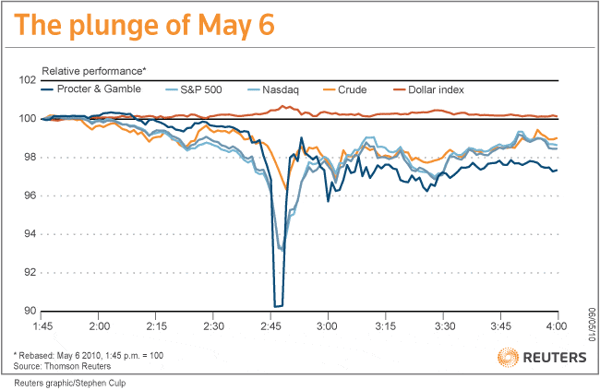
In the Flash Crash of 2010, the stock market dropped 9%, or about 1,000 points, in a matter of minutes because of a high-frequency computer trading program that went haywire. In 2012, Knight Capital had a similar issue, having a computer algorithm send trades that ended up costing the company over $400 million and manipulating the market for over 140 securities.
As computers become the dominating force on Wall Street (they currently make up about 70% of all trades each day), the potential for errors costing trillions of dollars is becoming more and more likely. And while the government and financial institutions implement "safeguards", that just gives a false sense of security before the next Flash Crash actually happens.
China or Europe Collapses
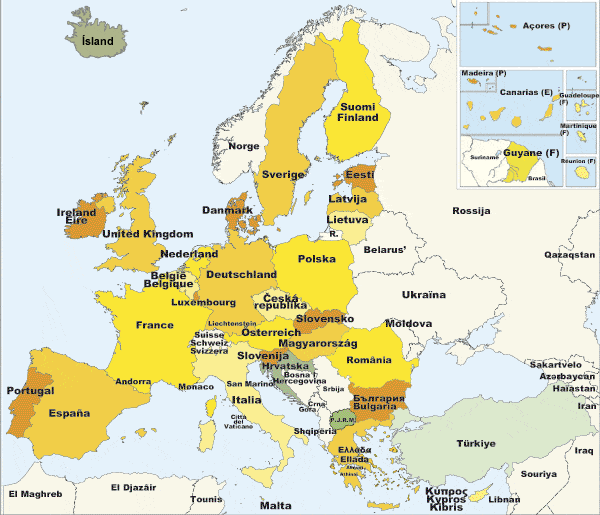
The European Union is the second largest economy if you add up the GDPs of all the member states, but China is slated to take that spot very soon, and is the second largest stand-alone economy behind the United States. And both of these areas are facing significant headwinds over the next decade.
Europe has been dealing with debt and stagnant growth for years, and there has been an on/off again relationship with multiple member countries - Greece, Spain, Portugal. If any one of these countries collapses, or the EU breaks up, it could result in a tumultuous market and result in a huge, unexpected, change to the global economy. This could send a shock that would decimate the stock market.
China, on the other hand, is trying to figure out how to grow in a sustainable way. It has been taking in huge sums of money for decades, and is now starting to experience growing pains as its infrastructure, government, and legal framework is being tested by the growth of its economy. If it were to run into a recession, it could be a huge event that would ripple through the global economy, similar to what US recessions have done before.
Natural Disasters Strike
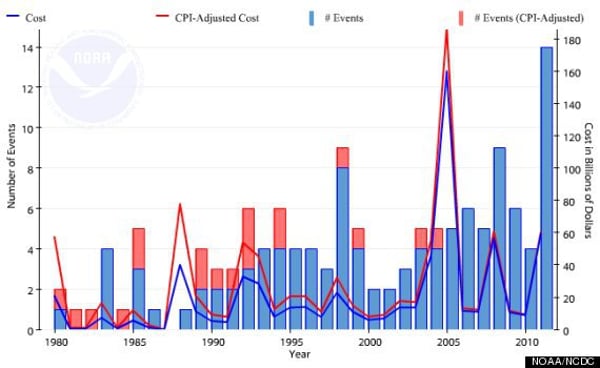
Finally, there are always the potential for more natural disasters. Scientific studies have shown that natural disasters have been increasing in frequency over the last few decades. However, natural disasters by their own regard don't usually impact the economy negatively - in fact, in many cases, the aftermath boosts the economy because of renewed economy spending.
I believe, though, that there will be a combination of issues that mire an upcoming natural disaster that will negatively impact the economy, and be a Black Swan Event. If the way our government handled Hurricane Sandy relief is any indicator, I think future responses to disasters will also be mired in bureaucracy, which will delay the response. Then, if that is compounded with a recession or other event, we could have a severe problem on our hands.
Fast forward to modern day, and look at the crash during the Covid-19 Pandemic.
Strategies for Investing around Black Swan Events
Now that I've highlighted all the doom and gloom that I can think of, how do you cope? There are two basic investment strategies for handling Black Swan Events.
Barbell Investment Strategy
The Barbell Investment Strategy was actually created by Nassim Taleb as a way to mitigate the effects of the events that he labeled. The idea is that you keep about 90% of your investments in ultra-safe assets, like cash and T-Bills, since nobody can predict the future. Then, with the remaining 10%, you invest in highly speculative investments, like venture capital. That way, no matter what happens, you only stand to lose 10% of your portfolio at any given time.
This approach isn't suited to most investors, however. It is too conservative, while at the same time too risky with what you do invest.
Do Nothing Strategy
My strategy for these types of events is the "Do Nothing Strategy". Pretty classy name, huh? It highlights my point that you should probably do nothing and just ride it out. In every Black Swan Event that has occurred, the market has rebounded nicely, and has hit new highs after the event. Black Swan Events are doom and gloom in the short term, but usually end up being blips on the radar in the long term. As such, you have a couple of options:
The name of the game should always be to avoid investing mistakes. Buying high and selling low is always number 1. So don't sell out just because the market has a flash crash. Your best bet in most circumstances will always be to do nothing and watch your portfolio return to its original glory over time.
What are your thoughts on these Black Swan Events? Do you think they're likely to occur? What else do you think can happen?
Editor: Clint Proctor Reviewed by: Chris Muller

Robert Farrington is the founder of The College Investor and is widely recognized as one of the nation’s leading voices on student loan debt and saving for college. He holds an MBA from UC San Diego Rady School of Management and has spent over 15 years researching, writing, and advising on student loans, 529 plans, financial aid programs, and saving and investing for young professionals.
Robert has been featured in the The New York Times, The Wall Street Journal, The Washington Post, NBC News, and Forbes, where he has been a regular personal finance contributor for over a decade. His work combines both professional expertise and personal experience – he successfully navigated his own student loan repayment journey and has helped thousands of readers do the same.
He is committed to making the intersection of personal finance and education transparent and accessible. You can learn more about Robert on the About Page or on his personal site RobertFarrington.com.