Vermont Student Loan Forgiveness Programs
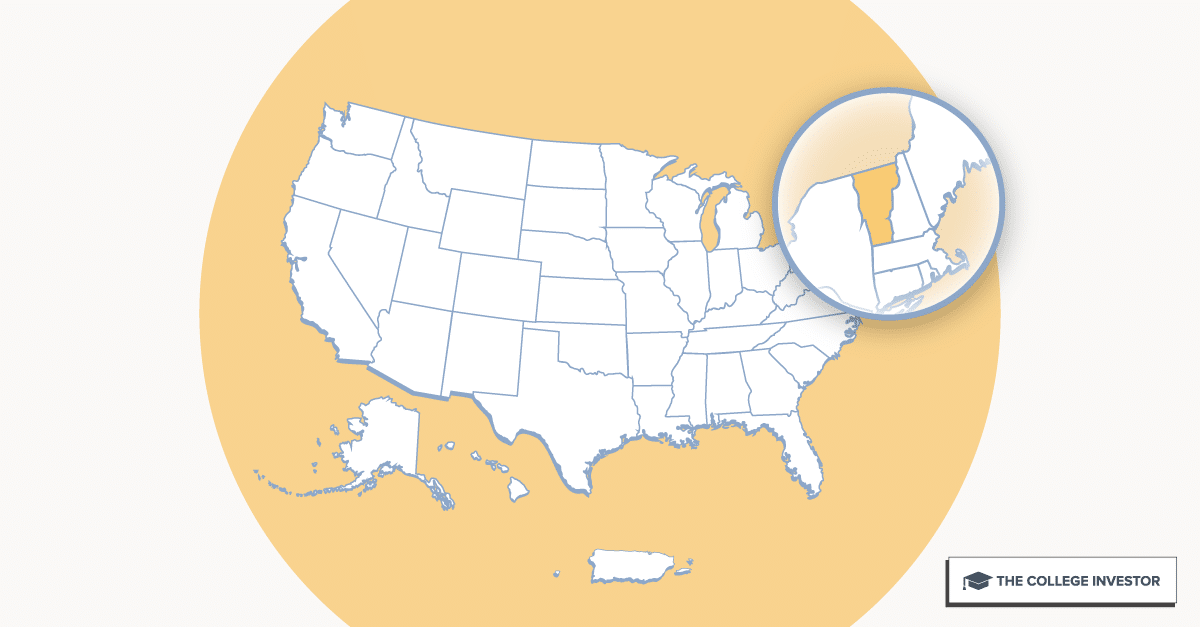
Vermont offers student loan repayment assistance programs for health care workers, early childhood educators, and some lawyers who work in the state. The Educational Loan Repayment Program run by Vermont AHEC matters most, covering doctors, nurse practitioners, PAs, dentists, and nurses, and its 2027 primary care round is open now. K-12 teachers have nothing active at the state level, so they and everyone else should start with federal forgiveness programs.
Vermont Programs At A Glance
| Program | Who Qualifies | Maximum Award | Service Required | Status |
|---|---|---|---|---|
| Educational Loan Repayment: Primary Care | Primary care physicians, psychiatrists, geriatricians, APRNs, CNMs, and PAs | $37,500/year in state/federal funds full time; up to $75,000/year and $450,000 over 6 years with employer match | 12 to 24 months per contract | Open |
| Educational Loan Repayment: Dentists | Vermont-licensed dentists | $25,000/year in state/federal funds; up to $300,000 over 6 years with employer match | 12 to 24 months per contract | Annual Cycle |
| Educational Loan Repayment: Nurses | LPNs and RNs | $10,000/year, up to $40,000 over 4 years | 12 months per award | Annual Cycle |
| Early Childhood Educator Student Loan Repayment Assistance | Early childhood educators earning $60,000 or less | $4,000/year | 12 months in a regulated Vermont program | Rolling |
| VBA Loan Repayment Assistance Program | Vermont Bar Association attorney members earning $90,000 or less | $5,000/year | None published | Annual Cycle |
| Rural Health Transformation Tuition Benefit | Students in nursing, allied health, mental health, EMS, and dentistry | Up to UVM in-state tuition (or a higher-cost VTSU program's tuition) | 5 years in rural Vermont health care | New In 2026 |
| Nurse Faculty Tuition Benefit | Graduate nursing students who will teach nursing in Vermont | Up to UVM in-state tuition | 1 year of full-time nurse faculty work per year of aid | Annual Cycle |
| VT AHEC Scholars Medical Student Incentive Scholarship | UVM Larner third- and fourth-year medical students entering primary care | $40,000 | 1 year as a Vermont physician per year of award | Annual Cycle |
Programs That Help Repay Loans You Already Have
Vermont borrowers average $38,500 in federal student debt, according to our Vermont student loans and financial aid breakdown. These programs send money toward that debt once you're working in a qualifying job. Compare them against Public Service Loan Forgiveness, since many qualifying Vermont employers, including community health centers and public hospitals, are also PSLF employers.
Vermont Educational Loan Repayment Program: Primary Care
Vermont AHEC at the UVM Larner College of Medicine pays full-time primary care providers $10,000 to $37,500 a year in state and federal funds, and awards can reach $75,000 a year and $450,000 over six years once employer match funds are added (UVM AHEC 2027 Overview). The Vermont Department of Health lists this program as the home of the state's federally funded State Loan Repayment Program, which requires service in a Health Professional Shortage Area (Vermont Department of Health). Physicians comparing offers should also read our breakdown of student loan forgiveness for doctors.
The 2027 application deadline is October 16, 2026, and AHEC says late applications won't be considered (UVM AHEC 2027 Flyer). Governor Phil Scott's FY2027 budget proposal cut more than $1.2 million from AHEC, and the House-passed budget restored $550,800 for the loan repayment program (Valley News). Borrowers who miss the deadline can still pursue RAP or another repayment plan while they wait for the next round.
| Administered by | Vermont Area Health Education Centers (AHEC), UVM Larner College of Medicine |
| Who qualifies | Primary care physicians (MD, DO, or ND), geriatricians, psychiatrists, APRNs, certified nurse midwives, and PAs in family medicine, internal medicine, pediatrics, OB-GYN, geriatrics, or psychiatry |
| Award | $10,000 to $37,500 a year full time, or $5,000 to $18,750 a year half time, in state/federal funds; up to $75,000 a year and $450,000 over six years including employer match |
| Commitment | 12 months for job-seeker and recruitment awards, up to 24 months for retention awards; clinical service at least 45 weeks a year |
| Eligible loans | U.S. educational loans with a current balance above $25,000 |
| Restrictions | Employer match of at least $10,000 (full time) or $5,000 (part time) for recruitment and retention awards; sites must accept Medicare, Medicaid, and Dr. Dynasaur; membership-fee practices aren't eligible |
| Residency | Vermont resident at the time of payment; U.S. citizenship required only for federal SLRP funds |
| Status | 2027 applications open through October 16, 2026 |
| Official source | UVM AHEC Primary Care Loan Repayment |
Vermont Educational Loan Repayment Program: Dentists
The dentist track pays $10,000 to $25,000 a year in state and federal funds, with a ceiling of $50,000 a year and $300,000 over six years when match funds are included (UVM AHEC 2026 Dental Overview). AHEC waived the employer match for the 2026 round and says it will return in the 2027 cycle. Dentists weighing this against private-practice income can model their payoff with our student loan calculator.
| Administered by | Vermont AHEC, UVM Larner College of Medicine |
| Who qualifies | Vermont-licensed dentists employed in Vermont who see at least 20 direct patient care hours a week, 45 weeks a year, at one eligible site |
| Award | $10,000 to $25,000 a year in state/federal funds; up to $300,000 over six years including match |
| Commitment | 12 months, or up to 24 months for retention awards; the contract sets a minimum Medicaid patient target |
| Eligible loans | U.S. educational loans with a current balance above $25,000 |
| Status | The 2026 round has closed; AHEC hasn't posted 2027 dental dates |
| Official source | UVM AHEC Dentist Loan Repayment |
Vermont Educational Loan Repayment Program: Nurses
LPNs and RNs can receive up to $10,000 a year in state funds, up to $40,000 over four years, for one-year service commitments at Vermont hospitals, nursing homes, home health agencies, mental health and substance use providers, the health department, free clinics, and K-12 public schools (UVM AHEC 2026 Nursing Overview). Hospitals get priority for psychiatric, substance use, OR, and PACU nurses. Nurses who don't fit have other routes in our roundup of student loan forgiveness for nurses.
| Administered by | Vermont AHEC, UVM Larner College of Medicine |
| Who qualifies | Vermont-resident LPNs and RNs working for an eligible Vermont employer |
| Award | Up to $10,000 a year, up to $40,000 over four years; employer match is encouraged but not required |
| Commitment | 12 months per award, with a new application each year |
| Eligible loans | U.S. educational loans in good standing with a balance above $10,000 |
| Status | The 2026 round has closed; AHEC hasn't posted 2027 nursing dates |
| Official source | UVM AHEC Nurse Loan Repayment |
Early Childhood Educator Student Loan Repayment Assistance
Created under Act 45 of 2021, this program pays early childhood educators up to $4,000 a year toward student loans, and VTAEYC accepts applications year-round on a first-come, first-served basis (VTAEYC). The Vermont Department for Children and Families lists it among its workforce supports for child care staff (Vermont DCF). K-12 teachers should look at the federal options in our list of student loan forgiveness options for teachers.
| Administered by | Vermont Association for the Education of Young Children (VTAEYC) with the DCF Child Development Division |
| Who qualifies | Educators with an associate, bachelor's, or master's degree in early childhood education or a related field (or Career Ladder Level IIIB or higher) who work in a private center-based program, a regulated family child care home, or Head Start |
| Award | Up to $4,000 a year |
| Commitment | 12 months in a Vermont regulated program, averaging at least 30 hours a week and 48 weeks a year (Head Start excepted) |
| Restrictions | Annual salary of $60,000 or less |
| Status | Year-round applications while funds last |
| Official source | VTAEYC Student Loan Repayment Assistance Program |
VBA Loan Repayment Assistance Program
The Vermont Bar Association pays up to $5,000 a year, in two checks, to member attorneys who earn $90,000 or less and carry at least $25,000 in law school debt (Vermont Bar Association). Priority goes to lawyers practicing in underserved parts of the state or in legal fields that serve vulnerable and working people. Legal aid and government lawyers can stack this with PSLF.
| Administered by | Vermont Bar Association LRAP Committee |
| Who qualifies | VBA members licensed in Vermont with income of $90,000 or less and combined student debt of at least $25,000 |
| Award | Up to $5,000 a year; the committee sets the number and size of awards |
| Commitment | The program description doesn't publish a service term |
| Status | The 2026 deadline was January 2, 2026; the VBA hasn't posted the 2027 date |
| Official source | VBA Loan Repayment Assistance Program |
Service-Based Funding For Students In Training
These three programs pay tuition up front and forgive it through service after graduation. They count as forgiveness only if you complete the service, and recipients who don't must repay the money, so weigh them against a private student loan with no strings attached.
Rural Health Transformation Tuition Benefit Program
The Vermont Department of Health, the Agency of Human Services, and VSAC launched this program in 2026 with federal CMS Rural Health Transformation funds, and it replaced VSAC's nursing, dental hygiene, and dentist forgivable loans, which no longer have funding (VSAC). It covers up to UVM's in-state tuition, or the tuition of a higher-cost Vermont State University program, in exchange for five years of rural Vermont health care work (VSAC Program Overview). Nursing students comparing it with other aid should also read our nursing forgiveness roundup.
| Administered by | VSAC with the Vermont Department of Health and Agency of Human Services |
| Who qualifies | Students in LPN, ADN, BSN, and graduate/APRN nursing; dental hygiene, radiology technology, respiratory therapy, and occupational therapy; mental health counseling, marriage and family therapy, social work, and psychology; EMS/paramedicine degree programs; and graduate dentistry |
| Award | Verified tuition charges up to UVM's in-state tuition, or a higher-cost VTSU program's tuition |
| Commitment | Five years, at least 32 hours a week, in a health care setting serving rural Vermont (designated counties, certain Chittenden County zip codes, and community health centers); travel nurses and professionals aren't eligible |
| Residency | Vermont residents get priority; nonresidents can apply if they commit to five years in Vermont |
| Status | 2026-27 funding is exhausted; applications for 2027-28 open October 1, 2026 |
| Official source | VSAC Rural Health Transformation Tuition Benefit |
Vermont Nurse Faculty Tuition Benefit Program
VSAC covers up to full tuition, capped at UVM's in-state rate, for graduate nursing students (including APRN, MSN, and DNP programs) who agree to teach full time at a Vermont nursing school for one year per year of aid (VSAC). Faculty at public colleges also work for PSLF-qualifying employers, which our graduate school forgiveness breakdown covers.
| Administered by | Vermont Student Assistance Corporation (VSAC) |
| Who qualifies | Vermont and non-Vermont residents enrolled at least half time in an accredited graduate nursing program that qualifies them to teach nursing in Vermont |
| Award | Up to full tuition, not to exceed UVM's in-state rate |
| Commitment | One year of full-time nurse faculty work at a Vermont nursing school, following licensure, per year of aid |
| Status | VSAC lists a February 10, 2027 postmark deadline; funding is limited and awarded first-come, first-served |
| Official source | VSAC Nurse Faculty Tuition Benefit |
VT AHEC Scholars Medical Student Incentive Scholarship
Up to 10 UVM Larner medical students entering their third or fourth year receive $40,000 for 2026-27 if they pursue primary care and commit to practicing in rural Vermont outside Chittenden County (UVM AHEC). VSAC told lawmakers the program's grant agreement and funding end June 30, 2027 (VSAC FY27 Testimony). Compare it with a standard medical school student loan before signing.
| Administered by | Vermont AHEC with VSAC |
| Who qualifies | Full-time third- and fourth-year Larner students in family medicine, internal medicine, pediatrics, OB-GYN, or psychiatry; Vermont residency isn't required |
| Award | $40,000 |
| Commitment | One year as a Vermont physician per year of award, starting within one year of finishing training |
| Status | The 2026-27 deadline was February 11, 2026; funding is scheduled to end June 30, 2027 |
| Official source | UVM AHEC Scholarships |
Federal Forgiveness Options For Vermont Borrowers
Federal programs reach far more Vermont borrowers than the eight state programs, and each one runs on its own rules for combining with a state award. Our full list of forgiveness programs covers every federal option.
Public Service Loan Forgiveness (PSLF). Borrowers who make 120 qualifying payments while working full time for a government agency or qualifying nonprofit get their remaining Direct Loan balance forgiven tax-free (StudentAid.gov). Vermont public school teachers, state and town employees, UVM and Vermont State University staff, and nonprofit hospital workers all work for qualifying employers, and our PSLF breakdown covers the 2026 employer rule litigation.
Teacher Loan Forgiveness. Teachers with five consecutive years at a low-income school can receive up to $17,500 if they teach secondary math, science, or special education, or up to $5,000 in other subjects (StudentAid.gov). The same years can't count toward both Teacher Loan Forgiveness and PSLF, which our teacher forgiveness breakdown walks through.
Repayment Assistance Plan (RAP) and IBR. RAP launched July 1, 2026, and forgives any remaining balance after 360 qualifying payments (How RAP Works). Borrowers deciding between plans can run the numbers in our RAP vs. IBR comparison.
Health care programs. Vermont runs a HRSA-funded State Loan Repayment Program through the AHEC Educational Loan Repayment Program covered above (Vermont Department of Health). The National Health Service Corps pays full-time primary care providers up to $75,000 for a two-year commitment, or up to $80,000 with a $5,000 Spanish-language bonus (HRSA), and Nurse Corps pays 60% of nursing debt for two years of service plus another 25% for a third year (HRSA). The STAR program pays up to $250,000 for six years in substance use disorder treatment (HRSA), and our nursing and health care forgiveness roundup covers eligibility for each.
Veterinarians. Vermont has no state veterinary loan repayment program, but the USDA Veterinary Medicine Loan Repayment Program pays up to $25,000 a year for at least three years of service in designated shortage areas (USDA NIFA). Vets carrying private loans should also check our list of private student loan forgiveness options.
Is Student Loan Forgiveness Taxed In Vermont?
Vermont automatically conforms to federal tax rules, so its treatment of canceled student debt follows federal law (The College Investor). The Vermont Department of Taxes says Vermont taxable income starts from federal adjusted gross income, so debt that's excluded federally stays off the Vermont return (Vermont Department of Taxes). PSLF, Teacher Loan Forgiveness, and death and disability discharges stay tax-free at both levels.
Forgiveness under income-driven plans became federally taxable again on January 1, 2026, when the American Rescue Plan exclusion expired, and automatic-conformity states like Vermont follow that change unless they pass their own exclusion (Taxes And Student Loan Forgiveness). Borrowers expecting IBR or RAP forgiveness can estimate the bill with our student loan tax bomb calculator.
Ask AHEC, VTAEYC, or the VBA whether your Vermont award will be reported as income, and read our explainer on the 1099-C and student loan forgiveness before filing.
If Your Job Isn't Covered
Borrowers outside health care, early childhood education, and law won't find a Vermont program, but three options remain. Employers can pay up to $5,250 a year toward your student loans tax-free, and our list of companies that offer student loan repayment assistance shows who offers it.
Borrowers with private loans or high-rate federal loans they don't plan to have forgiven can lower their rate through student loan refinancing. Refinancing federal loans into a private loan ends eligibility for PSLF, RAP, and IBR, so don't refinance a balance you expect to have forgiven.
Families with leftover 529 money can put up to $10,000 per beneficiary toward student loans, which our 529 plan for student loan repayment explainer covers. Vermont savers should also review the Vermont Higher Education Investment Plan.
Frequently Asked Questions
Does Vermont Have A Student Loan Forgiveness Program?
Vermont offers student loan repayment assistance programs rather than broad loan forgiveness. It runs eight service-based programs for doctors, nurse practitioners, PAs, dentists, nurses, early childhood educators, lawyers, and health care students. Borrowers outside those fields rely on federal programs like PSLF and income-driven plan forgiveness.
What Happened To Vermont's Nursing And Dental Forgivable Loans?
VSAC says its Nursing Workforce Incentive Loan, Dental Hygienist, and State Dentist forgivable loans no longer have funding, and it moved those applicants to the new Rural Health Transformation Tuition Benefit Program (VSAC). The new program asks for five years of rural service, so read our nursing forgiveness roundup before committing.
Can Vermont Doctors And Nurses Get Help Repaying Student Loans?
Primary care physicians, APRNs, and PAs can receive up to $37,500 a year in state and federal funds through AHEC, or up to $75,000 a year with an employer match (UVM AHEC). LPNs and RNs can receive up to $40,000 over four years, and federal Nurse Corps funding is covered in our nursing forgiveness roundup.
Does Vermont Help Teachers With Student Loans?
Vermont has no active loan repayment program for K-12 teachers, and VSAC's Teacher Forgivable Loan Incentive ran on carryover money in FY2025 with no new state appropriation (VSAC Testimony). Teachers should look to federal Teacher Loan Forgiveness and PSLF, both covered in our teacher forgiveness breakdown.
Is Student Loan Forgiveness Taxable In Vermont?
Vermont follows federal treatment, so PSLF and Teacher Loan Forgiveness are tax-free while income-driven plan forgiveness granted after 2025 is taxable (The College Investor). Use our tax bomb calculator to estimate what you'd owe.
Related Vermont Resources
How We Sourced This Data
Program details on this page come from the administering agencies: Vermont AHEC at the UVM Larner College of Medicine (2026 and 2027 program overviews), the Vermont Department of Health, the Vermont Student Assistance Corporation, VTAEYC and the Vermont Department for Children and Families, the Vermont Bar Association, the Vermont Department of Taxes, and VSAC's FY2027 budget testimony to the Vermont Legislature. Federal program details come from StudentAid.gov, HRSA, and USDA NIFA, and 2026 budget changes were cross-checked against reporting from VTDigger as republished by Valley News. Read more about how we fact-check and update content.
Page refreshed annually in August, after Vermont's legislative session and agency rule approvals, and reviewed in January for tax season. Last full refresh: September 23, 2026.
Editor: Clint Proctor Reviewed by: Claire Tak

Get the latest financial news and actionable insights.
How it works:
- 1Enter your email and subscribe.
- 2Get the latest personal finance and education news delivered every week.
- 3Take control of your finances with real insights.
- 4We won't spam you, ever!