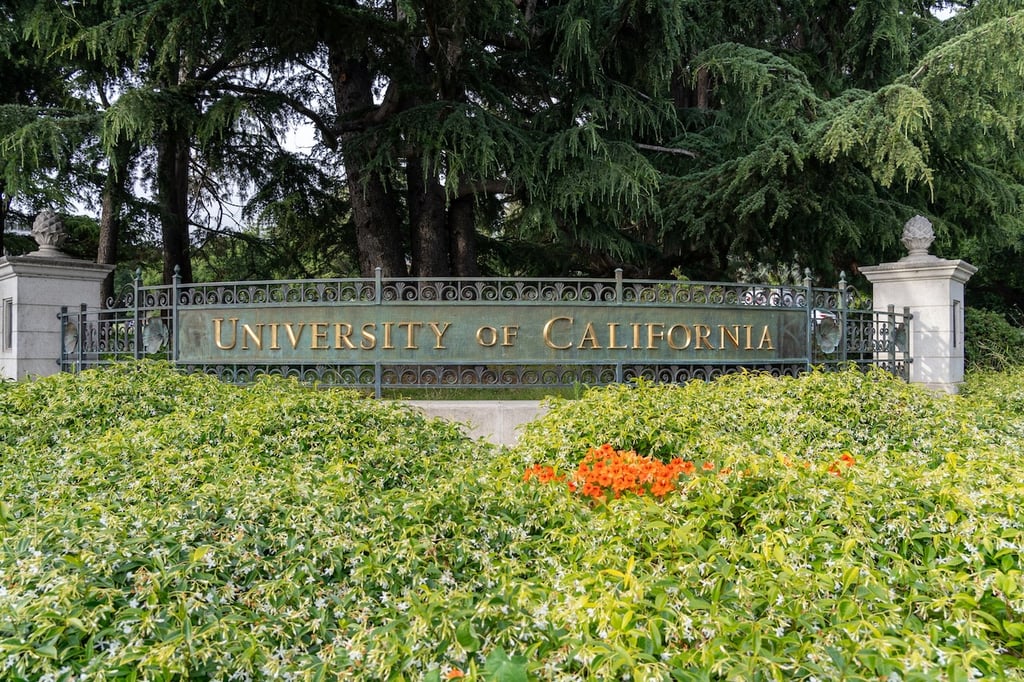
The Justice Department’s Civil Rights Division and the Education Department’s Office for Civil Rights issued joint findings last week that the University of California, Berkeley School of Law discriminates against white and Asian applicants in admissions.
The agencies say the school violated Title VI of the Civil Rights Act and the Supreme Court’s 2023 ruling in Students for Fair Admissions v. Harvard. Investigators point to application questions that asked for racial identity, essay prompts that could be used to identify race, and a practice of grouping admitted students by “primary identity” when assigning them to classes.
Berkeley School of Law is pushing back. Dean Erwin Chemerinsky said in a statement that the school “scrupulously complies with Proposition 209, federal statutes, and the United States Constitution” and that “our admissions policy is clear that race is not considered in any way in admissions decisions.“
The six-page findings letter (PDF File), signed by Assistant Attorney General Harmeet K. Dhillon, lays out the evidence. DOJ opened a compliance review of UC Berkeley on March 27, 2025 and expanded it to the law school on April 18. Berkeley has taken $369 million from the Education Department as of September 3, 2026, which is the leverage behind the federal aid rules that govern schools receiving Title IV money.
Would you like to save this?
Why It Matters
This is the latest in dozens of similar findings against colleges. If history is an indicator, schools facing a Title VI finding tend to scrub identity signals out of the application itself (the checkbox, the prompt, the optional statement) rather than defend them in litigation. Anyone writing a personal statement this cycle should expect narrower prompts and less room to write about background.
The financial side of law school also needs to be a big focus here, and it matters more than ever. The One Big Beautiful Bill Act capped law school borrowing at $50,000 a year or $200,000 total. That means that students looking at these schools need to take into consideration the financial side of things as much as any other factor.
What The Findings Say
The DOJ analyzed applicant-level data Berkeley Law produced for 2019 through 2025. Four figures carry the statistical case:
- Black applicants had 5.8x the odds of admission of comparable white applicants in 2025.
- In 2024 the figure was higher: 6.5x the odds.
- Half of admitted Black applicants scored below 95% of admitted white applicants on the LSAT, across 2024 and 2025 combined.
- 37% scored below 99% of admitted white applicants, a subset of that same group, with scores lower than nearly every white admit.
The letter also publishes median LSAT scores by race for five admitted classes:
| Race | 2021 | 2022 | 2023 | 2024 | 2025 |
|---|---|---|---|---|---|
| Asian | 172 | 172 | 173 | 172 | 172 |
| White | 171 | 172 | 173 | 172 | 172 |
| Hispanic | 168 | 169.5 | 170 | 169 | 170 |
| Black | 165.5 | 166 | 167 | 164 | 167 |
Source: U.S. Department of Justice, Civil Rights Division, Title VI findings letter, September 9, 2026.
The DOJ says Berkeley discriminated against Asian applicants in favor of Black applicants “to a similar degree,” but the letter gives no separate odds ratio for Asian applicants. Median gaps of roughly five points hold across all five years, which is the strongest raw evidence in the document.
Applicants building a graduate school application should read the table as a snapshot of admitted students, not of the applicant pool.
What “Comparable” Actually Meant
It’s important to understand what the DOJ considers comparable applicants. The DOJ built its admissions models on three variables: LSAT, undergraduate GPA, and race. Nothing else in a law school application is in the model. Work experience, the personal statement, letters of recommendation, undergraduate institution, and military or hardship background are all unmodeled, which is likely what Berkeley’s lawyers will focus on if this reaches a courtroom rather than a settlement table like the one UC Davis faced.
Another detail cuts against the government’s framing. The letter concedes the median LSAT gaps “were stable across each admission year, both before and after” SFF. That means that the pattern predates the Supreme Court ruling by years, in a state that banned race-conscious public admissions when Proposition 209 passed in 1996.
DOJ’s answer is that the regressions flag statistically significant preferences specifically in 2024 and 2025, which is the narrow ground the finding actually stands on. A similar dispute over whose read of the data controls is playing out in the Justice Department’s case against George Washington University’s medical school.
The Intent Evidence
However, statistics are only half the issue. The rest is a record of Dean Erwin Chemerinsky’s own words, starting with a 2022 New Yorker interview in which he said schools would need to “find ways to achieve diversity that can’t be documented as violating the Constitution” and replace the “explicit use of race” with “proxies for race.” At an AALS conference he added that “it’s very important not to talk about it in terms of it being an attempt to circumvent the decision.”
DOJ also cites video of Chemerinsky describing “unstated affirmative action” in faculty hiring (not admissions) where he said “if ever I’m deposed I’m going to deny I said this to you,” a distinction worth preserving in any coverage of how admissions offices actually operate.
The application form is the other exhibit. Berkeley Law’s Fall 2025 1L application asked how an applicant would “contribute diversity in our classrooms and community” and noted that past applicants had written about “race/ethnicity.” A separate question asked students to check one “PRIMARY identity” from a list of twelve racial and ethnic categories, framed around being “grouped with other students with whom they share a primary identity.” That prompt is the kind of thing the IRS is separately targeting at private schools through tax-exempt status.
Chemerinsky’s position is that the quotes DOJ assembled are commentary on what the law permits, not a description of what Berkeley Law does.
Reconciling that with the “primary identity” checkbox on the school’s own 2025 application is the work a settlement negotiation or a complaint will have to do, and it is nearly the same argument the government is making in its other case against Harvard.
Two Fronts Are Closing At Once
Context is important here – as the American bar Association just repealed its own rules on diversity.
On September 8, the ABA’s accreditation council voted 10-6 to repeal Standard 206, the rule requiring law schools to show concrete action toward diversity. Council members framed the repeal as self-preservation, worried that keeping the standard would push state supreme courts to reject ABA oversight, which is already happening in Texas.
The department recommended stripping the ABA’s federal recognition as a law school accreditor in August, with a committee vote set for September 23. Losing recognition would sever the ABA from the federal aid pipeline, which is the leverage behind the department’s push to make accreditors prove degrees are worth their cost.
Law schools took hits from accreditation and civil rights enforcement in the same week, and so far they are complying rather than litigating.
How This Connects
This is the third federal admissions finding against a graduate school this year, following UC Davis and George Washington.
The sequence is consistent: request applicant-level data, model it against test scores and GPA, announce a violation, offer resolution before suit.
Two more reviews are open: William & Mary, opened August 17 over scholarships and student benefits, and the City University of New York, opened June 9.
Congress is working oversight from another direction through the MERIT Act’s attempt to tie accreditation to ending legacy admissions.
The practical question is what a law degree costs and how it gets repaid. A J.D. runs through three years of capped federal borrowing, then bar exam financing before the first paycheck, and the repayment options available to lawyers narrowed at the same time federal grad borrowing did.
What’s Next
DOJ is seeking a voluntary resolution agreement and will sue if that fails. However, the letter mentions that Berkeley “refused to comply with requests for compliance information,” which usually shortens the runway to litigation.
Watch the September 23 accreditation committee vote on the ABA, and watch whether the William & Mary and CUNY reviews stay with test-score modeling or move toward scholarships and student programs, which touch far more students than law school admissions ever will.
Common Questions
What Did The DOJ And Education Department Find About Berkeley Law Admissions?
In a September 9, 2026 letter, the Justice Department’s Civil Rights Division and the Education Department’s Office for Civil Rights said Berkeley Law violated Title VI of the Civil Rights Act. They allege the law school discriminated against white and Asian applicants. DOJ says Black applicants had 5.8 times the odds of admission of comparable white applicants in 2025, and 6.5 times in 2024. DOJ’s model accounted only for LSAT scores, undergraduate GPA and race. It left out essays, work experience and recommendations.
How Did Berkeley Law Respond To The Federal Finding?
Berkeley Law Dean Erwin Chemerinsky denied the findings. He said the school “scrupulously complies with Proposition 209, federal statutes, and the United States Constitution.” He added that “race is not considered in any way in admissions decisions.” Chemerinsky says the past remarks DOJ cited were commentary on what the law permits, not descriptions of Berkeley’s practices.
Will This Finding Change Berkeley Law Admissions For Current Applicants?
Berkeley Law hasn’t announced any changes to its current admissions cycle. Schools facing Title VI findings often remove identity questions, essay prompts and optional statements from their applications. Applicants could see narrower prompts if Berkeley reaches an agreement with DOJ. Current applicants should still plan for the financial side of law school, since federal borrowing for law school is now capped at $50,000 a year.
What Happens Next If Berkeley Law Does Not Reach A Voluntary Agreement With DOJ?
DOJ says it will sue Berkeley if the two sides can’t reach a voluntary resolution agreement. The letter also says Berkeley refused requests for compliance information, which usually speeds up the path to litigation. UC Berkeley received $369 million from the Education Department as of September 3, 2026, money tied to Title IV federal aid rules. UC Davis’s medical school ended a similar DOJ finding with a settlement.
Editor: Colin Graves

Get the latest financial news and actionable insights.
How it works:
- 1Enter your email and subscribe.
- 2Get the latest personal finance and education news delivered every week.
- 3Take control of your finances with real insights.
- 4We won't spam you, ever!

Robert Farrington is the founder of The College Investor and is widely recognized as one of the nation’s leading voices on student loan debt and saving for college. He holds an MBA from UC San Diego Rady School of Management and has spent over 15 years researching, writing, and advising on student loans, 529 plans, financial aid programs, and saving and investing for young professionals.
Robert has been featured in the The New York Times, The Wall Street Journal, The Washington Post, NBC News, and Forbes, where he has been a regular personal finance contributor for over a decade. His work combines both professional expertise and personal experience – he successfully navigated his own student loan repayment journey and has helped thousands of readers do the same.
He is committed to making the intersection of personal finance and education transparent and accessible. You can learn more about Robert on the About Page or on his personal site RobertFarrington.com.