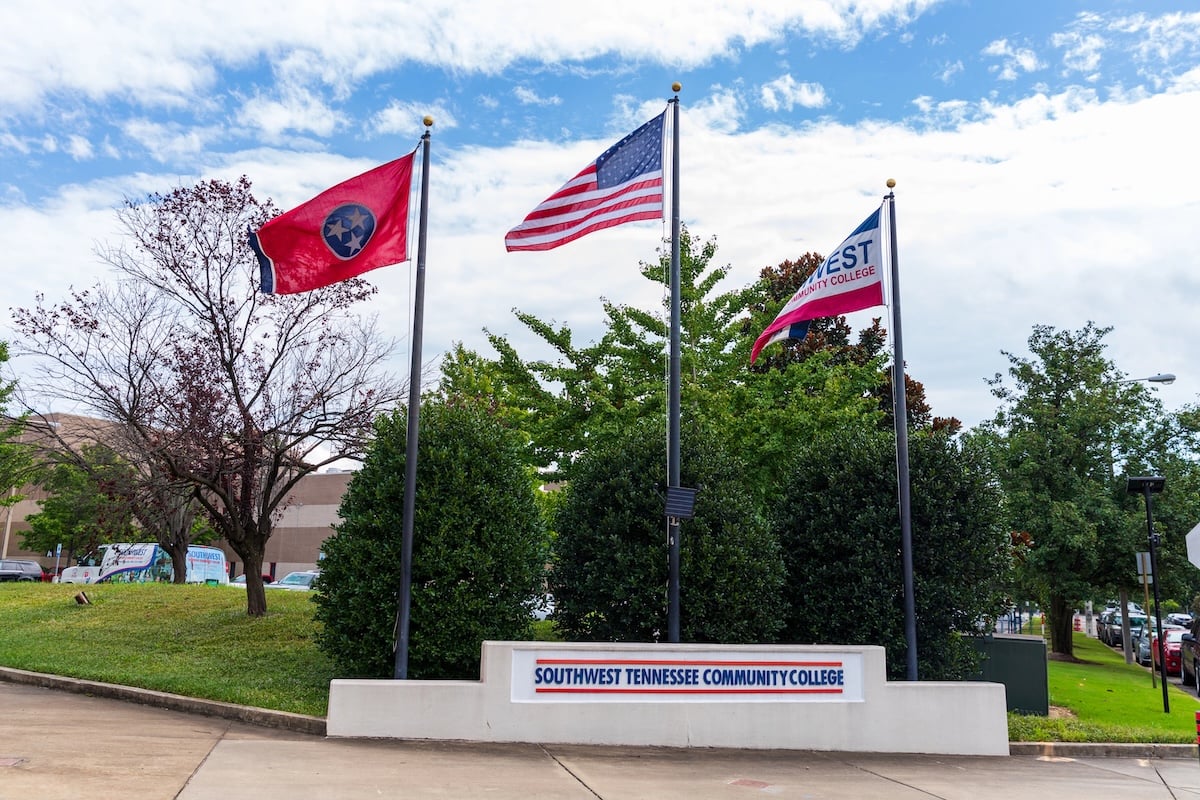
A new NBER working paper finds that Tennessee Promise, the nation’s first statewide free community college program, increased college enrollment, boosted degree completion, raised early-career earnings, and generated enough new tax revenue to more than cover its cost. The researchers estimate the program’s marginal value of public funds is infinite, meaning every public dollar spent produced positive benefits at no net cost to the government.
The study, from economists at the University of Tennessee, Saint Mary’s College of California, and the Tennessee Office of Evidence and Impact, tracks the program from its 2009 single-county pilot in Knox County through statewide rollout in 2015. Tennessee’s model became the template for the more than 20 states that now offer some version of free community college, most using the same last-dollar structure.
The program’s design is simple by financial aid standards. Any Tennessee high school graduate qualifies regardless of income, grades, or field of study, as long as they apply on time, complete mentoring and community service requirements, and enroll at a community college or college of applied technology the fall after graduation. That simplicity make it easy for students to benefit.
Would you like to save this?
Why It Matters
Free college skeptics have long argued that programs like Tennessee Promise just push students into community colleges with low completion rates, diverting them from four-year schools where they’d be more likely to finish. This study directly tested that concern and found the opposite.
Two-year degree completion went up, transfers into four-year schools increased to almost 9%, and bachelor’s degree attainment did not decline. That matters because employers increasingly treat community college pathways as legitimate: a separate NBER study found employers value bachelor’s degrees from community colleges on par with four-year university degrees in hiring.
On the cost side, Tennessee Promise is a last-dollar program that only covers tuition remaining after Pell Grants and state aid, so direct scholarship spending runs under $1,000 per participating student per year on average. That’s a small price for measurable gains, especially when the real cost of college after financial aid remains a barrier for many families.
The Key Numbers
- Enrollment: College attendance among 18-19-year-old high school graduates rose 5.4%, with larger effects for nonwhite students and students outside metro areas.
- Degrees: Associate degree attainment rose 2.9% among 21-year-olds, up to 37%.
- Earnings: Wage and salary income rose 6% to 8% for eligible students at ages 21 through 24.
- Cost vs. Return: Average program cost was calculated at $14,793 per Promise student (including subsidies for induced enrollment), against an estimated $24,845 in additional lifetime tax revenue — a net gain of roughly $10,000 per student for taxpayers.
- Life effects: Promise-eligible students were 27% less likely to be married before age 21 and 17% less likely to have a child in the household by age 22, consistent with more time spent in school.
The Trade-Off
The paper does confirm one trade-off: measured graduation rates at Tennessee’s two-year colleges fell about 6% as more marginal students enrolled, and more students reached four-year schools through transfer rather than direct entry.
But individual students were no worse off. The researchers found no drop in bachelor’s completion five to six years after high school, and slightly positive effects on four-year degrees. That’s a useful data point for families weighing whether college is worth the investment, since the transfer path delivered similar outcomes at a fraction of the tuition cost.
How This Connects
The findings line up with enrollment data showing community colleges are having a moment. For the first time on record, 18-to-20-year-olds are the largest group earning associate degrees, a shift driven by exactly the kind of direct high-school-to-community-college pipeline Tennessee Promise built.
It also reinforces why simple, universal financial aid works: Tennessee Promise has no income cap, no GPA cutoff for eligibility, and no major restrictions. Students just apply on time, complete mentoring and community service, and file the FAFSA.
Research cited in the paper shows each $1,000 in grant aid typically raises degree completion by 1.8 to 2.2 percentage points, and Promise met or beat that benchmark even while college costs continue rising faster than inflation.
The money angle matters too: surveys show money, not grades, is the top reason college dropouts leave. A guaranteed $0 tuition message appears to keep more students enrolled through a degree.
What’s Next
The authors caution that the paper is a working paper and that outcomes are only observed through age 24. Longer-term data will show whether the earnings gains hold.
Watch for other states to cite these results: 23 statewide free college programs exist, most modeled on Tennessee’s last-dollar design, and federal free community college proposals have surfaced repeatedly since 2015.
With tuition discounting at private colleges hitting record highs, the free community college model now has its strongest evidence yet that it works at scale.
Editor: Colin Graves

Robert Farrington is the founder of The College Investor and is widely recognized as one of the nation’s leading voices on student loan debt and saving for college. He holds an MBA from UC San Diego Rady School of Management and has spent over 15 years researching, writing, and advising on student loans, 529 plans, financial aid programs, and saving and investing for young professionals.
Robert has been featured in the The New York Times, The Wall Street Journal, The Washington Post, NBC News, and Forbes, where he has been a regular personal finance contributor for over a decade. His work combines both professional expertise and personal experience – he successfully navigated his own student loan repayment journey and has helped thousands of readers do the same.
He is committed to making the intersection of personal finance and education transparent and accessible. You can learn more about Robert on the About Page or on his personal site RobertFarrington.com.