• Skip to primary navigation
  • Skip to main content
  • Skip to primary sidebar
  • Skip to footer

Navigating Money And Education

  • About
  • Podcasts
  • Social
  • Newsletter
  • Save For College
  • Student Loans
  • Investing
  • Earn More Money
  • Banking
  • Taxes
  • Forum
  • Search
Home / Student Life / Studying and Productivity / How The Feynman Technique Can Help You Learn Faster

How The Feynman Technique Can Help You Learn Faster

Updated: November 12, 2023 By Allison Daniel | 7 Min Read Leave a Comment

Many or all of the products featured here may be from our partners who compensate us. This doesn't influence our evaluations or reviews. Our opinions are our own. Investing information is for educational purposes only. Learn more here.Advertiser Disclosure

There are thousands of financial products and services out there, and we believe in helping you understand which is best for you, how it works, and will it actually help you achieve your financial goals. We're proud of our content and guidance, and the information we provide is objective, independent, and free.

But we do have to make money to pay our team and keep this website running! Our partners compensate us. TheCollegeInvestor.com has an advertising relationship with some or all of the offers included on this page, which may impact how, where, and in what order products and services may appear. The College Investor does not include all companies or offers available in the marketplace. And our partners can never pay us to guarantee favorable reviews (or even pay for a review of their product to begin with).

For more information and a complete list of our advertising partners, please check out our full Advertising Disclosure. TheCollegeInvestor.com strives to keep its information accurate and up to date. The information in our reviews could be different from what you find when visiting a financial institution, service provider or a specific product's website. All products and services are presented without warranty.

Feynman Technique

We begin learning the moment we’re born. As infants, we rely entirely on our senses to understand the world around us and make sense of our place in it. We often think of learning as going to school, reading from a textbook, or listening to a podcast – all physical actions that lead to mental growth. While many forms of learning do occur that way, the act of learning is far more complex.

Learning is a fundamental aspect of our existence – it’s the key to personal growth, adaptability, and success in the modern world. As a species, we constantly seek to acquire new knowledge and understand complex concepts to better engage with the world. Learning holds immense value in our society, and its significance grows as the world becomes more dynamic.

In our quest for knowledge, various techniques and strategies have been developed to support the learning process. One of these methods is the Feynman Technique, created by the Nobel-prize winning physicist Richard Feynman. Let’s dive into what the Feynman Technique is, why it works, and how you can put it into practice.

Table of Contents
What Is The Feynman Technique?
Principles Of The Feynman Technique
1. Pick A Single Concept To Learn About
2. Teach It To Yourself Or Someone Else
3. Pinpoint Where You Get Stuck
4. Simplify Your Understanding
Looking Forward

What Is The Feynman Technique?

Richard Feynman was known for the systematic way that he identified concepts he didn’t know about and then threw himself into understanding them inside and out. In his words:

“Nobody ever figures out what life is all about, and it doesn’t matter.
Explore the world. Nearly everything is really interesting if you go into it deeply enough.”

Feynman possessed a unique talent for explaining difficult scientific concepts in the simplest terms, making him an exceptional scientist and educator. As a professor, he sought better ways to teach students than relying on jargon and complex equations.

His approach to teaching was rooted in the belief that true understanding comes from the ability to explain a concept in plain language.

If you’ve grown up in any educational system, you’ve likely heard that if you can’t explain a concept to others then you don’t understand it well enough. And it's true; if you want to understand something well, you should be able to explain it to others.

Why does this methodology work? Explaining a concept improves your own understanding of that concept. So, by explaining it to others, you’re able to identify where your understanding excels and where it lacks. If you have to resort to using complex terms, you probably don’t fully understand what you’re explaining.

Principles Of The Feynman Technique

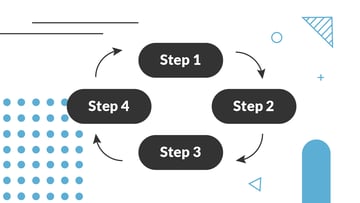
The Feynman Technique is based on a set of core principles that underscore its effectiveness: simplicity and clarity, pretending to teach, identifying knowledge gaps, and engaging in iterative learning. Whether studying with a friend or in your own time, implementing these four steps will help you learn just about anything:

feynman technique

1. Pick A Single Concept To Learn About

Choose something you’re interested in learning about and write it down in your notebook. Be intentional about selecting something you don’t know much about already, something narrow enough to fit on just a few pages.

Why is this step effective? It forces you to face what you don’t know, even if it’s a teeny tiny concept compared to the entire body of knowledge that exists in the world. You’re starting somewhere, and you’re starting small.

2. Teach It To Yourself Or Someone Else

More often than not, we read a chapter in a textbook and run through a few examples, then conclude that our learning is complete. In reality, though, it’s not enough to just read about something to fully comprehend the concept. True understanding rests in actively engaging with the material: write a summary in your own words, recite the information to yourself with your textbook closed, or pair off with a classmate. Do anything that puts the concept into practice.

Teaching others is a critical component because it creates a feedback loop that exposes you to questions and critiques. This step is also where many suggest you try phrasing the concept as if you were teaching it to a child. Children are notorious for asking “why,” and this one word will challenge your assumptions of what you’ve learned. Children also have a limited vocabulary, which doesn’t include jargon. This forces you to use plain language that can be easily understood by anyone.

Why is this step effective? When you have to explain something out loud, it’s easier to find the flaws in your reasoning and the gaps in your knowledge. When you truly understand the concept, you’ll be able to explain it inside and out, and you’ll have the confidence to do so. Think of writing and teaching as ways to obtain knowledge, not something you do only once you have knowledge.

Related: Using Spaced Repetition To Remember What You Learn

3. Pinpoint Where You Get Stuck

The Feynman Technique is not only about what you know – it’s also about what you don’t know. Learning is an ongoing process, and learning something new or complex often requires several attempts. The Feynman Technique promotes an iterative approach to comprehension and encourages you to revisit learning material to solidify your knowledge. Used in conjunction with teaching, identifying where you get stuck and refining your explanations will only deepen your understanding.

Why is this step effective? Rather than conceptualizing your learning as a one-time thing, you are encouraged to go back through the material and refresh your understanding. This ties back to the need to be actively engaged throughout the learning process: when you form your own summaries and reasoning based on source material, you’re better able to commit new information to long-term memory. You’re also better able to recall that information at a later time.

4. Simplify Your Understanding

Don’t confuse knowing jargon with understanding concepts. If your explanation of a new concept includes technical terms or complex language, challenge yourself to simplify them. Repeating big words might make you sound smart, but it isn’t doing any favors for your own understanding – or for those you’re trying to teach. Practice reading your written summaries aloud, paying close attention to any areas where you fumble over the language. Then, distill larger terms and concepts into their most basic form.

Why is this step effective? Memorizing does not equate to understanding. However, relying on analogies has proved to be a useful technique for simplifying big ideas into bite-sized pieces. Making mnemonics, drawing pictures, or creating rhymes – any method that helps you synthesize new information is worth using. Not only does this allow you to make fun and nuanced connections in your mind, but it also creates a mental shortcut for quicker recall later on.

Related: Best Flashcard Apps To Help Students Study Better

Looking Forward

Sometimes we don’t realize we lack an understanding of something until it’s too late. In Feynman’s words:

“The first principle is that you must not fool yourself –
and you are the easiest person to fool.”

The Feynman Technique won’t let you fool yourself into thinking you’ve mastered a concept when you really haven’t, because each step of the process forces you to confront what you don’t know and clarify your understanding. Feynman believed in a multi-disciplinary approach to learning and often turned to creative outlets to help draw connections in his work. I urge you to do the same as you study for course exams and take on new hobbies.

The key takeaway here is this: The ultimate way to ensure you fully understand something internally is to explain it externally, whether that’s to yourself or to someone else. So, the next time you find yourself in front of a blank page, consider it an opportunity to continue your lifelong pursuit of knowledge.

Editor: Ashley Barnett Reviewed by: Chris Muller

Allison Daniel
Allison Daniel

Allison is a policy- and budget-analyst turned personal finance writer with a strong interdisciplinary background in science, government policy and quantitative research.

Based in the Pacific Northwest (by way of being a self-acknowledged transplant), she writes about finance, education, student debt and public policy issues. She uses her analytical foundation to ask the big questions behind personal finance trends, tax rules and student aid policy — and brings actionable insights to readers.

Outside her policy and finance work, Allison also writes about fitness, wellness and curiosity-driven topics that spark discussion.

Please Share And Support

  • Facebook
  • X
  • LinkedIn
  • Reddit
  • Flipboard
  • Bluesky
  • Print
  • Email
Editorial Disclaimer: Opinions expressed here are author’s alone, not those of any bank, credit card issuer, airlines or hotel chain, or other advertiser and have not been reviewed, approved or otherwise endorsed by any of these entities.
Comment Policy: We invite readers to respond with questions or comments. Comments may be held for moderation and are subject to approval. Comments are solely the opinions of their authors'. The responses in the comments below are not provided or commissioned by any advertiser. Responses have not been reviewed, approved or otherwise endorsed by any company. It is not anyone's responsibility to ensure all posts and/or questions are answered.
Subscribe
Notify of
0 Comments
Oldest
Newest Most Voted

Primary Sidebar


Add The College Investor as a Preferred Source on Google
As Featured In

Social Media

Popular Posts

Photograph of the historic Vassar College, a private, coeducational, liberal arts college in the town of Poughkeepsie, New York. Founded in 1861 by Matthew Vassar

30 Most Expensive Colleges in 2026: Tuition Tops $72,000 at Every School on the List

A man with blonde hair, dressed in a white collared shirt, sits relaxed on a wooden bench with his hands clasped behind his head, gazing out over a calm body of water at sunset. A silver laptop is visible next to him on the bench, suggesting he has just finished working or is taking a break while his investments generate passive income. The warm, soft light of the setting sun creates a tranquil atmosphere, emphasizing the freedom and peace of mind associated with achieving financial independence through passive income streams. This image perfectly illustrates the article's core message about earning money without continuous active effort, highlighting the desired outcome of strategic monetary or time investments.

30 Passive Income Ideas To Build Wealth In 2026

IRS Refund Schedule

IRS Tax Refund Calendar And Schedule 2026 (Updated)

529 Plan By Age

How Much Should You Have In A 529 Plan By Age

SAI Chart EFC Chart

2026 – 2027 Student Aid Index (SAI) Chart And Calculator

Side Hustle Ideas

54 Side Hustle Ideas To Make Money Fast

Student Loan Forgiveness Programs

How To Get Student Loan Forgiveness [Full Program List]

wait to repay your student loans

For-Profit College Student Loan Forgiveness List

A dynamic infographic illustration titled "The College Investor: Best Side Hustles" features a stylized figure of a man in a black shirt on the lower center, gesturing with an open hand towards a list of icons on a light blue panel on the right. The background is a mix of white and light blue, adorned with scattered light blue polka dots and minimalist black line art shapes like plus signs and triangles. The man's gesture highlights three black icons arranged vertically: a funnel, a camera, and a chef's hat, each accompanied by five blue stars, suggesting high ratings for these side hustle categories. This visual aims to help readers identify worthwhile side hustles with high earning potential, good scheduling flexibility, and growth opportunities, tying into the article's focus on effective ways to earn extra money to achieve financial goals like paying off student loans or saving for retirement.

20 Best Side Hustles To Earn Money In 2026

Net Worth of Millennials

Average Net Worth Of Millennials By Age

Ultimate Guides

How To Fill Out The FAFSA | Source: The College Investor

How To Fill Out The FAFSA: 2026-27 Step-By-Step Guide

Student Loan Forgiveness Programs By State

The Full List Of Student Loan Forgiveness Programs By State

529 Plan Guide

529 Plans: The Ultimate Guide To College Savings Plans

Student Loans and Financial Aid By State

Student Loan And Financial Aid Programs By State

Student Loan Advice

The Definitive Guide To Student Loan Debt

Latest Research

MINNEAPOLIS/USA - July 23: Tate Labratory on the campus of the University of Minnesota. The University of Minnesota is a university in Minneapolis and St. Paul, MN and the 6th largest university in the USA.

Why Is College So Expensive? 5 Forces Behind Rising Tuition Costs

EVANSTON, IL,USA - JUNE 20, 2021 - Entrance sign and gardens to Northwestern University.

Are Expensive Colleges Worth It? New Data on Price, Selectivity, and Graduation Rates

Profile views of a young woman and a young man facing each other, set against a grey background adorned with hand-drawn lightbulbs. A single bright yellow lightbulb glows centrally between them, symbolizing the realization or "bright idea" regarding the shifting gender dynamics in higher education. This visual metaphor accompanies an analysis of the growing gender gap in college degree attainment, where women now outpace men in earning Associate's, Bachelor's, Master's, and Doctoral degrees. Source: The College Investor

Gender Gap in College Degrees: 50 Years of Data Explained

Institutional Merit Grants

Who Gets Merit Based Scholarships At Private Colleges?

This image depicts a stylized graphic representing college education and its perceived value, set against a dynamic background of gold and black shapes. A prominent white circular icon in the center showcases a black graduation cap with a tassel, positioned above a rolled-up diploma tied with a ribbon, symbolizing academic achievement and a college degree. To the left, the top of a person's head and shoulders are visible, suggesting a student or individual considering their educational path. The background features various abstract shapes, including long, rounded rectangles in black and gold, smaller white dots, and thin diagonal lines, creating a sense of movement and modern relevance. This visual reinforces the article's theme about Americans weighing in on college costs, education policy, and the worth of a college degree in 2025, particularly given that public sentiment on college value is currently low.

New Poll Reveals How Americans Feel About College

Footer

Who We Are

The College Investor® provides the latest news and analysis for saving and paying for college, student loan debt, personal finance, banking, and college admissions.

Connect

  • Social
  • Contact
  • Newsletter
  • Advertise
  • Press & Media
  • Helpful Calculators

About

  • About
  • In The News
  • Research
  • Editorial Guidelines
  • How We Make Money
  • Archives

Social

Copyright © 2026 · The College Investor® · 2514 Jamacha Rd, Ste 502, El Cajon, CA 92019

Privacy Policy ·Terms of Service · DO NOT Sell My Personal Information

wpDiscuz