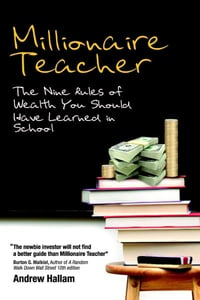
 If you haven’t heard of Andrew Hallam, two thoughts come to mind:
- You’re probably not Canadian
- You probably didn’t check your Amazon Recommended Reading in the past few months
Andrew Hallam is the Millionaire Teacher – a high school teacher who built a million dollar investment portfolio by the time he was 38 years old. He teaches personal finance at Singapore American School, and recently published a book, Millionaire Teacher, which hit #1 on Amazon’s personal finance category in late 2011. He loves travelling, exercising, and as much leisure time as possible. He’s the antithesis of a work-a-holic, but his wife hates it when he refers to himself as “lazy”.
Andrew Hallam’s story is incredibly inspiring to me, because he was able to do what I strive for, and I think many of us in general strive for – creating wealth without “get rich quick” schemes or living extremely frugal lifestyles (although Andrew’s is more frugal than most). He also has the same mantra as I do – helping young adults get the right financial education to make smart financial decisions, to in turn, live wealthier lives.
I recently was able to reach out to Andrew and ask if he would be willing to share more of his story, and he kindly agreed.
An Interview with Andrew Hallam, author of Millionaire Teacher
1) In the book, you define a pretty high bar for wealth. Why do you think it is so important to set such a high bar for what you define as wealthy?
 I think high salaries can trick a lot of people into spending more than they should and that actual wealth (and not just income) should be a person’s barometer.
Imagine somebody filling their swimming pool with water. It gushes into the pool, but the pool has so many cracks at the bottom that the owner doesn’t recognize. He runs around buying a barbecue, deck furnishings, beer, invites all his friends over for a pool party…but when they get there, he has all the trimmings, but just a few inches of water in the pool. Too many high salaried people are financially like that. The water gushing in represents their salaries. The holes at the bottom of the pool represent the expensive, depreciating assets they borrow money to buy. If they don’t plug up the holes at the bottom of their pool they can end up living in a pretend world, and potentially struggling with debts or the NEED to work until they’re 80, just to make ends meet.
My purpose for defining such a high bar for wealth is to show that a person with a salary of $400,000 a year could actually be less wealthy than someone making $50,000 a year. What you do with your money is more important than how much you make.
2) I really like the phrase you used “Education is the great weapon against exploitation”. In multiple parts of the book, you talk about the lack of financial education in school. What would you, as a teacher, ideally like to see?
 I’m very fortunate, because I’ve been able to implement these ideas in my own school. I teach high school personal finance, and we roll up our sleeves and get practical. I think a decent personal finance course should be part of every school district’s mandatory curriculum.
To be honest, kids don’t necessarily learn or absorb financial lessons if you “teach them”. It’s better for the kids to discover them…to take ownership of their discoveries. For example, I ask students to find a hypothetical car to purchase. I then put the kids into groups of three to compare their cars. They look at costs of purchase, reliability ratings, insurance costs for each car, respective fuel costs, repair costs for brakes and clutch (and/or transmission) costs, potential loan interest costs (if they can’t buy it outright) and depreciation. Then they figure out which car will cost them the most over a 5 year period, assuming that they sell it after five years. The total cost difference, however, is just the beginning. They then have to figure out the opportunity cost of having Car A over Car B. If one car, after all expenses, costs $15,000 more than another (after adding fuel, insurance, repairs differences…everything) what does that really cost the student?
This lends itself well to learning about compound interest and the stock market. What if that $15,000 were invested in the markets, averaging 9 percent a year for 35 years? It amounts to $306,209. That’s the real cost of making a silly car buying decision when someone is young. I encourage some kids to “choose” a new car, others a used car, others a lease….so they can make these comparisons. So many educational objectives get met with a project like this. And I pretend I really don’t know the answers…that the kids are going to teach me. This, I find, is more empowering than anything I could “tell them”. I think that’s how personal finance classes should be taught. Inevitably, some kid tells me that going without a car for five years is actually worth half a million dollars to them. When you do the math, you can see that they’re often right.
3) Along those same lines, how do we help those that are already out of school?
 Everybody needs to buy a copy of Millionaire Teacher. Wouldn’t that be nice? Seriously, it’s a tough question. It’s tough for people to rewire their thinking—to understand that paying any interest to a credit card company is foolish, to understand that we need to invest for our future, to understand how investment results can be eroded by fees. People need to take action themselves and decide to make goals they can reach, while getting financially educated in the process. Personal finance is pretty easy stuff. It’s tougher to pass a grade 8 math class than it is to learn how to manage your money effectively.
But the marketing industry bombards us with advertisements (buy this and you’ll look and feel sexy!) and the financial news industry tries to make money management sound like some kind of war. It isn’t. I read one writer refer to the financial media as “financial pornography”. She’s right. Just a few good books on the subject of personal finance would go a long way towards helping. Dave Ramsey has some very good books on the market, about getting your financial house in order. I recommend him for inspiration on debt reduction, budgeting etc. And then, when you’re debt free, you can invest. I know of a pretty decent book in that vein!
4) You spend an entire chapter in the book dedicated to highlighting the “salesman” aspect of finance and the financial industry. Most people still don’t understand that. How would you envision the financial industry of 2020 and what would change in it?
The only thing that would change it would be a shift in the market—and I mean, the consumer demand market. Regular people (in a perfect world) would learn that it’s silly to pay an upfront commission for a mutual fund. And they would learn that it’s silly to pay a deferred sales load on a mutual fund that you may end up selling. They would learn that it’s crazy to pay an advisor’s wrap fee on a mutual fund account. And they would also learn that most actively managed mutual funds charge hefty hidden fees that (when compounded) can cost investors hundreds of thousands of dollars in lost opportunity costs—much like the example I gave of the poor car choice, only far far worse.
Once the market (the average investor) learns these things, then the industry won’t be able to sell as many of its self-serving products. The industry will be forced to sell more upstanding products, because the public won’t put up with the industry’s gouging any longer. That won’t happen by 2020. But with some luck, we’ll eventually get there.
5) Throughout the book you highlight some on the financial mistakes you made. What do you consider your biggest, and what did you learn from it (that we can learn too!)?
Past results don’t equal future results: that’s the biggest lesson I learned. I got involved in a scheme that paid investors 54% a year. At first, I was reluctant to get on board. But a friend of mine had been making 54% annually like clockwork for nearly eight years. I knew about the investment the moment he made it. I tried convincing him not to go for it. But he did. And he made hundreds of thousands of dollars. If something sounds too good to be true, it usually is. I knew that, but I still (eventually) got seduced by the investment, late in the game, and consequently lost money. I detailed the experience in my book. It’s pretty embarrassing to think that I fell for it, but it goes to show how weak we can all be when greed dangles its carrot.
6) What inspired you to write that first editorial on Warren Buffett, and what drove you to continue from that point on?
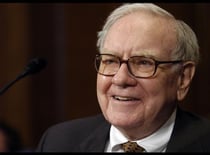 Buffett’s financial lessons really resonated with me. The guy is so practical. The investment world makes itself out to be so complicated, and then, here’s this guy from Omaha with the best, documented investment track record in history, and he touts simple investment methods that make so much sense. I wanted to bring what I learned (about Buffett) to a broader audience. To be honest, the teacher in me wanted to share what I learned.
7) You mentioned that prior to writing this book, you scoured through stacks of other personal finance books. Do any of these other books/authors/financial planners influence you?
Absolutely! Michael O’Higgins’ dispassionate thinking very much resonated with me. I think he’s a financial genius. He wrote an amazing book called Beating the Dow with Bonds. And he’s coming out with a new book soon, so watch out for it. Not following the crowd is the best lesson I learned from O’Higgins.
Anything written by John Bogle is a must—although his writing tends to be pretty academic. I would say the same thing about David Swensen, Yale’s endowment fund manager. Swensen’s book, Unconventional Success is a gem that everyone should plough through at some time in their lives. Take your time to understand these two books and you’ll know oodles more than 99% of financial advisers.
Burton Malkiel’s book, a Random Walk Down Wall Street is another superbly researched book. It’s an absolute classic.
And you can learn a lot from William Bernstein also. He wrote The Four Pillars of Investing and The Investors Manifesto. Great books.
8) What are you currently working on?
Currently, I’m writing for Canadian Business magazine and for AssetBuilder (an amazing U.S. financial service provider).
I’m toying with the idea of writing a money book for teens. My publisher certainly wants it, to benefit from the momentum of Millionaire Teacher. But for now, I think I’ll just enjoy the success of the first book. There’s no need to jump into any kind of rat race to sell more books. My motive for writing Millionaire Teacher was an educational one, and I’m thrilled that so many people have read it.
9) Do you have any specific advice for college students and young adults to set themselves up for financial success?
To be successful, it helps to find some financial role models. Perhaps it’s a person you connect with on a person finance blog. Perhaps it’s a personal finance author who paves a path you can follow. Perhaps you’ll be even luckier. I was inspired by a millionaire mechanic who put me on the right track. You might meet someone similar. Find these sources, and spend some time with them. And don’t forget to talk to your friends about this stuff. It’s a bit like a great exercise regime. If some of your friends are doing it too, it gets a lot easier!
Lessons Learned
 I just wanted to take a second to thank Andrew for his time in answering my questions and sharing his stories with us.
If you haven’t already done so, you should check out Andrew’s book Millionaire Teacher. It is a great read! You can also check out Andrew at his blog www.andrewhallam.com, or on Facebook.
Being a personal finance blogger, I have experienced many of the things that Andrew brought to light in his interview and covered more in depth in his book. Andrew is a great teacher, and I think that many of the tactics mentioned here and in the book are the direction we need to go in terms of financial education.
While it won’t happen overnight, hopefully we can bring change and help everyone live wealthy lives!
Editor: Clint Proctor Reviewed by: Chris Muller

Robert Farrington is the founder of The College Investor and is widely recognized as one of the nation’s leading voices on student loan debt and saving for college. He holds an MBA from UC San Diego Rady School of Management and has spent over 15 years researching, writing, and advising on student loans, 529 plans, financial aid programs, and saving and investing for young professionals.
Robert has been featured in the The New York Times, The Wall Street Journal, The Washington Post, NBC News, and Forbes, where he has been a regular personal finance contributor for over a decade. His work combines both professional expertise and personal experience – he successfully navigated his own student loan repayment journey and has helped thousands of readers do the same.
He is committed to making the intersection of personal finance and education transparent and accessible. You can learn more about Robert on the About Page or on his personal site RobertFarrington.com.