Delaware 529 Plan And College Savings Options
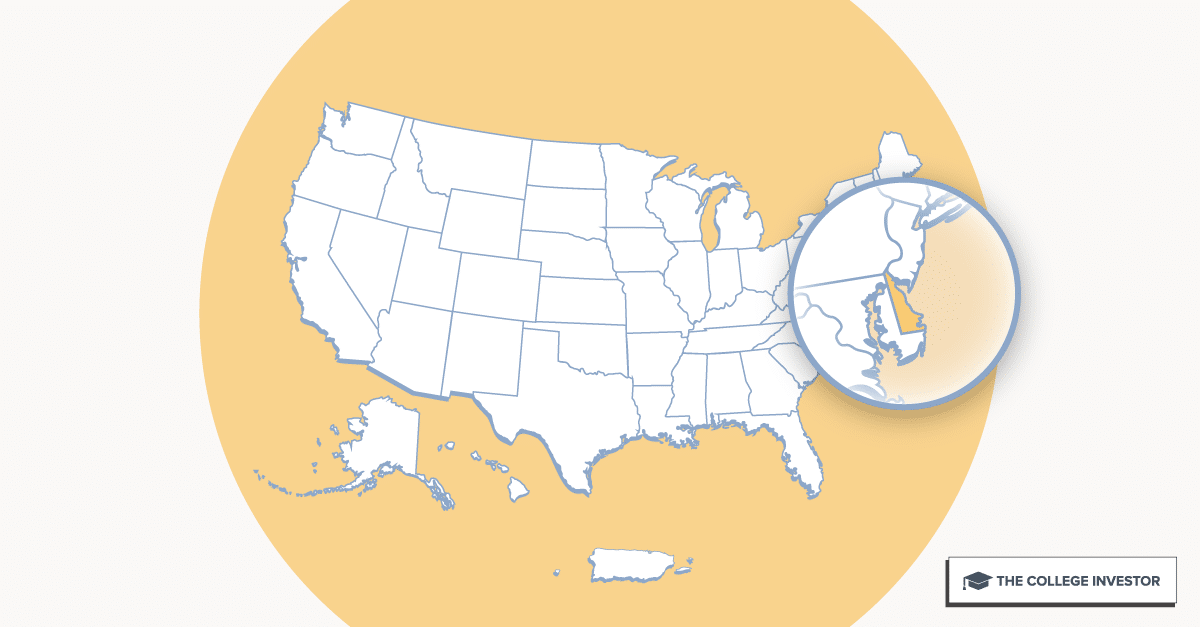
Delaware's 529 plan is the DE529 Education Savings Plan, a direct-sold plan run by Fidelity, and its index portfolios make it a solid low-cost pick for Delaware families. The state deduction is small and has income limits: up to $1,000 per taxpayer or $2,000 on a joint return, and only if federal adjusted gross income is $100,000 or less ($200,000 joint). Two Delaware-specific traps stand out: contributions meant for K-12 tuition aren't deductible, and families over the income limits get no home-state tax edge from DE529. If you're new to these accounts, start with how 529 plans work.
Delaware 529 Plans At A Glance
| Plan | Type | Annual Cost | Who It's For | Status |
|---|---|---|---|---|
| DE529 Education Savings Plan | Direct-sold savings plan | 0.10%–0.93% all-in; 0.12% on the index age-based portfolios; no annual account fee | Families who open and manage the account themselves | Open |
Delaware 529 Tax Deduction And Tax Rules
Delaware lets each taxpayer subtract up to $1,000 a year in DE529 contributions, or $2,000 on a joint return, but only if federal adjusted gross income is $100,000 or less ($200,000 or less for joint filers) (Delaware Division of Revenue). The statute gives the subtraction to any individual who contributes, doesn't allow it for money added through a rollover or beneficiary change within DE529, and has no carryforward (30 Del. C. § 1106). Our state-by-state 529 tax deduction table shows how that compares with neighboring states.
Delaware also bars the deduction for contributions intended or used for K-12 tuition at a public, private, or religious school (30 Del. C. § 1106). Growth is tax-deferred and withdrawals for qualified higher education expenses are free of federal and Delaware income tax, including at an out-of-state college (Delaware State Treasurer), which our list of qualified 529 plan expenses breaks down.
| Situation | Delaware Tax Treatment |
|---|---|
| Contribution to DE529 | Deductible up to $1,000 per taxpayer or $2,000 joint, only with federal AGI of $100,000 or less ($200,000 joint); no carryforward |
| Contribution to another state's 529 plan | No Delaware deduction |
| Qualified college withdrawal (any accredited school, in or out of state) | Tax-free |
| K-12 tuition and expenses | Withdrawals follow the federal $20,000 limit starting in 2026, but contributions meant for K-12 tuition aren't deductible |
| Student loan repayment | Tax-free up to $10,000 lifetime per borrower |
| Registered apprenticeship costs | Tax-free |
| Non-qualified withdrawal | Earnings taxed as income; Delaware's statute and return instructions include no recapture of past deductions |
| Contribute and withdraw right away (529 churning) | Allowed for college costs; no holding period, but the deduction is barred for money meant for K-12 tuition |
| Rollover from DE529 to another state's plan | No Delaware recapture provision; follows federal rules |
| Rollover from another state's plan into DE529 | Tax-free if it's tax-free federally; Delaware hasn't said whether it counts toward the deduction |
| 529-to-Roth IRA rollover | Follows federal treatment; Delaware hasn't published separate guidance |
Delaware doesn't require money to stay in DE529 for any set period before you withdraw it for college. The statute allows the subtraction for amounts contributed during the tax year and doesn't mention when the money comes out, apart from the K-12 tuition bar (30 Del. C. § 1106), and the January 2026 DE529 plan description adds no holding period (DE529). Families under the income limits can route up to $1,000 ($2,000 joint) of college costs through DE529 first, a move states like Wisconsin and Montana have blocked, as our breakdown of 529 plan churning and withdrawal limits explains.
Federal law lets a 529 that's been open at least 15 years roll up to $35,000 into the beneficiary's Roth IRA without tax. Delaware's income tax starts from federal adjusted gross income, and the state's return instructions list no Delaware add-back for 529 withdrawals or rollovers (Delaware Division of Revenue), but the division hasn't issued guidance aimed at Roth rollovers. Read our 529-to-Roth IRA rollover rules before you move leftover money.
Delaware hasn't published separate guidance on the 2026 federal changes to 529 plans, including the $20,000 K-12 limit and the new category for postsecondary credential programs. The state's plan site lists K-12 tuition up to $20,000 a year as a qualified use (DE529), so confirm with the Division of Revenue before relying on a Delaware-specific answer. Our breakdown of the 2026 529 plan expansion covers what changed federally.
How Delaware's 529 Plan Ranks
Delaware ranks 37th of the 50 state plans in our best 529 plans rankings, which include Washington, D.C., with a 58.5% net return on investment. Our Net ROI score models $100 a month for 10 years at a 5% annual return, subtracts plan fees, and reinvests the value of the state tax break each year. The rankings give Delaware no credit for a tax break, so its score comes from DE529's 0.07% fee alone.
| State | Fees (Basis Points) | State Tax Break | Net ROI |
|---|---|---|---|
| Indiana (#1 overall) | 12.5 | 20% | 87.8% |
| New Jersey | 10 | 10.8% | 74.3% |
| Maryland | 8 | 6.5% | 68.2% |
| Pennsylvania | 16 | 3.0% | 61.7% |
| Delaware (#37) | 7 | 0% | 58.5% |
Don't read this table as a reason to switch plans. Each state's score assumes a taxpayer in that state using its own plan, so a Delaware resident who opens Maryland's or New Jersey's plan doesn't get those states' deductions. Families under Delaware's income limits give up the DE529 deduction by leaving, while families over the limits have no home-state tax edge and should compare fees, which the full rankings table lists for all 50 state plans.
The gap with the top of the list comes down to the tax break, since DE529's fee is already lower than Indiana's. Indiana's 20% tax credit is what puts it at #1, while Delaware's deduction is small and cut off by income, so a larger deduction without the income test would move Delaware families up. If that matters to you, share these numbers with your state legislators, and use our 529 plan tax deductions by state table to show how other states reward savers.
Should Delaware Residents Use DE529?
Yes, for Delaware families under the income limits, since the deduction only applies to DE529 and the plan's index age-based portfolios cost 0.12% a year all-in (Savingforcollege). Families with federal AGI above $100,000 ($200,000 joint) get no Delaware deduction anywhere, so they can pick any state's plan on cost and investments. Our list of the best 529 plans ranks the low-fee options.
Families who already hold another state's plan can roll it into DE529, and our explainer on 529 plan rollovers and transfers covers the once-per-year federal limit. Nonresidents can open DE529 too, since the plan is open to residents and nonresidents (DE529), but they should first check where to open a 529 plan in their own state.
Four years at an in-state Delaware public university runs about $114,000 on campus, so the average DE529 balance of about $28,300 covers about one year. Our Delaware college costs and financial aid breakdown lists costs by school, and our 529 savings benchmarks by age show what to aim for.
Delaware 529 Plan Details
DE529 is sponsored by the State of Delaware and managed by Fidelity Investments, and the Office of the State Treasurer publishes the plan's state information (Delaware State Treasurer). As of June 30, 2026, DE529 held $809.1 million across 28,593 open accounts, and Delaware ranked 44th among the states in 529 assets (The 529 Network). Our 529 plan and college savings statistics show how that compares nationally.
| Delaware Plan (June 30, 2026) | Open Accounts | Assets | Average Balance |
|---|---|---|---|
| DE529 Education Savings Plan | 28,593 | $809.1 million | $28,298 |
| All Delaware 529 plans | 28,593 | $809.1 million | $28,298 |
DE529 Education Savings Plan
This is Delaware's only 529 plan, and it's sold directly with no annual account fee and no minimum to open (DE529). The plan fee is 0.07% on Fidelity Index portfolios, 0.10% on Fidelity Blend portfolios, and 0.15% on actively managed Fidelity Funds portfolios, and each portfolio also passes through the expenses of the Fidelity funds it holds (DE529). Savingforcollege lists a total annual cost of 0.10% to 0.93% across the plan, with every index age-based portfolio at 0.12%, the Blend age-based portfolios at 0.38%–0.58%, and the actively managed age-based portfolios at 0.58%–0.83% (Savingforcollege). On a $28,298 balance, the plan's average as of June 30, 2026, the index portfolios cost about $34 a year, which our 529 balance by age benchmarks can put in context.
| Program manager | Fidelity Investments |
| Minimum contribution | None to open; $15 a month or $45 a quarter for automatic contributions |
| Maximum account balance | $500,000 per beneficiary across all DE529 accounts |
| All-in annual cost | 0.10%–0.93% across the plan; 0.12% (Fidelity Index age-based), 0.38%–0.58% (Fidelity Blend age-based), 0.58%–0.83% (Fidelity Funds age-based) |
| Plan fee | 0.07% (Fidelity Index), 0.10% (Fidelity Blend), 0.15% (Fidelity Funds), plus underlying fund expenses; the Bank Deposit Portfolio also carries a bank administration fee |
| Investment options | 3 age-based tracks (Fidelity Index, Fidelity Blend, and actively managed Fidelity Funds) with 8 portfolios each, 6 multi-fund static portfolios, 4 individual index fund portfolios, a stable value portfolio, and a bank deposit portfolio |
| Fund families | Fidelity; the Bank Deposit Portfolio holds an FDIC-insured account at Wells Fargo |
| Who can open | Anyone; open to residents and nonresidents |
| Official source | DE529 at Fidelity or 800-544-1655 |
Other Delaware College Savings Programs
Upromise. Upromise lets you earn money for your DE529 account through rebates and rewards on everyday spending, and the Upromise credit card sends cash back straight into your child's 529 plan (Upromise). You can link a DE529 account to your Upromise profile, so the rewards stack on top of Delaware's state tax deduction.
First State, First Steps. Delaware adds $100 to a new DE529 account opened for a Delaware resident age 5 or younger, as long as the account opens with at least $100 (Delaware State Treasurer). The program runs through December 31, 2026, and the board can extend or end it at any time. Our 529 plan overview explains how small early deposits grow.
DEPENDABLE. Delaware residents with disabilities can save in DEPENDABLE, the state's ABLE plan run by the Office of the State Treasurer (Delaware State Treasurer). Contributions to a Delaware ABLE account are deductible up to $5,000 per taxpayer or $10,000 joint (30 Del. C. § 1106), and our 529 plan overview compares ABLE accounts with regular college savings.
Leftover money. Families with money left after college can change the beneficiary to a sibling, pay down up to $10,000 of student loans, or roll to a Roth IRA. Our list of what to do with leftover 529 money covers each option, and Delaware graduates in health care should also check Delaware student loan forgiveness programs.
Frequently Asked Questions
What Is The Delaware 529 Plan Called?
Delaware's 529 plan is the DE529 Education Savings Plan, a direct-sold plan managed by Fidelity Investments. Delaware doesn't offer an advisor-sold or prepaid plan, and our 529 plans by state hub lists every state's plans.
Is The Delaware 529 Plan Tax Deductible?
Yes, with limits. Contributions to DE529 are deductible up to $1,000 per taxpayer or $2,000 joint, and only if federal AGI is $100,000 or less ($200,000 joint) (Delaware Division of Revenue). Contributions to other states' plans don't qualify, which our state 529 tax deduction table shows state by state.
Can Grandparents Get The Delaware 529 Deduction?
Yes, if they file a Delaware return, meet the income limit, and contribute to a DE529 account. The statute gives the subtraction to an individual who contributes, not only the account owner (30 Del. C. § 1106), and our breakdown of how 529 plans work covers who can own and fund an account.
Can I Use A Delaware 529 Plan At An Out-Of-State College?
Yes. DE529 money can pay for accredited colleges and universities nationwide, vocational and technical schools, and many schools abroad, free of Delaware income tax (Delaware State Treasurer). The list of qualified 529 plan expenses is the same no matter where the school is.
Can I Contribute To A Delaware 529 Plan And Withdraw Right Away?
Yes, for college costs. Delaware has no holding period, so a taxpayer under the income limits can deduct a DE529 contribution and use it for a qualified college expense shortly after (30 Del. C. § 1106). Money meant for K-12 tuition isn't deductible, and our 529 plan churning breakdown shows which states restrict this.
What Happens If I Withdraw Delaware 529 Money For Non-Qualified Expenses?
The earnings are taxable on your federal and Delaware returns and face the 10% federal penalty. Delaware's statute and return instructions don't include a recapture of past deductions (Delaware Division of Revenue), and our explainer on the 529 plan penalty shows how to avoid the penalty.
Can I Use My Delaware 529 Plan For Private K-12 School?
Yes. Starting in 2026, you can withdraw up to $20,000 per beneficiary per year for K-12 tuition (DE529), but Delaware doesn't allow a deduction for contributions meant for K-12 tuition. Our walkthrough on using a 529 plan for private school covers the paperwork.
Related Delaware Resources
How We Sourced This Data
Plan details on this page come from the plan and the state: the DE529 website at Fidelity and its January 2, 2026 plan description (Fact Kit), Savingforcollege's DE529 plan profile for all-in portfolio costs, the minimum, the maximum balance, and the portfolio lineup, the DE529 annual report for 2025, The 529 Network 529 plan data as of June 30, 2026, and the Delaware State Treasurer's DE529, First State First Steps, and DEPENDABLE pages. Tax rules come from 30 Del. C. § 1106 and the Delaware Division of Revenue's 2025 resident income tax instructions. The college cost figure comes from our Delaware financial aid page, which draws on institutional cost pages and NCES IPEDS data. Read more about how we fact-check and update content.
Page refreshed annually in September, after DE529 publishes its updated fee schedule, and reviewed in January for tax season. Last full refresh: September 24, 2026.
Editor: Clint Proctor Reviewed by: Chris Muller