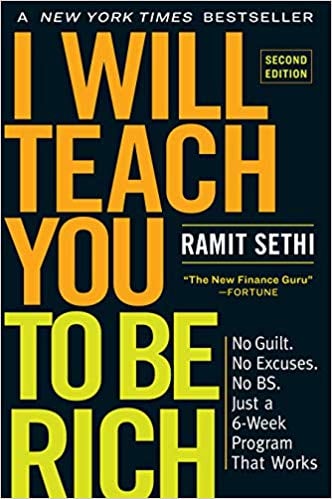
I Will Teach You To Be Rich has a style that is a big change from some of the typical finance books. Although personal finance books can often seem very cut and dry, this book is anything but boring. Ramit Sethi will regale you with tales of “negotiating like an Indian” while getting down to the nitty-gritty details of your personal finances.
Throughout the book, Sethi encourages you to take a closer look at your life and your priorities. Instead of lecturing you about getting your finances on track, Sethi poses questions. Hopefully, these questions will encourage you to think more deeply about your goals in relation to your financial actions.
Quick Summary
- The personal finance book you need to read (and pass on to others)
- Ramit Sethi breaks down the system you need to create for your money
- One of the few books that takes an honest look at money and habits
What’s I Will Teach You To Be Rich All About?
The goal of the book is to help you get your finances on track within a six-week system. With a total of nine chapters, you can breeze through the book while enjoying Sethi’s hilarious writing style. Yes, the book is about personal finance, but you might actually find yourself chuckling along the way.
Sethi’s style is brutally honest with humor thrown in to make the process more comfortable. He will point out your mistakes but show you an exact method of remedying the situation as soon as possible. After all, everyone makes mistakes. If you are choosing to read the book, then you are likely ready to clean up your act.
Throughout the book, you will encounter manageable action steps at the end of most chapters. If you choose to take action on each of these steps, your finances will be on the right track by the end of the six weeks. Each of the steps represent a small part of the new personal finance system you are building. You’ll be able to customize the system to meet your specific financial goals based on Sethi’s recommendations.
Throughout the book, there are stories regarding readers of the first edition of I Will Teach You To Be Rich. It can be helpful to see that there are so many people in a similar situation to yours. However, it is more encouraging to see that they were able to dramatically improve their finances with Sethi’s advice. Don’t skip over the reader stories, they are an uplifting part of the story that shouldn’t be overlooked.
Plus, Sethi includes useful graphics that will truly help you visualize the costs of not taking action.
Chapter Summary
Let’s take a closer look at what each chapter covers.
Optimize Your Credit Cards
Credit cards are an accessible personal finance tool that most people are already familiar with. You’ll start your six-week journey by tackling your credit card situation. Of course, if you are in credit card debt, Sethi outlines how to fix that.
Beyond the basic advice of paying down your cards, Sethi offers solutions for simplifying the credit cards in your wallet while maximizing points. If you take action on his advice, then you stand to earn a significant number of credit card points.
At the end of the first chapter, you’ll encounter the first action steps. Most chapters have three to five action steps to complete for the week. Not only does Sethi outline exactly what steps to take, but he also shares about how long it will take for you to complete each one. That way, you can pencil it into your busy calendar without any excuses.
Beat the Banks
Wading through the world of big banking can be difficult. Luckily, Sethi breaks down everything you need to know — starting with all of the reasons why you should switch to a bank that is going to treat you right. Sethi holds nothing back as he unleashes his opinions on several big-name banks that are notorious for fees.
With specific recommendations and action steps to accomplish, you’ll be banking more comfortably soon.
Get Ready to Invest
Now that you are more comfortable with talking about personal finance, Sethi introduces the ladder of personal finance. You’ll see all of the steps towards success outlined in bite-sized chunks. From the basics of your 401(k) to opening an HSA, the ladder is meant to encourage you to continue the journey.
You’ll notice that most of the rungs on the ladder are connected to investing. Although there are many excuses to continue avoiding investing, Sethi blasts through these excuses in a no-holds-barred manner. The chapter is filled with statics and myths that force you to start thinking about the importance of investing.
Conscious Spending
When you start the fourth chapter, you’ll quickly notice that it is the longest in the book. That’s because it is one of the most important chapters in the book.
Sethi will teach you how to build a Conscious Spending Plan. Without a Conscious Spending Plan, it can be difficult to build a solid financial future because you likely overpay for stuff that you don’t care about. Sethi’s philosophy is to spend big on the things that matter to you and ruthlessly cut costs in areas that don’t matter to you. Most people don’t take the time to cut costs in areas that don’t matter to them, so this could make a big difference in your long-term ability to save.
Unlike some personal finance books, Sethi doesn’t give any judgemental advice about what you should spend your money on. In fact, he shares some stories that might make you feel better about your spending habits.
Sethi does throw out some guidelines that could help you to establish your Conscious Spending Plan. But he is clear on the fact that he doesn’t care what you choose to spend your money on, but understanding your priorities is critical to success. Once you understand what you value, Sethi will walk through the steps of ensuring that your spending reflects that.
Save While Sleeping
Automation is a key part of building your financial system. Although it can seem overwhelming to tackle financial automation, Sethi breaks it down to the core components. His ultimate goal for you is that you only spend 90 minutes managing your personal finances each month.
After taking the time to understand your values and build your Conscious Spending Plan, you’ll learn the ins and outs of automating your accounts.
The Myth of Financial Expertise
Many people avoid dealing with their personal finances because there is a myth of financial expertise. Sethi breaks this myth down and builds your confidence as a competent human that can handle your own accounts. If you are unwilling to take the reins, then you’ll find out exactly how much that will cost you over the course of your lifetime.
You’ll breeze through this chapter and feel empowered to take control of your investing in the next chapter.
Investing Isn’t Only for Rich People
After finding out how much it would cost to hire a professional investor without the facts to back up their “success,” you’ll be fired up to tackle your investing plan. Throughout the chapter, you’ll learn about specific investment accounts that you should take advantage of. Plus, you’ll learn how to find the investments that will work best for your goals.
Beyond the basics, you’ll learn about asset allocation. Although that might seem like a scary phrase, Sethi shows you exactly what the term means and how to implement the principle in your portfolio.
In addition to highly regarded investments such as index funds, you’ll find Sethi’s thoughts on everything from real estate to cryptocurrency. It is an interesting chapter full of odd facts that bolster your confidence as you build your own portfolio.
How to Maintain and Grow Your System
At this point, you will have completed the six-week plan to build your financial system. Hopefully, the new system will propel you towards your financial goals.
Now that you’ve built your financial system, Sethi discusses ways to grow your system. As your assets grow, you might encounter more pervasive money myths. A few that are broken down in the chapter are within the realm of taxes, rebalancing, and when to sell your investments.
Although these tips might seem off the point for now, once you’ve grown your investments, then you might be ready to hear Sethi’s advice in this chapter.
A Rich Life
The final chapter of the book goes beyond the nuts and bolts of building and growing your financial system. It takes a closer look at the messy world of relationships and money. You’ll encounter questions about prenups and combining finances that you’ve likely never considered before.
In addition to some thought-provoking relationship questions, Sethi shares his practical advice for saving money on big purchases such as a home, car, or wedding. Ultimately, he encourages you to stick to your Conscious Spending Plan and consider large purchases far in advance.
About Ramit Sethi

Ramit Sethi studied technology and psychology at Stanford University. After graduating, he founded I Will Teach You To Be Rich. The blog focuses on personal finance and entrepreneurship.
The first edition of the book was published in 2009 and it became a bestseller of The New York Times. This second edition of the book was published in 2019 to update the information and add more stories from successful readers.
Who Should Read I Will Teach You To Be Rich?
If you want to get your finances on the right track with manageable steps, then I Will Teach You To Be Rich is a good place to start. The book can help you build a base of financial literacy. Along the way, you’ll build a financial system that can take you towards your goals.
If you already have a solid grasp on basic personal finance, you can still find value in I Will Teach You To Be Rich. The action steps provide a clear-cut way to polish your financial system. Although some of the information in the book will seem obvious, you’ll be able to build a financial system that works for you along the way.
Final Thoughts
Overall, the tone of the book is helpful, guilt-free, and extremely honest. You need to be ready to be honest with yourself about your financial situation. Otherwise, you’ll likely find it difficult to complete the action steps along the way. If you aren’t ready to own up to the financial mistakes in your past, then you aren’t ready to read this book.
The book has a total of 353 pages — 80 of these pages have been added for the second edition. Each page is packed with useful information that will help you master your money, and then move on with your life.
If you are looking for a place to get started with your finances, then this is a great option.
I Will Teach You To Be Rich Book Review
-
Easy to Read
-
Useful or Helpful
-
Story Telling
Overall
Summary
Learn about I Will Teach You To Be Rich, a book that aims to help you consider your priorities. Get your finances on track!
Editor: Clint Proctor Reviewed by: Chris Muller

Sarah Sharkey is a personal finance writer who covers banking, credit, student loans, and insurance for The College Investor. She has written for leading financial outlets including Bankrate, Business Insider, and more, helping readers make confident choices about borrowing, saving, and building wealth.
Sarah holds both a bachelor’s and a master’s degree from the University of Florida, and her background in management and research informs her clear, practical approach to complex financial topics.