Florida 529 Plan And College Savings Options
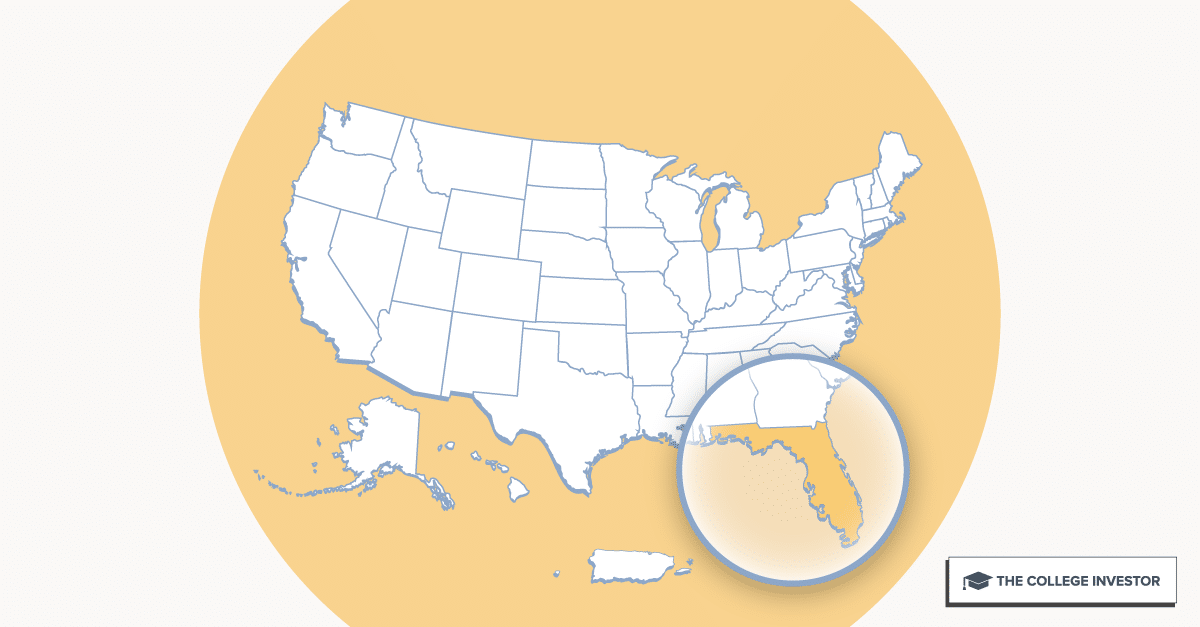
Florida runs two 529 plans through the Florida Prepaid College Board: the Florida Prepaid 529 Plan, which locks in tuition at today's prices, and the Florida Investment 529 Plan, a low-cost savings plan. Florida has no state income tax, so there's no deduction to chase, and the Investment Plan's zero admin fee and index funds from 0.02% make it one of the cheapest plans in the country for families who want flexibility. The Prepaid Plan fits families who are confident their child will attend a Florida public college, since it pays out only the Florida rate at private and out-of-state schools. If you're new to these accounts, start with how 529 plans work.
Florida 529 Plans At A Glance
| Plan | Type | Annual Cost | Who It's For | Status |
|---|---|---|---|---|
| Florida Investment 529 Plan | Direct-sold savings plan | 0.00% admin fee; fund fees 0.04%–0.09% (Enrollment Year Portfolio) and 0.02%–0.82% (individual funds) | Families anywhere who want low-cost investments for college or K-12 | Open |
| Florida Prepaid 529 Plan | Prepaid tuition and dorm plan | Fixed price per one-year plan, paid in a lump sum or monthly | Florida families who expect their child to attend a Florida public college | Open |
Florida 529 Tax Rules
Florida has no personal income tax, so there's no state deduction for 529 contributions and no state tax on 529 withdrawals, and the Investment Plan's disclosure states that contributions and earnings are exempt from Florida taxation (Florida Prepaid College Board). The federal benefits still apply: growth is tax-deferred and qualified withdrawals are tax-free. Our state-by-state 529 tax deduction table shows what families in income-tax states get instead.
Because there's no state deduction, Florida families can open any state's plan without losing a tax break, and the only reasons to stay home are fees, investments, and the Prepaid Plan's state guarantee. Withdrawals for an out-of-state college follow the federal rules, which our list of qualified 529 plan expenses breaks down.
| Situation | Florida Tax Treatment |
|---|---|
| Contribution to a Florida plan | No state deduction; Florida has no personal income tax |
| Contribution to another state's 529 plan | No state deduction; no Florida tax either way |
| Qualified college withdrawal (any accredited school, in or out of state) | Tax-free federally; no Florida income tax |
| K-12 tuition and expenses | Tax-free federally up to $20,000 per beneficiary per year starting in 2026; no Florida income tax |
| Student loan repayment | Tax-free federally up to $10,000 lifetime per borrower; no Florida income tax |
| Registered apprenticeship costs | Tax-free federally; no Florida income tax |
| Non-qualified withdrawal | Earnings face federal income tax plus the 10% penalty; no Florida income tax or recapture |
| Contribute and withdraw right away (529 churning) | No state deduction to gain or lose, so there's no Florida rule on timing |
| Rollover from a Florida plan to another state's plan | Follows federal rules; no Florida tax |
| Rollover from another state's plan into a Florida plan | Follows federal rules; no Florida tax |
| 529-to-Roth IRA rollover | Follows federal rules; no Florida tax |
Florida has no churning rule because it has no deduction to protect. Paying a tuition bill through a Florida 529 plan gives no state tax benefit, so the only reason to do it is to use money that's already been growing tax-deferred, and our breakdown of 529 plan churning and withdrawal limits explains why the tactic matters in states with deductions.
Federal law lets a 529 that's been open at least 15 years roll up to $35,000 into the beneficiary's Roth IRA, and the Investment Plan lists that option (Florida Prepaid College Board). With no state income tax, Florida adds nothing on top of the federal rules, which our 529-to-Roth IRA rollover rules cover.
How Florida's 529 Plan Ranks
Florida ranks 34th of the 50 state plans in our best 529 plans rankings, which include Washington, D.C., with a 59.6% net return on investment. Our Net ROI score models $100 a month for 10 years at a 5% annual return, subtracts plan fees, and reinvests the value of the state tax break each year. Florida's score is driven entirely by fees: its 0 basis-point plan fee is the lowest in the rankings, but with no state tax break it can't match states that add a deduction on top.
| State | Fees (Basis Points) | State Tax Break | Net ROI |
|---|---|---|---|
| Indiana (#1 overall) | 12.5 | 20% | 87.8% |
| Georgia | 2 | 5% | 66.9% |
| Alabama | 17 | 5% | 64.5% |
| Florida (#34) | 0 | 0% | 59.6% |
Florida's plans have no home-state tax edge, so residents can shop any state's plan on fees and investments. Georgia and Alabama rank higher only because their own residents get a deduction, and a Florida family that opens either plan gets no tax break from it. The Investment Plan's 0.00% admin fee already puts it at the cheap end of the full rankings table, so compare its fund fees before moving elsewhere.
The gap with the top of the list comes down to the tax break Florida can't offer without an income tax. Indiana's 20% tax credit is what puts it at #1, while Florida's fees are already as low as they go, so the Investment Plan is close to the best a no-tax state can do. Florida families who want the state to do more for savers can share these numbers with their state legislators, and our 529 plan tax deductions by state table shows what other states offer.
Should Florida Residents Use Florida Prepaid Or The Investment Plan?
The Investment 529 Plan is the better default for most Florida families. It has no admin fee, no minimum, and index funds from 0.02%, and the money can pay for college anywhere, K-12 tuition up to $20,000 a year, or a Roth IRA rollover (Florida Prepaid College Board). Our 529 plan overview explains how savings plans compare with prepaid plans.
The Prepaid Plan makes sense for families who want a guaranteed result and expect their child to attend a Florida public university or college, since the plan is protected by the State of Florida (Florida Prepaid College Board). At private or out-of-state schools it transfers only the average amount it would pay a Florida school, capped at actual costs (Florida Prepaid Master Contract), which our prepaid tuition vs. 529 plan comparison walks through.
Four years at an in-state Florida public university runs about $86,000 on campus, so the average Investment Plan balance of about $12,500 covers less than one year, while the average Prepaid account holds about $29,000. Our Florida college costs and financial aid breakdown lists costs by school, and our 529 savings benchmarks by age show what to aim for.
Florida 529 Plan Details
Both plans are run by the Florida Prepaid College Board, which also manages the ABLE United program (Florida Prepaid College Board). As of June 30, 2026, Florida's two plans held $15.97 billion across 645,706 open accounts, and Florida ranked 11th among the states in 529 assets (The 529 Network). Our 529 plan and college savings statistics show how that compares nationally.
| Florida Plan (June 30, 2026) | Open Accounts | Assets | Average Balance |
|---|---|---|---|
| Florida Investment 529 Plan | 167,208 | $2.10 billion | $12,535 |
| Florida Prepaid 529 Plan | 478,498 | $13.88 billion | $28,998 |
| All Florida 529 plans | 645,706 | $15.97 billion | $24,735 |
Florida Investment 529 Plan
This is the plan to open if you want a flexible savings account. The Board charges a 0.00% admin fee, so the only ongoing cost is the fund fee: 0.04% to 0.09% on the Enrollment Year Portfolio, 0.04% to 0.17% on the six static portfolios, and 0.02% to 0.82% on the individual funds (Florida Prepaid College Board). On a $12,535 balance, the plan's average as of June 30, 2026, a 0.04% portfolio costs about $5 a year, which our 529 balance by age benchmarks can put in context.
| Administered by | Florida Prepaid College Board |
| Minimum contribution | None |
| Maximum account balance | $500,000 per beneficiary, counting Prepaid Plan values for the same beneficiary |
| All-in annual cost | 0.04%–0.09% (Enrollment Year Portfolio); 0.04%–0.17% (static portfolios); 0.02%–0.82% (individual funds) |
| Investment options | 1 enrollment-year (age-based) portfolio track, 6 static portfolios, and 15 individual fund options |
| Fund families | Vanguard, DFA, Eaton Vance, Wellington, BlackRock, and Florida PRIME (money market) |
| Who can open | Any U.S. citizen or resident alien 18 or older; no Florida residency required |
| Official source | myfloridaprepaid.com |
Florida Prepaid 529 Plan
The Prepaid Plan covers tuition and most fees in one-year (30 credit hour) increments, up to four years, and a separate Dormitory 529 Plan covers campus housing (Florida Prepaid College Board). For 2026–27 enrollment, a one-year university plan bought in a single payment costs $6,349.03 for a newborn and $6,465.92 for an 11th grader (Florida Prepaid College Board). Enrollment moved from a February-to-April window to year-round in 2026 (Florida Prepaid College Board), and our prepaid tuition vs. 529 plan comparison covers the trade-offs.
| Administered by | Florida Prepaid College Board |
| Covers | Tuition and most fees at Florida state universities and colleges; dorm housing with the Dormitory Plan; the Florida-rate value at other eligible schools |
| Who can enroll | Anyone can buy a plan for a beneficiary who is a Florida resident (domiciled in Florida for at least 12 months) in 11th grade or younger |
| Benefit window | Usable for 10 years after the projected college enrollment year |
| Status | Open year-round |
| Official source | Prepaid 529 Plan page and Master Contract |
Other Florida College Savings Programs
Upromise. Upromise lets you earn money for your Florida 529 account through rebates and rewards on everyday spending, and the Upromise credit card sends cash back straight into your child's 529 plan (Upromise). You can link a Florida Investment 529 Plan account to your Upromise profile, so the rewards add to what you save.
Florida Prepaid College Foundation scholarships. The Foundation awards Prepaid Plan scholarships through programs such as Project STARS and the First Generation Matching Grant, and it reports more than 66,100 scholarships awarded (Florida Prepaid College Foundation). These scholarships are available only through the Foundation's partner programs, and our Florida financial aid page lists the state's grants, including Bright Futures.
ABLE United. Floridians with disabilities can save in ABLE United, a 529A program managed by the Florida Prepaid College Board with no minimum monthly contribution and no sign-up or monthly fees (ABLE United). ABLE balances up to $100,000 don't count against SSI's $2,000 asset limit, which our 529 plan overview compares with regular college savings.
Leftover money. Families with money left after college can change the beneficiary to a sibling, pay down up to $10,000 of student loans, or roll to a Roth IRA, and Prepaid Plan families can transfer the plan to another child or cancel it. Our list of what to do with leftover 529 money covers each option, and Florida graduates in nursing or legal aid should also check Florida student loan forgiveness programs.
Frequently Asked Questions
What Is The Florida 529 Plan Called?
Florida offers two 529 plans through the Florida Prepaid College Board: the Florida Prepaid 529 Plan and the Florida Investment 529 Plan. Both are sold directly, and our 529 plans by state hub lists every state's plans.
Does Florida Offer A 529 Tax Deduction?
No. Florida has no personal income tax, so there's no deduction for contributions and no state tax on withdrawals (Florida Prepaid College Board). Our state 529 tax deduction table shows which states offer one.
Do You Have To Live In Florida To Use A Florida 529 Plan?
Not for the Investment Plan, which is open to families nationwide (Florida Prepaid College Board). The Prepaid Plan requires the beneficiary to be a Florida resident, though the buyer can live anywhere, and our breakdown of how 529 plans work covers who can own and fund an account.
Can I Use A Florida 529 Plan At An Out-Of-State College?
Yes. Investment Plan money works at any eligible school, and the Prepaid Plan transfers the average amount it would pay a Florida school, up to the actual cost (Florida Prepaid Master Contract). The list of qualified 529 plan expenses is the same no matter where the school is.
Can I Contribute To A Florida 529 Plan And Withdraw Right Away?
Yes. Florida has no state deduction, so there's no state holding period or recapture to worry about. Federal rules still require the withdrawal to match a qualified expense in the same year, and our 529 plan churning breakdown shows which states restrict this.
What Happens If I Withdraw Florida 529 Money For Non-Qualified Expenses?
Florida doesn't tax it, but the earnings face federal income tax and the 10% federal penalty. Prepaid Plan families can cancel instead, and the Board advertises a full refund on cancellation (Florida Prepaid College Board), while our explainer on the 529 plan penalty shows how to avoid the federal hit.
Can I Use My Florida 529 Plan For Private K-12 School?
Yes, with the Investment Plan. It covers K-12 tuition up to $20,000 a year per student from all 529 plans combined (Florida Prepaid College Board), and our walkthrough on using a 529 plan for private school covers the paperwork.
Related Florida Resources
How We Sourced This Data
Plan details on this page come from the Florida Prepaid College Board: the Florida Investment 529 Plan Program Description and Participation Agreement (effective July 2026), the Investment Plan and Prepaid Plan pages and investment options list (February 13, 2026 fees), the Prepaid Plan Master Contract, the 2026–27 plan pricing sheet, and the Board's May 2026 enrollment announcement, plus The 529 Network 529 plan data as of June 30, 2026. Scholarship and ABLE details come from the Florida Prepaid College Foundation and ABLE United. The college cost figure comes from our Florida financial aid page, which draws on institutional cost pages and NCES IPEDS data. Read more about how we fact-check and update content.
Page refreshed annually in September, after the Florida Prepaid College Board publishes its updated fee schedule, and reviewed in January for tax season. Last full refresh: September 24, 2026.
Editor: Clint Proctor Reviewed by: Chris Muller