
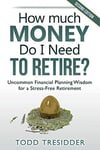
How Much Money Do I Need to Retire? explains the fundamentally flawed logic that most people base their retirement assumptions on. After taking a deep dive into the dangerous assumptions that the traditional retirement planning model suggests, Tresidder explores alternative solutions.
Throughout the book, Tresidder encourages you to play with your own numbers to build out the amount of money you may need to retire. With access to helpful worksheets, you can take a hands-on approach to learn about retirement planning from a man that was able to retire at 35.
Quick Summary
- Discover how to accurately estimate your retirement number
- Learn why traditional retirement planning formulas often fall short
- See the false assumptions that can lead to significant underspending or overspending in retirement
What’s How Much Money Do I Need To Retire? All About?
The goal of the book is to help you understand the logic behind retirement planning. You’ll explore different strategies for retirement planning and learn how to pull the best of each model into your plans.
The book is divided into discussions of three models that can be used to plan for your spending needs in retirement. The first model is the traditional retirement planning model. The bulk of the book is spent dissecting the conventional wisdom that makes flawed assumptions to determine your retirement number. The second model is centered around creative lifestyle planning that could reduce your savings requirement. The final model explores cash flow planning as a solution for retirement income that you can never outlive.
Chapter Summary
Throughout How Much Money Do I Need to Retire?, Tresidder takes a logical approach to retirement planning. He presents the three planning models in an easy to understand way that will allow you to apply the knowledge to your own planning. Let’s take a closer look at what's covered in the book.
Introduction
Tressider opens up How Much Money Do I Need to Retire? by outlining the problem. Essentially, most retirement planning experts use a traditional retirement model that has many flaws. He shares a handful of statistics that reveal the stark reality that traditional retirement planning is failing in America.
The hard truth is that the traditional retirement planning calculators ask for you to make assumptions that you cannot possibly predict accurately. Even a small misstep in the calculations from the correct assumption could lead to a retiree either saving too much for retirement or running out of money.
He also shares where you can gain access to the printable worksheets that go along with this book. If you take the time to print them out, they can be very helpful. As you read through the book, you can start to plan out your retirement nest egg needs with a fill-in-the-blank sheet.
Model 1: Conventional Retirement Planning, The Smart Way
Tressider spends the majority of the book explaining the ins and outs of the traditional retirement planning model. He breaks down the assumptions and pulls out the useful parts.
The goal is to help you understand the flaws of a traditional approach to retirement planning and which components are still useful to consider.
What It Costs To Live A Great Life In Retirement
This chapter kicks off the book by explaining that an inaccurate retirement savings goal is better than having no goal at all. At the very least, you’ll have something to diligently work towards even if you have to make adjustments along the way.
It’s All About The Assumptions, Not The Calculator
In this section of How Much Money Do I Need to Retire?, the cracks in the traditional retirement planning model will begin to be exposed. Although traditional calculators make things seem simple on the surface, the underlying assumptions can be almost impossible to pinpoint.
Tresidder shares some of the unknowable details that many retirement planning models require, such as when will you die. Your retirement planning is only as good as the assumptions you put into the calculator. So it's easy to see how you could run into some serious issues.
The Five Essential Questions
You’ll walk through the five important questions that you need to answer for an accurate retirement nest egg. As you walk through the questions, you’ll realize how difficult it can be to answer these accurately.
From inflation to an increase in spending due to medical issues, you cannot see into the future to answer these questions. The breakdown of each truly helps to illuminate the flaws of traditional retirement planning. You’ll start to wish for a better solution.
How To Accurately Estimate Investment Returns
At this point, you’ll learn about the variables that will affect your investment returns. The three crucial parts include:
- Volatility
- The sequence of returns
- Valuations
Although he does a great job of breaking down the questions into easy to understand terms, there's a lot of detail that you’ll need to absorb in this part of the book. It could help to take notes on your worksheets or read the complex sections twice to fully grasp the concepts.
How To Estimate Your “Magical” Retirement Number
Tresidder recaps the important lessons that you’ve learned throughout the first section of How Much Money Do I Need to Retire? He also shares more information on the dividend discount model.
Since the goal of the book is to find your retirement number, Tresidder shares calculation options. The first is to plan on recalculating your retirement number every few years by replacing your original assumptions with actual data. With each recalculation, you’ll reduce the potential for error.
The second solution is to build a confidence interval through the variation of key assumptions in this model. With that, you’ll have a comfortable range of what is possible. He will take you through the steps of building out a confidence interval for your retirement plans.
In this section, he touches on the 4% rule. With a brief explanation of the 4% rule, Tressider shares some possible solutions but cautions against solely relying on the 4% rule. He also outlines the two most important components to a successful retirement -- your savings rate in your early years and your return on investment minus inflation. Finally, he gives some advice for using retirement calculators the right way.
Model 2: Lifestyle Planning, The Creative Way
The second model of retirement planning is centered around lifestyle flexibility. Tresidder introduces a list of alternative retirement lifestyles for you to consider. Each could dramatically alter the amount of money you’ll need to save for retirement. Essentially the lifestyle changes include:
- Dramatically cutting your expenses
- Increasing your post-retirement income
- Choosing an alternative investment strategy
Any combination of these choices could have large ramifications on your future retirement. Tresidder encourages you to brainstorm some creative retirement lifestyles and determine how they could affect your savings goal.
Model 3: Cash Flow Planning, The Simple Way
In this final model, Tressider shares his secrets to a secure retirement at age 35. The basic choice was to create income streams that would grow over time to offset inflation. The income streams must not be connected so that if one stream is taken away temporarily, you’ll have other income to support your lifestyle. He outlines three simple rules to follow in order to make this model a secure approach.
Conclusion
In the conclusion of How Much Money Do I Need to Retire?, Tresidder recaps the main points from each retirement planning model. He encourages you to take advantage of the best components from each model in your own plans.
About Todd Tresidder

Todd Tresidder is the investor behind the popular site, Financial Mentor. Before creating the site, he was a hedge fund investment manager that secured his financial independence at age 35. Since then, he has enjoyed continuing to invest and write about financial markets. His message is to focus on personal development while pursuing financial freedom. Through his series of books, Financial Freedom For Smart People, he shares his knowledge in an approachable format.
Who Should Read How Much Money Do I Need To Retire?
Retirement planning is not a simple topic. Tresidder breaks down the often overwhelming assumptions of traditional models down to their fundamental parts. Although he does a great job of breaking down the assumptions to an understandable level, you’ll run into some sections of the book that are filled with investor-specific knowledge.
If you're just starting your financial journey, you may want to start with a book that offers money-saving advice before moving on to this more complex topic. But if you already have a firm grasp of basic financial principles, then this book is a great way to boost your knowledge further. At 238 pages, you’ll likely find plenty of useful gems that you can apply to your own life no matter where you're at in your financial journey.
Final Thoughts
Overall, How Much Money Do I Need to Retire? offers useful advice for anyone attempting to plan for their retirement. The numbers surrounding retirement planning can seem overwhelming. But Tresidder breaks the complexity down to its core parts. You’ll walk away with a solid understanding of each of the retirement planning models and be able to move forward confidently.
How Much Money Do I Need To Retire? Book Review
-
Easy To Read
-
Useful Or Helpful
-
Storytelling
Overall
Editor: Clint Proctor Reviewed by: Claire Tak

Sarah Sharkey is a personal finance writer who covers banking, credit, student loans, and insurance for The College Investor. She has written for leading financial outlets including Bankrate, Business Insider, and more, helping readers make confident choices about borrowing, saving, and building wealth.
Sarah holds both a bachelor’s and a master’s degree from the University of Florida, and her background in management and research informs her clear, practical approach to complex financial topics.